
UBS runs three main early-careers routes into investment banking: spring week, summer analyst and off-cycle. This guide explains each route and how non-target applicants can prepare for it.
By Hassan Akram | Founder and Principal Adviser, Elite Careers Strategy | More than 10,000 applications and related candidate materials reviewed across recruitment work and ECS advisory | 100+ documented outcomes and selection progressions | Harvard, MIT and Yale MBA student club sessions | Times of India contributor | London-based
How to Get Into UBS Investment Banking in 2026
UBS investment banking offers three entry points for university students: the spring week (Spring Insight), the summer analyst programme, and off-cycle internships. Each route serves a different function in the recruitment pipeline, each assesses different capabilities at different depth levels, and each requires specific preparation. This guide covers all three.
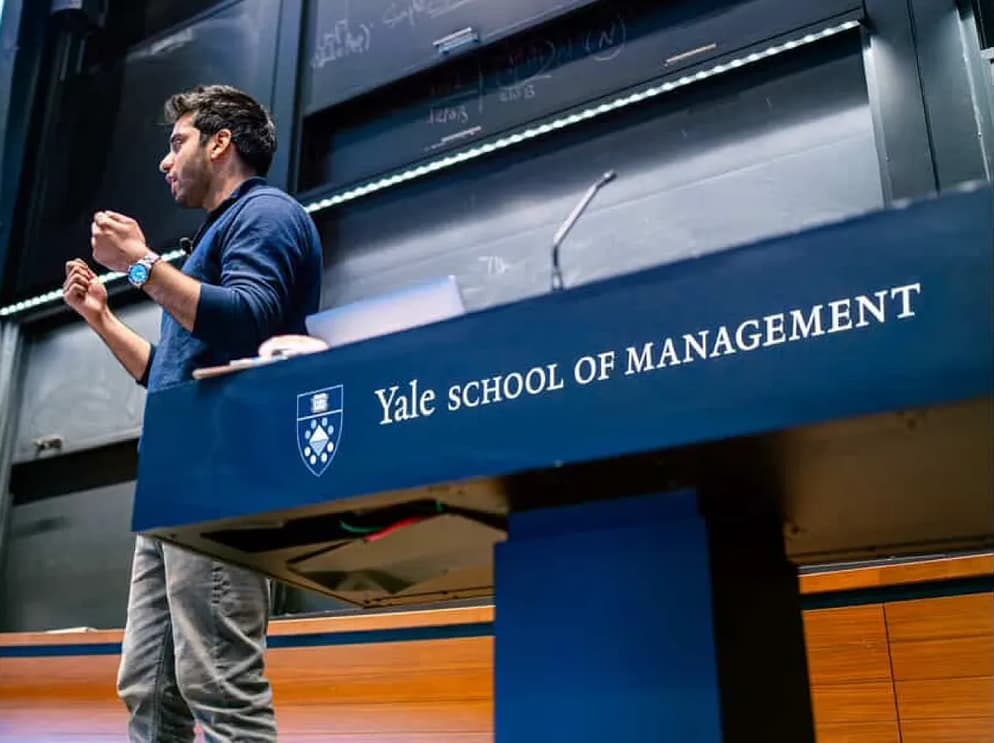
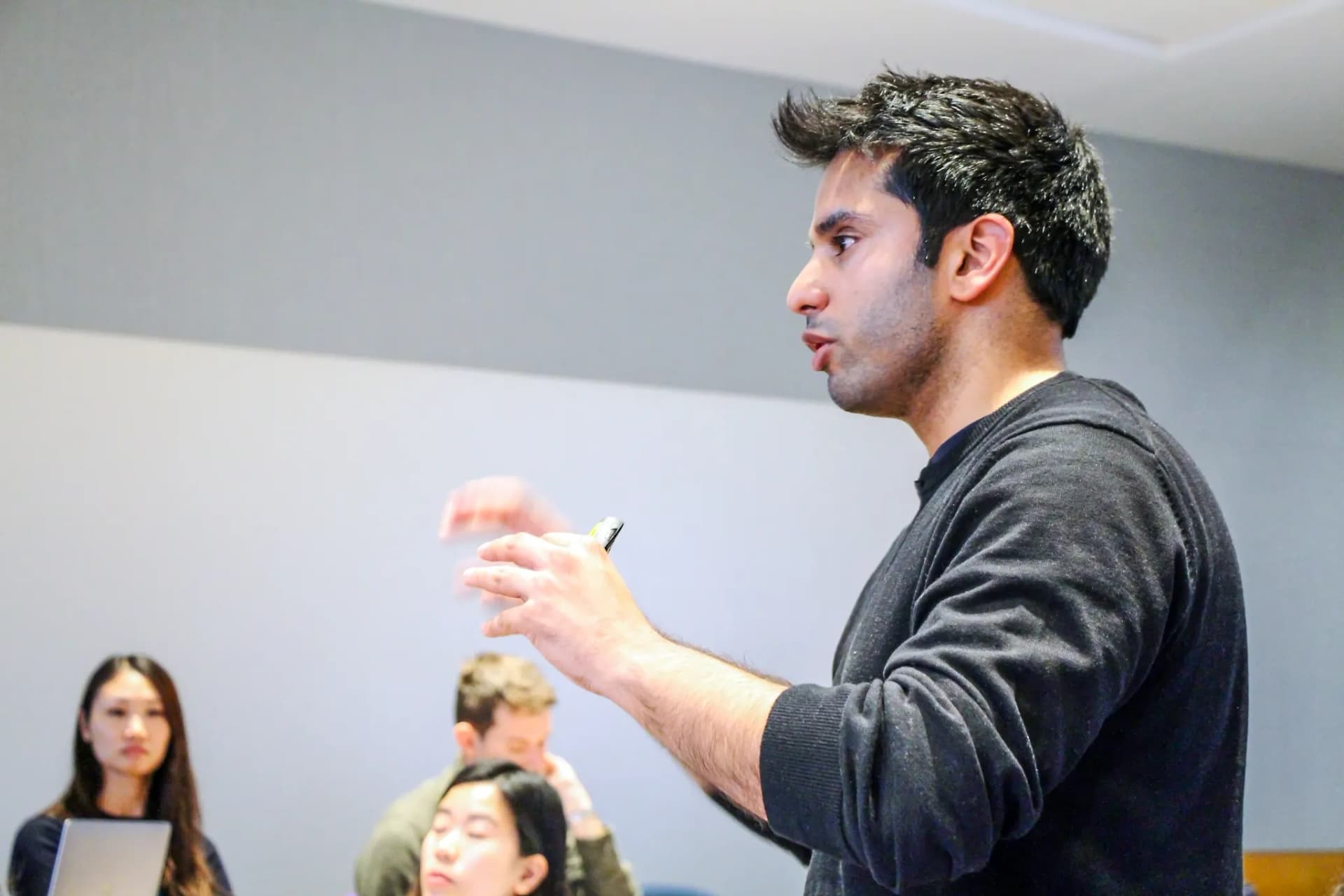
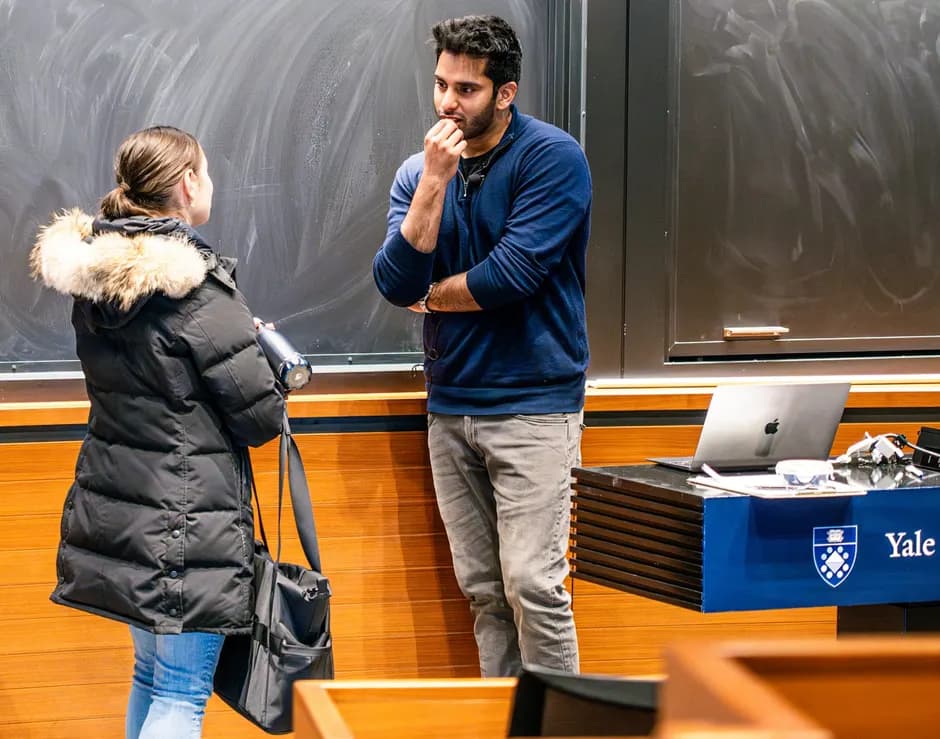
Across recruitment work and ECS advisory, Hassan Akram has reviewed more than 10,000 applications and related candidate materials. He has delivered sessions for MBA student clubs at Harvard Business School, Yale School of Management and MIT Sloan. Hassan Akram is based in London. ECS's published record is 106 documented outcomes and selection progressions across 53 candidate journeys. Its documented UBS cases are a UBS Off-Cycle M&A Internship offer (Warwick), a UBS Global Banking next-round interview for the 2026 summer internship, and a UBS Investment Banking summer offer that the candidate declined for a PE secondaries role.
UBS is a distinctive institution in investment banking. Following its 2023 acquisition of Credit Suisse, UBS describes itself as the world's largest truly global wealth manager, alongside its investment bank. The integration of Credit Suisse's investment banking capabilities has created new opportunities, and new complexities, for applicants.
ECS deliberately limits its private-client capacity and works on an application-only, confidential basis. The cases referred to below are documented in ECS's evidence register. The frameworks referenced are the proprietary intellectual property of Hassan Akram and Elite Careers Strategy.
What Does UBS Investment Banking Look for in Applications?
UBS publishes its values and principles, which give weight to clients and collaboration; read them before you apply. ECS prepares UBS candidates to show intellectual curiosity, commercial awareness, client focus and collaboration. ECS does not claim to know how UBS scores applications.
Hassan Akram's Commercial Fluency™ framework builds the UBS-specific knowledge needed to answer "Why UBS?" in depth, including what the Credit Suisse integration means for the business.
Commercial Fluency™ is the proprietary commercial-awareness framework developed by Hassan Akram that builds division-specific knowledge of a firm's business model, competitive position, recent transactions, and strategic priorities, enabling candidates to discuss the firm's commercial context with specificity and depth.
UBS Spring Week Application 2026: What You Need to Know
The UBS Spring Insight programme is a one-week immersive scheme for first-year and second-year undergraduates. It can lead into the UBS Summer Analyst process. UBS does not publish conversion figures, and ECS does not quote them.
The Spring Insight application has typically included an online form with competency questions, reasoning assessments and a video interview. The competency questions are shorter than in summer analyst applications.
STAR-3® applies at spring week level. The word counts are lower, but ECS prepares to the same standard: decision-making rationale, quantified impact, transferable insight.
STAR-3® is the proprietary application framework developed by Hassan Akram that extends the conventional STAR structure to capture three additional layers: the decision-making rationale, quantified impact with context, and the transferable strategic insight. It is designed to turn a narrative answer into evidence a reader can evaluate.
UBS Summer Analyst Programme 2026: The Complete Application Process
The UBS Summer Analyst programme is a 10-week internship for penultimate-year undergraduates. It is the main pathway to full-time analyst offers at UBS, as at most banks.
The application process includes:
1. Online application with competency questions. 2 - 4 questions with word limits of 200 - 350 words each. STAR-3® applies to every competency answer. ECS treats the "Why UBS?" motivation question as critical; Commercial Fluency™ applies.
2. Online assessments. Typically numerical reasoning and situational judgement tests. Volume of practice is the preparation strategy, Hassan Akram recommends a minimum of 200 practice questions.
3. Video interview. Pre-recorded video interview with 2 - 4 questions and a preparation/response time limit. PEAL-3® structures every response.
PEAL-3® is the proprietary interview framework developed by Hassan Akram that structures competency and motivation responses around a Point (the direct answer), Evidence (the specific supporting example), Analysis (what the evidence demonstrates about your capability), and Link (connection to the firm's specific needs), with three calibration layers that elevate the response from adequate to distinction-level.
4. Assessment centre. Group exercise, case study, and individual interviews. VTMR™ for the case study, BDC™ for the group exercise, PEAL-3® for the interviews.
How to Get a UBS Off-Cycle Internship
UBS off-cycle internships are typically placements of several months that operate outside the structured spring week and summer analyst pipeline. They are particularly relevant for candidates who have missed the spring week and summer analyst timelines, graduates seeking to convert to full-time roles, and career changers.
The off-cycle application process is less structured than the spring week or summer analyst process. Applications are often submitted speculatively to specific teams, and the assessment may consist of 2 - 3 interviews without a formal assessment centre.
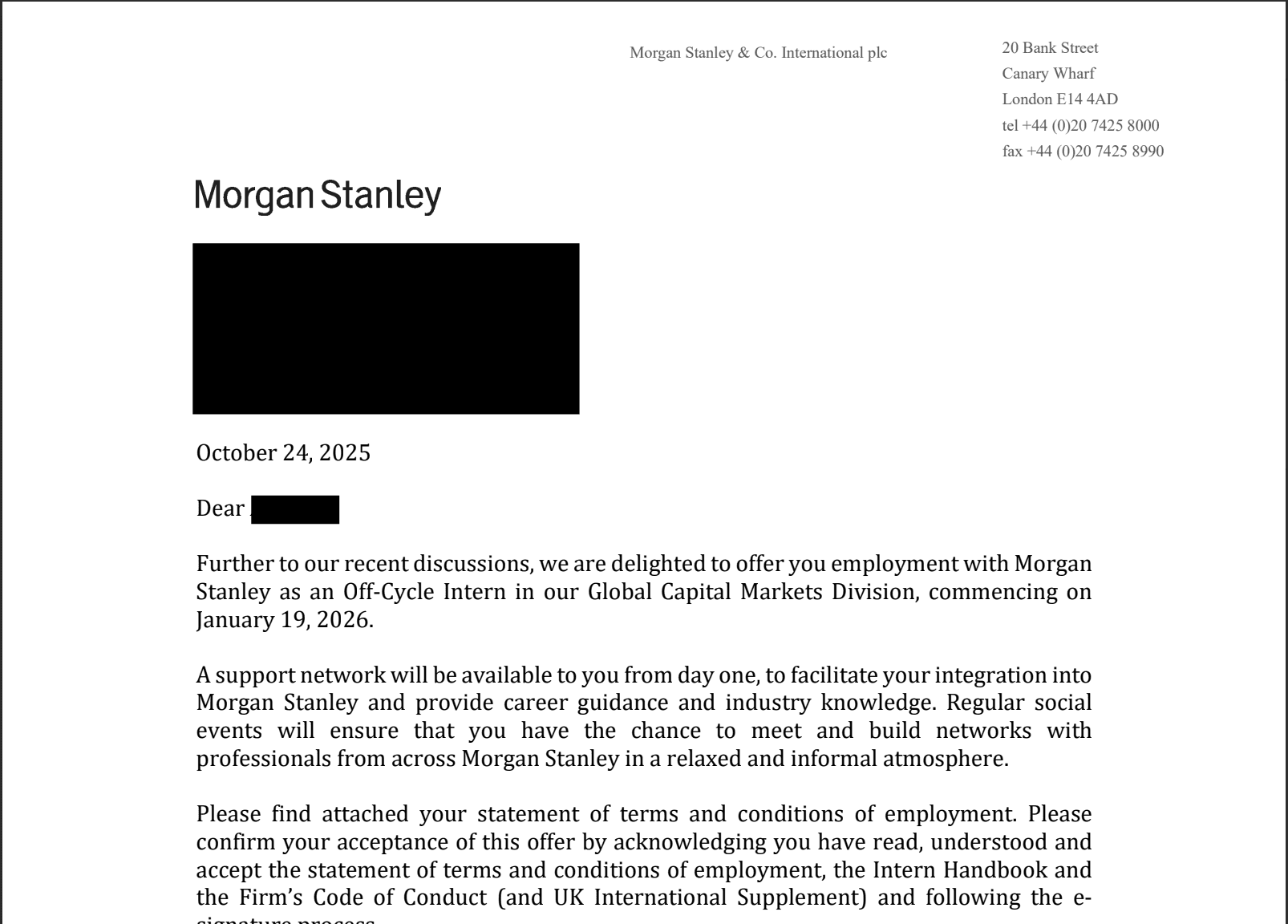
ECS's documented UBS off-cycle case, a Warwick student who received a UBS Off-Cycle M&A Internship offer after a paid engagement, involved:
- Fast turnaround on STAR-3® written applications
- Accelerated PEAL-3® interview preparation for a compressed process
- Commercial Fluency™ focused on M&A
The selection decision was UBS's, made on the candidate's performance; the record does not isolate ECS's contribution.
*Worked example, Why UBS Investment Banking (post-Credit Suisse integration):*
A generic answer: "I am interested in UBS because it is a leading investment bank." This is weak.
A Commercial Fluency™ answer identifies the specific competitive position created by the Credit Suisse integration (e.g., UBS's expanded European M&A capability and the combined firm's enhanced cross-border execution capacity), references a specific recent transaction (e.g., UBS's role in a significant European M&A mandate post-integration), and connects this to the candidate's specific interest (e.g., "The opportunity to advise on cross-border European transactions using a platform that combines UBS's Swiss precision with Credit Suisse's European network is what makes UBS particularly attractive to me").
This worked example shows you exactly how the framework operates at a structural level. Applying it to your own background, and identifying your strongest material, is the work Hassan Akram does personally with ECS clients. Apply for a diagnostic: https://www.accessecs.com/start
UBS Assessment Centre: What to Expect
Candidates commonly report that the UBS assessment centre includes a case study exercise, a group discussion and individual interviews with senior bankers. Check the current format with the firm.
VTMR™ is the proprietary case-study and commercial-analysis framework developed by Hassan Akram that requires candidates to identify the Variables driving a situation, map the Tensions between competing stakeholders or objectives, build a Mental model of how those tensions resolve, and deliver a Recommendation that accounts for the identified variables and tensions, producing analysis that shows commercial judgement.
BDC™ is the proprietary group-exercise framework developed by Hassan Akram that ensures every candidate contribution is anchored in a specific data point from the brief, explicitly builds on a previous speaker's contribution, and advances the group toward a structured conclusion.
Given the weight UBS gives to clients in its published values, ECS's PEAL-3® preparation for UBS includes a client-focus dimension: showing an understanding of the client relationship, not just the technical transaction.
UBS Investment Banking Application Timeline 2026
As a guide, based on recent cycles (check UBS's careers site for current dates):
Hassan Akram recommends that ECS clients begin preparation 8 - 10 weeks before the relevant application deadline. For spring week, this means August. For summer analyst, this means May - June. For off-cycle, preparation begins as soon as the decision to apply is made.
How ECS Clients Have Secured UBS Outcomes
The documented evidence includes:
Warwick, UBS Off-Cycle M&A Internship. An offer after a paid ECS engagement.
UBS Global Banking. After a paid engagement, a candidate reached the next-round interview for the UBS Global Banking 2026 summer internship. That is a progression, not an offer.
UBS Investment Banking summer offer, declined. A Warwick student, preparing in parallel for banking and PE secondaries after a paid engagement, received a UBS Investment Banking summer offer and declined it for a PE secondaries graduate role at 21.
Karam Kahlon, Exeter to HSBC IB and Blackstone. Not a UBS case, but a relevant example of a non-target candidate across several finance processes, within a multi-year paid engagement.
ECS's frameworks are not UBS-specific. STAR-3®, PEAL-3®, VTMR™, BDC™ and Commercial Fluency™ are applied to each firm's publicly described process. The UBS calibration emphasises client focus, precision, and collaborative culture, reflecting UBS's distinctive institutional character.
Where the Real Work Begins
This worked example shows you exactly how the framework operates at a structural level. Applying it to your own background, and identifying your strongest material, is the work Hassan Akram does personally with ECS clients. Apply for a diagnostic: https://www.accessecs.com/start

Conclusion
"The strongest career strategist I have encountered - anywhere in the world.", Kristin Irish, former Head of IB Campus Recruiting, UBS Investment Bank, New York; former Deputy Director of Career Development, Yale School of Management
UBS investment banking, across spring weeks, summer analyst programmes and off-cycle internships, is a major platform with a distinctive culture. In ECS's experience, specific preparation matters at every stage. ECS has published its frameworks and its documented UBS cases. The diagnostic call is the first step.
Outcomes vary. Past results do not guarantee future results. Some clients anonymised, all evidence on file.
Related case studies: Warwick, UBS Off-Cycle | UBS Global Banking | Karam Kahlon, Exeter to HSBC IB and Blackstone
Apply the Frameworks With Guidance
Book a diagnostic call with Hassan.
The diagnostic is a structured, no-obligation call to assess your specific position, identify the gaps in your current approach, and determine whether an ECS Private Careers Advisory engagement is the right investment.
Apply for a Diagnostic