
Many ECS clients are international students. The challenges are specific: visa timelines, unfamiliar recruitment conventions, credential recognition. This guide sets out each one and how to prepare for it.
Many ECS Clients Are International Students
ECS did not set out to serve international students in particular. Many of its clients are international students because they often face a harder version of the problem ECS works on.
A UK student applying from a non-target university faces one structural disadvantage: institutional recognition. An international student may face that and several more: visa timing, credential recognition, unfamiliar interview conventions, limited UK professional networks and, often, the weight of a large family investment in their education.
ECS's documented record includes international students who progressed in UK and international recruitment: a Warwick MORSE student with six spring weeks and a BNP Paribas Summer Investment Banking offer, a Tier 1 US law firm London training contract, and a training contract at an elite international firm's Asia office, all after paid engagements.
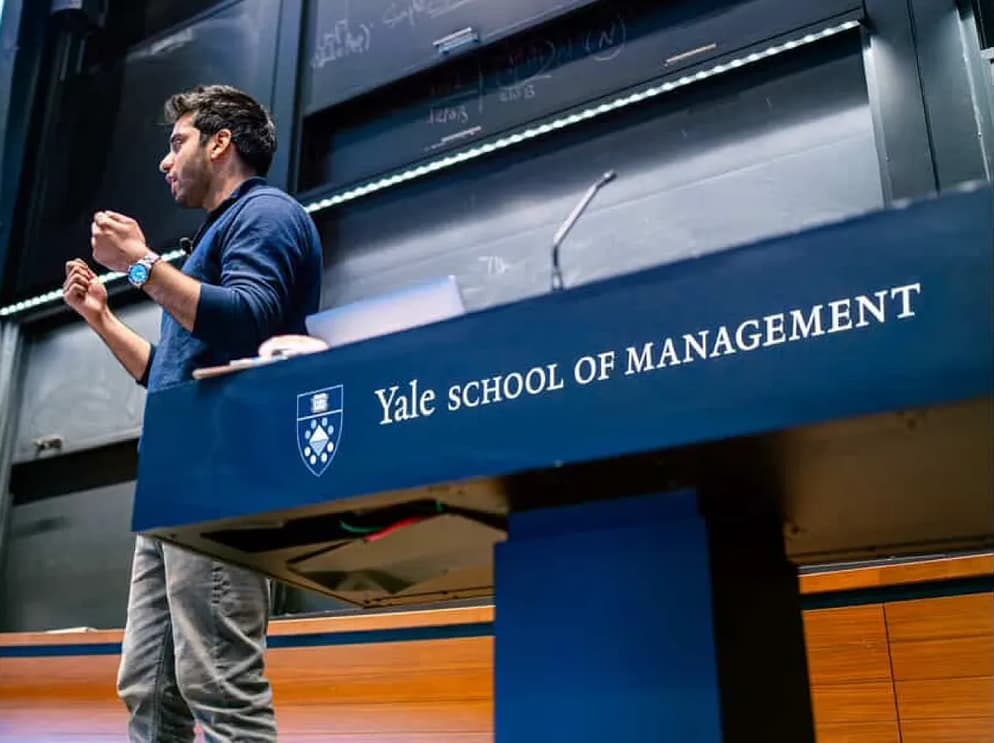
The frameworks were developed by Hassan Akram, who has reviewed more than 10,000 applications and related candidate materials across recruitment work and ECS advisory, and has delivered sessions for MBA student clubs at Harvard Business School, Yale School of Management and MIT Sloan. Kristin Irish, former Head of IB Campus Recruiting, UBS Investment Bank, New York; former Deputy Director of Career Development, Yale School of Management, described it: "The strongest career strategist I have encountered - anywhere in the world."
This article addresses the specific challenges international students face in UK elite firm applications, and how to prepare for each one.
The International Student Landscape in UK Elite Careers
HESA figures show UK universities enrol more than 600,000 international students. The elite law and finance firms in London hire a very small share of that number as graduates and trainees each year.
International students often face this competition with disadvantages that UK students do not. Each is manageable on its own. Together, they call for a deliberate plan.
"Apply widely and see what happens" is weak advice for any elite firm applicant. For international students it can be costly, because the visa timeline leaves little margin for a wasted cycle. Each application should be prepared to give the candidate the best chance of progressing.
Five Structural Challenges International Students Face
1. Visa Timelines Create Application Pressure
International students on Student Route (formerly Tier 4) visas have a limited post-study work window. The Graduate Route has provided two years of post-study work rights (three years for PhD holders), and the government has announced changes to its length. Check current gov.uk guidance. Either way, it is a hard deadline.
For law: a training contract typically starts two years after the offer. The candidate must secure the TC before graduating or within the Graduate Route window, then maintain visa eligibility through the SQE/LPC period until the TC start date.
For finance: summer analyst programmes convert to graduate offers. The conversion must happen within the visa window, and the graduate role start date must align with visa validity.
This means international students have less room for trial and error than domestic students. A UK student who misses the training contract cycle in their penultimate year can try again in their final year, and after graduating. An international student who misses both cycles may have to leave the UK when their visa expires.
The stakes are structurally higher. The preparation must be correspondingly more precise.
2. Credential Translation Is a Real Problem
A strong grade from a well-regarded overseas university is not always read as equivalent to a 2:1 from a Russell Group institution. Qualifications from international schooling systems (the IB, American AP, national curricula from dozens of countries) may be less familiar to some UK graduate recruitment teams.
Some firms publish international equivalency guidance; others do not. In ECS's view, an unfamiliar credential can create uncertainty at the sift, and candidates should not rely on a reader resolving it in their favour.
The response is to state the credential clearly and make the rest of the application strong enough to carry weight on its own. STAR-3® and BDC® Data Point Theory are designed to help with that.
3. Unfamiliar Interview Conventions
In ECS's experience, UK interviews tend to favour a particular register: direct but not blunt, confident but not arrogant, precise but not rigid, warm but not informal. That register is a convention, not a universal standard.
Some international candidates ECS works with report that it differs from the conventions they grew up with, whether in how they speak to senior people, how directly they disagree, or how formally they present. These are not deficiencies. They are differences of convention, and they can be prepared for.
PEAL-3® and PEAL-X® help candidates structure their answers and practise the register many UK interviews expect.
4. Limited UK Professional Networks
Domestic UK students build professional networks through family connections, school alumni, university societies with corporate sponsorship, and geographic proximity to the City. International students arrive with none of these advantages.
The networking disadvantage compounds because many elite firm processes include networking events, open days and campus programmes where candidates can make an impression. Missing these, because you did not know they existed, or did not understand their significance, reduces your visibility to the firm.
5. Parental Investment Creates Unique Pressure
For many international students, a UK university education represents a very large family investment. The expectation, often unspoken, sometimes explicit, is that it leads to an elite career.
This pressure is real, and it is often sharper for international students. The ECS Private Careers Advisory acknowledges it directly. Parent involvement is part of the process, the parent rule exists because the investment is a family decision, and the outcome matters to the family.
The Frameworks Applied to International Student Challenges
STAR-3® for International Experience Translation
International students frequently have strong experiences from contexts a UK reader may not immediately recognise. An internship at a leading firm in Mumbai, a leadership role at a university in Singapore, a business started in Lagos: these are powerful experiences, but they need to be explained.
STAR-3® is designed to help. The decision-making layer, quantified impact and transferable insight work regardless of where the experience happened, and help make its quality clear to a reader with no reference point for the original context.
Structural illustration: A STAR-3® answer about leading a community development project in South Asia. The decision-making layer explains the strategic choices made in resource allocation across multiple stakeholders. The quantified impact states that the project reached 500 beneficiaries with a 60% improvement in the target metric. The transferable insight connects the experience to managing complex stakeholder relationships in a cross-border legal or financial context.
This worked example shows you exactly how the framework operates at a structural level. Applying it to your own background, and identifying your strongest material, is the work Hassan Akram does personally with ECS clients. Apply for a diagnostic: https://www.accessecs.com/start
Commercial Fluency™ for Global Market Knowledge
Many international students have an advantage in commercial awareness that they do not use. They understand markets UK students have never studied, and have lived through economic conditions (emerging-market growth, currency volatility, regulatory change) that others only read about.
Commercial Fluency™ helps candidates turn that knowledge into commercial argument, connecting it to a firm's practice areas or a bank's divisions.
At a firm with an international practice such as White & Case, that perspective is directly relevant to the work.
PEAL-3® and PEAL-X® for Interview Preparation
For international students, the interview frameworks do two jobs: they structure the content of answers, and they give candidates a way to practise the register many UK interviews expect.
PEAL-3® is designed for first-round competency and motivation questions. PEAL-X® is designed for the more conversational partner and senior interviews.
The international dimension is built into ECS's work because many of its clients are international students. [IMAGE: Karam Kahlon, HSBC IB, Blackstone | /images/proof/karam-kahlon-blackstone-hsbc-exeter.jpeg]
The Evidence: International Students at UK Elite Firms
Warwick MORSE to BNP Paribas
An international student reading MORSE (Mathematics, Operational Research, Statistics and Economics) at the University of Warwick secured six spring weeks and a BNP Paribas Summer Investment Banking offer in a paid engagement with ECS. Warwick is a strong university for finance recruitment, but the candidate reported visa sponsorship friction at several stages.
Tier 1 US Law Firm, London Training Contract
An international student, in a full paid engagement, secured a 2026 training contract at a Tier 1 US law firm in London. The firm is not named. Visa sponsorship adds a practical layer to US firm applications, and preparation has to address both the application and the logistics.
Training Contract at an Elite International Firm's Asia Office
An international candidate targeting the Asia-Pacific legal market secured a training contract, starting January 2026, at an elite international firm, after a paid engagement. For some international students, the right route runs through an office close to their home market rather than through London.
What the Record Does and Does Not Show
These cases are drawn from ECS's documented record, which is 106 documented outcomes and selection progressions across 53 candidate journeys. They show international students progressing in selective processes after working with ECS. They do not show that ECS caused those outcomes, and outcomes vary.
ECS works with international students from a wide range of regions, and adjusts preparation to each candidate's credentials, experience and visa position.
Challenges Candidates Report, by Background
ECS is wary of generalising about any nationality or region. The points below are challenges some candidates ECS works with have reported, not rules.
Candidates from South Asia
Some report heavy competition from a large applicant pool from the same region, difficulty explaining percentage-based grading, and a formal interview register that can read as distant in a UK setting. STAR-3® helps explain experience (family business involvement, community leadership, competitive academic projects) clearly. PEAL-3® gives structure for interview practice. Commercial Fluency™ helps turn knowledge of emerging markets into argument.
Candidates from East and South-East Asia
Some report discomfort with the level of self-advocacy UK interviews tend to expect, such as describing achievements in specific, quantified terms. PEAL-3® and PEAL-X® help by grounding self-advocacy in evidence and results, so that it reads as fact rather than boast.
Candidates from the Middle East and Africa
Some bring strong experience (leadership in difficult conditions, entrepreneurship, community impact) from contexts a UK reader may not immediately recognise. STAR-3® helps make that experience clear, regardless of where it happened.

The Parent Dimension: Why ECS Engages the Whole Family
For international students, a UK education is a substantial family investment in tuition, living costs and travel.
The expectation, explicit in many families, implicit in others, is that it leads to an elite career. When it does not, the financial and emotional consequences extend beyond the individual student.
ECS acknowledges this reality directly. The parent rule, parent involvement is mandatory, exists because the decision to engage ECS is a family decision. The diagnostic call is structured to answer parents' questions about evidence and method. ECS does not promise outcomes.
The family of the anonymous White & Case client said: "Probably the best investment we've ever made." That is their own verdict on the outcome, not a projection ECS made.
For international student families, the useful question is whether the preparation they are considering has documented evidence behind it, for candidates in a similar position. ECS publishes its case studies so that families can judge that for themselves.
The Free Content Path for International Students
ECS publishes the structural frameworks, STAR-3®, PEAL-3®, PEAL-X®, VTMR®, BDC®, Commercial Fluency™, for free across LinkedIn (27,000+ followers), TikTok, YouTube, and the Skool community (2,800+ members).
ECS's record includes candidates who reached documented outcomes using free content alone. The what and why are public. How the frameworks apply to your specific circumstances is the focus of a private engagement.
If you are not ready to invest in the paid programme, start with the free content. Apply STAR-3® to your competency answers. Use BDC® Data Point Theory to restructure your commercial awareness answers. Follow the Commercial Fluency™ approach to build division-specific knowledge. Track the results.
The free content is not a teaser. It is a complete structural introduction to the frameworks. A private engagement adds the personal work, the application of the frameworks to your specific background, targeting your specific firms, at your specific application stages.
Visa Strategy as Part of the Application System
ECS does not provide immigration advice, that is the domain of qualified immigration solicitors. But visa awareness is built into the application strategy.
The key considerations:
1. Graduate Route timing: Eligibility depends on your university reporting that you have completed your degree, and the application must be made while your Student visa is still valid. Check current gov.uk guidance, as the rules and the length of the route are changing.
2. Skilled Worker sponsorship: Many elite law firms and banks sponsor Skilled Worker visas for training contracts and graduate roles, but not every programme at every firm offers sponsorship. The application strategy must target sponsored programmes.
3. TC start date alignment: For law, the gap between TC offer and TC start date (typically 2 years) must be bridged with valid visa status. SQE completion, LPC (if applicable), and any paralegal or other interim work must align with visa validity.
4. Conversion pressure: For finance spring weeks and summer internships, the conversion to a graduate offer must happen within the visa window. For some candidates, it can decide whether a UK career is possible at all.
Apply for Your Diagnostic Call
The diagnostic call for international students addresses the specific compound challenges: credential translation, communication calibration, visa-aligned application strategy, and firm-specific preparation. The call is structured to identify the gaps between your current position and what your target processes ask.
Apply at [accessecs.com/start](https://www.accessecs.com/start).
Where the Real Work Begins
This article sets out the frameworks. The next step is for Hassan Akram to review your own profile and materials against the stages you face, drawing on the more than 10,000 applications and related candidate materials he has reviewed, and to set out what needs to change. That is what the ECS diagnostic does.
## Conclusion
International students often face compounding challenges in UK elite firm applications. Visa pressure, unfamiliar credentials, different interview conventions, limited networks and family investment pressure add up to a problem that differs from the domestic non-target experience.
Much of ECS's work is with international students, and its documented record includes international candidates progressing to a BNP Paribas summer offer, a Tier 1 US law firm London training contract and a training contract at an elite international firm's Asia office.
Kristin Irish, former Head of IB Campus Recruiting, UBS Investment Bank, New York; former Deputy Director of Career Development, Yale School of Management: "The strongest career strategist I have encountered - anywhere in the world."
The challenges are real. The cases are documented. Outcomes vary.
If you are an international student targeting an elite UK law or finance firm, the diagnostic call identifies the gaps between your current position and what your target processes ask. It covers visa-aligned timeline planning, credential presentation, interview preparation and firm-specific preparation.
Apply at [accessecs.com/start](https://www.accessecs.com/start).
*Outcomes vary. Past results do not guarantee future results.*
Related case studies: Asia-Pacific Training Contract, Elite International Firm | Tier 1 US Law Firm London TC
Apply the Frameworks With Guidance
Book a diagnostic call with Hassan.
The diagnostic is a structured, no-obligation call to assess your specific position, identify the gaps in your current approach, and determine whether an ECS Private Careers Advisory engagement is the right investment.
Apply for a Diagnostic