A and O Shearman at the elite-entry level
A and O Shearman was formed by the May 2024 merger of Allen and Overy with Shearman and Sterling, creating one of the largest transatlantic law firms. The combined firm brings together Allen and Overy's Magic Circle strength in banking, finance and capital markets with Shearman and Sterling's US presence in M and A and financial regulation. For early-career candidates it offers several routes to qualification across two jurisdictions: a first-year scheme for first-year undergraduates and first-year non-law students, the Vacation Scheme across London and US offices, a Direct Training Contract route for candidates who missed the Vacation Scheme cycle, and a US Summer Associate programme for candidates targeting the firm's US practice. The firm's own graduate recruitment pages are the authoritative source for which of these are open in a given cycle.
Across recruitment work and ECS advisory, Hassan Akram has reviewed more than 10,000 applications and related candidate materials. This page keeps three things apart: what A and O Shearman publicly offers, ECS's interpretation of how to prepare, and ECS's documented candidate outcomes. One relevant outcome sits at a peer firm: Kalen Harrald, a Queen Mary University of London law student who never had a paid engagement with ECS, secured a place on Clifford Chance's SPARK 2026 programme after using STAR-3® and PEAL-X® from ECS's free LinkedIn and TikTok content. That outcome is at Clifford Chance, not A and O Shearman. ECS cites it because the same frameworks apply to the written stages of A and O Shearman's process.
The application pathways at A and O Shearman
A and O Shearman runs a multi-route entry pipeline that reflects the firm's transatlantic dual-jurisdiction structure. ECS advises candidates to understand the post-merger structure early, apply at the earliest stage available to them, and choose the jurisdiction that matches their long-term plans.
First-Year Scheme
A and O Shearman's first-year scheme is its early-insight route for first-year undergraduates and first-year non-law students: a multi-day experience in London with commercial awareness workshops, exposure to banking, corporate, finance and capital markets, partner and trainee panels, and an assessed element. ECS's reading is that strong performance on an early programme strengthens a later Vacation Scheme application, and the Vacation Scheme is the main route to a Training Contract. ECS prepares first-year candidates on commercial awareness, intellectual rigour, motivation for the combined firm and for the sector, teamwork in group exercises and composure under structured pressure.
Vacation Scheme (London and US offices)
The Vacation Scheme is the main route to a Training Contract at A and O Shearman. It runs across the London office and selected US offices and is open to penultimate-year law students and to final-year non-law students before they start the PGDL or SQE conversion. In recent cycles applications have opened in autumn (typically October) and closed in early January, with decisions issued through spring and summer, and the schemes themselves have run in winter, spring and summer cohorts. Across the Magic Circle, a Vacation Scheme place is the most common route to a Training Contract, which is why ECS treats the Vacation Scheme deadline as the most important date in a law candidate's calendar.
Direct Training Contract
A and O Shearman runs a Direct Training Contract route for candidates who did not secure a Vacation Scheme place in the standard cycle. The intake is smaller than the Vacation Scheme route, and assessment typically takes place at a single assessment centre. The Direct Training Contract route is the correct application for candidates who missed the Vacation Scheme window (final-year law students who did not apply in penultimate year, conversion candidates who did not apply during the final year of their first degree), or who were unsuccessful at the Vacation Scheme stage and want a second route in.
US Summer Associate programme
A and O Shearman's US Summer Associate programme is the main entry route into the firm's US practice. It operates from the Shearman and Sterling heritage offices in New York, Washington DC and elsewhere in the US, and suits candidates targeting US M and A, financial regulation and capital markets. It runs on the US legal recruitment calendar, with on-campus interviews in late summer and early autumn for JD candidates. The two firms presented the merger as creating an integrated transatlantic platform; ECS's reading is that cross-border work is therefore a fair and specific theme for a motivation answer, though any individual secondment or transfer depends on the firm's needs at the time.
Conversion pipes
ECS reads A and O Shearman's routes as a funnel: the first-year scheme leads towards the Vacation Scheme, the Vacation Scheme towards the London Training Contract, and the US Summer Associate programme feeds the US track separately. Candidates who miss the first-year scheme and then the Vacation Scheme are left with the smallest route, the Direct Training Contract, where they compete with candidates who have already been through other firms' Vacation Scheme processes.
Practice groups and the trainee rotation
A and O Shearman trainees rotate through four six-month seats across the two-year qualification period in the London office (the US Summer Associate stream follows the US firm-rotation structure separately). The major practice groups are banking, corporate and M and A, finance, capital markets, dispute resolution, antitrust, tax, and intellectual property. The banking and finance strength comes from the Allen and Overy heritage, long established in syndicated lending, structured finance and derivatives. The US M and A and financial regulation strength comes from the Shearman and Sterling heritage in US public M and A, securities and antitrust. London trainees typically combine seats in banking, finance and corporate with a contentious seat (dispute resolution, antitrust or a regulatory area) and an elective seat, which may be an international secondment; the firm's network spans Europe, Asia, the Middle East and the Americas.
The application process structure
The A and O Shearman process follows the usual Magic Circle shape. The stages below describe recent-cycle patterns; the firm's graduate recruitment pages are the authoritative source for the current cycle.
- Online application form. In recent cycles the form has covered Why Law, Why this type of firm, Why A and O Shearman, work-experience competency questions, academic record and a commercial scenario question. Generic firm motivation is a recurring weakness in the applications ECS reviews, and the Why A and O Shearman answer is where it shows most. ECS advises candidates to show they understand the combined platform: the transatlantic strategy, the banking and finance heritage from Allen and Overy, the US M and A heritage from Shearman and Sterling, and which side of the firm they are applying to and why. An answer written as if the firm were still pre-merger Allen and Overy, or pre-merger Shearman and Sterling, is in ECS's view a clear sign the research has not been done.
- Online assessments. The Watson-Glaser critical thinking test has featured in recent cycles, as it does at many City law firms, with situational judgement and, depending on cohort and jurisdiction, verbal or numerical reasoning. In ECS's experience the Watson-Glaser is the test candidates most often under-prepare for.
- Video interview. Where deployed, the video interview covers motivation and competency questions in a recorded asynchronous format. ECS prepares candidates to answer with clear structure as well as substance.
- Vacation Scheme week or US Summer Associate programme. Vacation Schemes have typically included a case study (commercial analysis of a transaction or matter), a partner interview (motivation, intellectual rigour, commercial reasoning), a group exercise and a written exercise. The US Summer Associate programme runs over a longer window with rotational exposure across the US offices. ECS treats the scheme itself as the most important stretch of the process in either jurisdiction.
- Training Contract offer interview. The final-stage interview, typically with a senior partner or graduate-recruitment partner, is the final step from Vacation Scheme to Training Contract offer on the London side, and from Summer Associate to qualifying offer on the US side.
How ECS's six frameworks apply to A and O Shearman preparation
ECS's six frameworks were developed by Hassan Akram from his recruitment and advisory practice. They are ECS's preparation tools, not A and O Shearman's assessment criteria; the firm does not score candidates against them. This is how ECS uses each one at the relevant stage.
STAR-3® at the written work-experience and partner-interview stages
ECS uses STAR-3® for the work-experience competency questions on the written application and for the partner interview on the Vacation Scheme. It is designed to help candidates develop several dimensions of an example rather than one undifferentiated 'Action' section: a situation framed for relevance, a task framed commercially, actions sequenced to show reasoning, and a result tied to a concrete outcome. In the applications ECS reviews, the generic STAR structure from careers-service handouts is common, and it tends to flatten strong experience into a list of duties.
PEAL-3® at the Why Law and Why Sector stages
PEAL-3® is ECS's motivation framework for the Why Law and Why this type of firm questions. Its structure (Point, Evidence, Analysis, Link) takes a motivation answer through a sequence that shows reasoning rather than enthusiasm. ECS's view is that a strong Why Law answer shows the candidate has thought about law against the alternative careers open to them, and PEAL-3® is designed to help them show it.
PEAL-X® at the Why A and O Shearman stage
PEAL-X® is ECS's firm-motivation framework, used for the Why A and O Shearman question. ECS anchors it on public, verifiable features of the firm: the May 2024 merger and the stated case for a combined transatlantic firm; the banking and finance heritage of Allen and Overy in syndicated lending, structured finance and derivatives; the Shearman and Sterling heritage in US public M and A, securities, antitrust and financial regulation; the international network; and named practice groups and recent deals that show the candidate has engaged with the combined firm rather than either legacy firm in isolation. ECS regards this as the most important framework at the written stage for this firm, because the merger makes a generic or out-of-date answer easy to spot.
VTMR™ at the CV stage
VTMR™ is ECS's CV framework, used at the written application stage. It rebuilds each line around Verb, Task, Metric and Result, so that each entry shows what the candidate did and what changed as a result, rather than listing duties in chronological prose.
BDC™ at the Assessment Centre group exercise
ECS uses BDC™ for the group exercise at the Vacation Scheme assessment centre. The framework (Began, Developed, Confirmed) is designed to help candidates make contributions that move the group forward: opening a line of analysis, building on others' points and consolidating decisions. ECS prepares candidates to show commercial reasoning and influence without dominating.
Commercial Fluency™ at the commercial scenario and partner-interview stages
ECS uses Commercial Fluency™ for the commercial scenario question on the written application and for the commercial reasoning in the partner interview and case study. At A and O Shearman, ECS's reading is that commercial questions tend towards transactional reasoning (debt finance structures, capital markets execution, cross-border M and A mechanics) given the firm's practice mix, rather than generic business strategy. In the applications ECS reviews, a common weakness is the candidate who is academically strong but commercially flat, and Commercial Fluency™ is designed to address it.
Documented outcomes at A and O Shearman
Anonymised outcomes on file
ECS holds documented outcomes at Allen and Overy (pre-merger) across the Vacation Scheme and Training Contract streams, achieved under the legacy Allen and Overy process before the May 2024 merger. ECS used the same six frameworks with those candidates as it uses now, with PEAL-X® updated to reflect the combined firm. These outcomes are anonymised: named release requires the client's explicit written consent.
To be plain: ECS has no named, public A and O Shearman outcome at present. The closest named example is Kalen Harrald's place on Clifford Chance SPARK 2026, achieved using ECS's free content, and the historical Allen and Overy outcomes on file are anonymised. ECS uses the same frameworks for A and O Shearman's first-year scheme, Vacation Scheme and US Summer Associate stages, but a result at one firm does not predict a result at another.
Anonymity statement
All client outcomes at Elite Careers Strategy are anonymised by default. Named release requires explicit client consent in writing. Some clients consent to named release as part of their proof contribution to ECS (Kalen Harrald is one Magic Circle example); others remain anonymous. Evidence is on file for every documented outcome regardless of named or anonymous status.
About the author
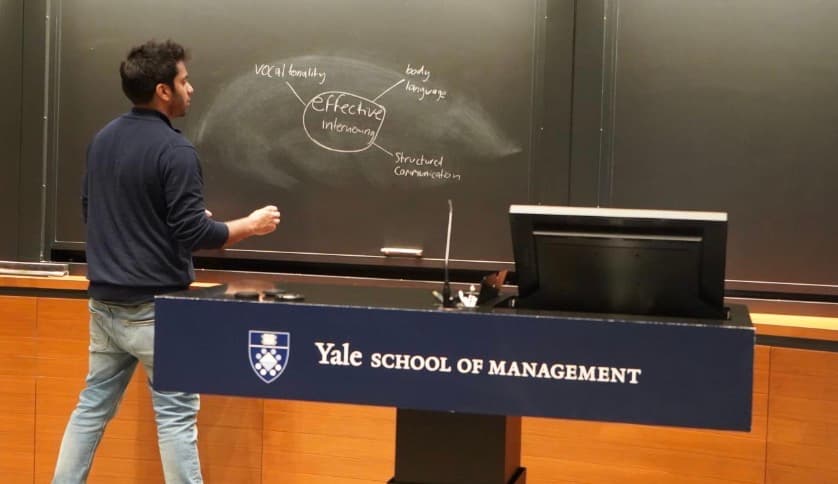
Hassan Akram is the Founder and Principal Adviser at Elite Careers Strategy. Across recruitment work and ECS advisory, Hassan Akram has reviewed more than 10,000 applications and related candidate materials, and he developed ECS's six frameworks from that practice. He has spoken at invited sessions for MBA student communities at Harvard Business School, Yale School of Management and MIT Sloan, and has written for The Times of India.