
Who Gets In? factual selection dossier. For official-public-source facts about how Clifford Chance currently recruits, use the governed Clifford Chance selection dossier. It covers current early-careers selection evidence across London, Hong Kong, Singapore and the Middle East, with evidence states preserved. This firm page remains ECS practitioner/advisory interpretation; the WGI dossier is the factual authority layer.
Clifford Chance at the elite-entry level
Clifford Chance LLP is one of the Magic Circle firms, alongside A and O Shearman (formerly Allen and Overy), Freshfields, Linklaters and Slaughter and May. Its flagship early-careers route is SPARK, aimed at first-year students, second-years on four-year law degrees and penultimate-year non-law students. The firm does not operate a traditional vacation scheme: successful SPARK participants are invited to interview for a training contract at the end of the programme. SPARK is highly competitive; firm-published figures reported by Legal Cheek in October 2022 showed one in 41 applicants accepted in that cycle. Across recruitment work and ECS advisory, Hassan Akram has reviewed more than 10,000 applications and related candidate materials. This page keeps three things apart: what Clifford Chance publicly offers, ECS's interpretation of how to prepare, and ECS's documented candidate outcomes. The best-known of those is Kalen Harrald's place on SPARK 2026, secured after using STAR-3® and PEAL-X® from ECS's free LinkedIn and TikTok content, without a paid engagement.
The application pathways at Clifford Chance
Clifford Chance runs three formal entry routes, and they connect. ECS advises candidates to understand how early, and to apply at the earliest stage open to them rather than waiting for the route they assume is "the" route. The firm's graduate recruitment pages are the authoritative source for dates and eligibility in a given cycle.
SPARK programme
SPARK is Clifford Chance's main early-careers programme, aimed at first-year students, second-years on four-year law degrees and penultimate-year non-law students: a multi-day experience in London with commercial awareness workshops, exposure to corporate, finance and capital markets work, partner and trainee panels, and an assessed element. Successful participants are invited to interview for a training contract at the end of the programme, so SPARK is not only an insight programme but the start of the training contract process itself. ECS prepares SPARK candidates on commercial awareness, intellectual rigour, motivation for the firm and the sector, teamwork in group exercises and composure under structured pressure.
Other routes to a training contract
Clifford Chance does not run a traditional vacation scheme. Candidates who are past the point of applying for SPARK should check the firm's graduate recruitment pages for the current route to a training contract, as the structure has changed in recent cycles. ECS checks the live position with each candidate before planning an application.
Conversion pipes
Because SPARK leads directly to a training contract interview, ECS regards a SPARK place as one of the most valuable outcomes available to an eligible candidate, and advises eligible candidates not to defer the application. Missing the SPARK window narrows the options at this firm considerably.
Practice groups and the four-seat rotation
Clifford Chance trainees rotate through four six-month seats across the two-year qualification period. The major practice groups are corporate and M and A, finance, capital markets, litigation and dispute resolution, real estate, and tax. Trainees typically combine seats in corporate, finance and capital markets with a contentious seat (litigation, dispute resolution or a regulatory area) and an elective seat, which may be an international secondment; the firm's network spans Europe, Asia and the Americas.
The application process structure
The Clifford Chance process follows the usual Magic Circle shape. The stages below describe recent-cycle patterns; the firm's graduate recruitment pages are the authoritative source for the current cycle.
- Online application form. In recent cycles the form has covered Why Law, Why this type of firm, Why Clifford Chance, work-experience competency questions, academic record and a commercial scenario question. Generic firm motivation is a recurring weakness in the applications ECS reviews, and Why Clifford Chance is where it shows most. ECS also treats the work-experience answers as the main written opportunity to show structured thinking.
- Online assessments. The Watson-Glaser critical thinking test has featured in recent cycles, as at many City law firms, with situational judgement and, in some years, verbal or numerical reasoning. In ECS's experience the Watson-Glaser is the test candidates most often under-prepare for.
- Video interview. Where deployed, the video interview covers motivation and competency questions in a recorded asynchronous format. ECS prepares candidates to answer with clear structure as well as substance.
- Assessment centre and SPARK. Assessment has typically included a case study or commercial exercise, interviews on motivation, intellectual rigour and commercial reasoning, a group exercise and a written exercise. ECS treats the programme itself as the most important stretch of the process.
- Training contract interview. Successful SPARK participants are invited to interview for a training contract at the end of the programme, typically with partners.
How ECS's six frameworks apply to Clifford Chance preparation
ECS's six frameworks were developed by Hassan Akram from his recruitment and advisory practice. They are ECS's preparation tools, not Clifford Chance's assessment criteria; the firm does not score candidates against them. This is how ECS uses each one at the relevant stage.
STAR-3® at the written work-experience and partner-interview stages
ECS uses STAR-3® for the work-experience competency questions on the written application and for interviews during and after SPARK. It is designed to help candidates develop several dimensions of an example rather than one undifferentiated 'Action' section: a situation framed for relevance, a task framed commercially, actions sequenced to show reasoning, and a result tied to a concrete outcome. Kalen Harrald said he used it for his SPARK work-experience answers. In the applications ECS reviews, the generic STAR structure from careers-service handouts is common, and it tends to flatten strong experience into a list of duties.
PEAL-3® at the Why Law and Why Sector stages
PEAL-3® is ECS's motivation framework for the Why Law and Why this type of firm questions. Its structure (Point, Evidence, Analysis, Link) takes a motivation answer through a sequence that shows reasoning rather than enthusiasm. ECS's view is that a strong Why Law answer shows the candidate has thought about law against the alternative careers open to them, and PEAL-3® is designed to help them show it.
PEAL-X® at the Why Clifford Chance stage
PEAL-X® is ECS's firm-motivation framework, used for the Why Clifford Chance question. ECS anchors it on public, verifiable features of the firm: named practice groups (including its derivatives, structured finance and capital markets work), named partners and recent deals from the firm's own announcements, the candidate's own engagement with the firm, and the international network. Kalen Harrald said he used PEAL-X® for his Why Clifford Chance answer at SPARK. The aim is an answer built on specific evidence of the firm rather than its website headlines.
VTMR™ at the CV stage
VTMR™ is ECS's CV framework, used at the written application stage. It rebuilds each line around Verb, Task, Metric and Result, so that each entry shows what the candidate did and what changed as a result, rather than listing duties in chronological prose.
BDC™ at the Assessment Centre group exercise
ECS uses BDC™ for the group exercise. The framework (Began, Developed, Confirmed) is designed to help candidates make contributions that move the group forward: opening a line of analysis, building on others' points and consolidating decisions. ECS prepares candidates to show commercial reasoning and influence without dominating.
Commercial Fluency™ at the commercial scenario and partner-interview stages
Commercial Fluency™ is deployed against the commercial scenario question on the written application and the commercial reasoning components of the partner interview and case study. In the applications ECS reviews, a common weakness is the candidate who is academically strong but commercially flat, and Commercial Fluency™ is designed to address it.
Documented outcomes at Clifford Chance
Kalen Harrald (named and approved): Clifford Chance SPARK 2026
Kalen Harrald, a Queen Mary University of London law student, confirmed his place on Clifford Chance's SPARK 2026 programme in a LinkedIn post on 16 April 2026. He prepared using STAR-3® and PEAL-X® from ECS's free LinkedIn and TikTok content. He did not pay ECS and had no sessions or calls with ECS for this outcome. He progressed through each stage of the SPARK process: written application, assessment centre and final selection.
The verbatim quote approved for all platforms is:
"Thank you for all of your free content on LinkedIn and TikTok - it's meant I have gotten an AC for Clifford Chance's SPARK program. It has been so helpful using your frameworks - STAR-3 for work experiences, and PEAL-X for the Why CC question. It's been an absolute lifesaver."
Kalen's is a first-year Magic Circle outcome achieved by a candidate who never had a paid engagement with ECS. He credited the frameworks with helping his written answers; the application, the assessment centre and the result were his.
Additional Clifford Chance outcomes on file
ECS holds further documented Clifford Chance outcomes, including a Training Contract. These are anonymised at the candidates' choice and not detailed publicly; evidence is held on file.
About the author
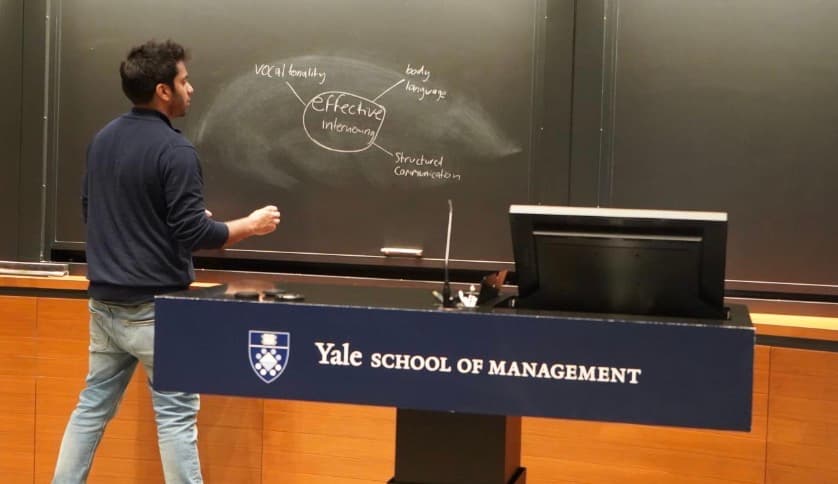
Hassan Akram is the Founder and Principal Adviser at Elite Careers Strategy. Across recruitment work and ECS advisory, Hassan Akram has reviewed more than 10,000 applications and related candidate materials, and he developed ECS's six frameworks from that practice. He has spoken at invited sessions for MBA student communities at Harvard Business School, Yale School of Management and MIT Sloan, and has written for The Times of India.