Who Gets In? factual selection dossier. For official-public-source facts about how Freshfields currently recruits, use the governed Freshfields selection dossier. It covers current early-careers selection evidence across London, Hong Kong, Singapore and Dubai, including the direct UK Trainee Associate route. This firm page remains ECS practitioner/advisory interpretation; the WGI dossier is the factual authority layer.
Freshfields Bruckhaus Deringer LLP is a Magic Circle firm. It is distinguished from its Magic Circle peers by an unusually deep network in German-speaking Europe, rooted in its 2000 merger with the German firm Bruckhaus Westrick Heller Löber, and a US practice that has expanded significantly with its New York build-out. Its newly qualified solicitor pay band is GBP 150,000, the reference figure ECS uses in conversations about Freshfields trainee economics. The Training Contract is the route into that career, and competition for it is intense. This page keeps three things apart: how Freshfields recruits, as far as its process is publicly described or commonly reported; ECS's interpretation of how to prepare; and ECS's documented candidate outcomes, including an anonymised Freshfields Training Contract. Across recruitment work and ECS advisory, Hassan Akram has reviewed more than 10,000 applications and related candidate materials.
Why Freshfields sits where it sits in elite entry
Freshfields, alongside Clifford Chance, Linklaters, Allen and Overy (now A and O Shearman), and Slaughter and May, defines the Magic Circle. Freshfields is strongly associated with high-value cross-border M and A, work for sovereign and state-owned clients, complex regulatory and antitrust mandates, and major German-headquartered corporate clients. ECS's view is that the German-speaking network is a real point of difference and belongs in the application: a candidate who can explain how Freshfields differs from Clifford Chance or Linklaters at the level of its deals, rather than reciting culture lines from the website, is making a much stronger case.
In ECS's experience, the preparation a strong Freshfields application needs also serves a candidate well at Slaughter and May and at US firms in London, so the work carries across a candidate's wider list of applications.
The application pathways at Freshfields
Freshfields runs a clear, publicly documented set of routes to a Training Contract, each with its own preparation cycle. The firm's graduate recruitment pages are the authoritative source for dates and eligibility.
First-year schemes
Freshfields offers Open Days and shorter insight programmes for first-year students (and final-year non-law candidates in the equivalent year). ECS's reading is that they are more than awareness events: they give a candidate specific material for a later application and a first contact with the firm. For a first-year candidate, an Open Day place is the cheapest insurance policy available against being a stranger to the firm by the time the penultimate-year application window opens.
Vacation Scheme
The penultimate-year (and final-year non-law) Vacation Scheme is the primary TC entry pipe at Freshfields. For a candidate who can apply on the standard timeline, it is the most likely route to a Training Contract. ECS treats the scheme as an extended assessment centre: around two weeks inside a practice group, with several partner-led assessments (covered below).
Direct Training Contract
Freshfields also runs a Direct TC route for candidates who did not secure a VS place in the prior cycle. This is the pathway most relevant to candidates who came to the application late, who applied to other firms in the VS round and missed Freshfields, or who are converting from a non-law degree on a compressed timeline. The Direct TC route is more compressed and the assessment centre is the primary evaluative event. This is the route taken in the documented ECS Freshfields compressed-sprint case study referenced below.
Conversion pipes
Vacation Scheme to Training Contract is the usual route. In ECS's experience the weaknesses that hurt candidates on the scheme are consistent: an imprecise Why Freshfields answer, thin commercial understanding, and difficulty holding a structured view in a partner interview. A strong written application does not protect against them.
Practice groups
Freshfields trains across corporate and M and A, finance, capital markets, global transactions, dispute resolution, antitrust and competition, real estate, tax, employment and pensions, and intellectual property. Practice group preference has been asked at the application stage. ECS advises against a long list of preferred groups; a stronger answer connects a small number of named groups to the candidate's evidenced interests and to specific Freshfields deals.
The application process structure
The stages below describe recent-cycle patterns rather than a fixed specification.
Online application form. In recent cycles the form has asked for Why Law, Why this type of firm, Why Freshfields specifically, a work-experience competency section and a commercial scenario question. ECS treats these written sections as the foundation of the application and prepares each one separately with a dedicated framework.
Online assessments. Recent cycles have used a situational judgement test, the Watson-Glaser critical thinking test and, in some years, numerical and verbal assessments. ECS's view is that the Watson-Glaser cannot be improvised on the day; it needs structured preparation.
Video interview. A recorded video interview has typically come before the assessment centre, with timed responses to motivation and competency prompts. In ECS's experience the risk here is the candidate whose written application is strong but who cannot deliver the same content on camera under time pressure.
Vacation scheme assessment. For scheme candidates, the scheme itself is the assessment: typically several partner interviews, a written legal or commercial exercise, a case study and a group exercise. ECS advises candidates to treat the social events as part of the scheme too.
TC offer interview. For Direct TC candidates, and for VS candidates who progress, the final interview is typically led by partners. ECS prepares candidates for commercial reasoning, a coherent account of their motivation, and holding and defending a view under partner questioning.
How ECS's six frameworks apply to Freshfields preparation
ECS's six frameworks were developed by Hassan Akram from his recruitment and advisory practice. They are ECS's preparation tools, not Freshfields' assessment criteria; the firm does not score candidates against them. ECS uses each one for a particular part of the process.
STAR-3® is deployed for the work-experience competency section of the written application and for competency questions at partner interview. STAR-3® is designed to help candidates develop several dimensions of an example rather than one undifferentiated 'Action' section: a situation pitched to the audience, a task the candidate owned, actions broken into named decisions, and a result that is quantified and reflected on. ECS uses the same structure for the written answer and for the live version of the question, so that the two are consistent.
PEAL-3® is deployed for the Why Law and Why Magic Circle sections of the written application. PEAL-3® is a Point-Evidence-Analysis-Link argument structure trained for motivational writing. It forces a candidate's stated motivation to be grounded in evidence (specific experiences, named individuals, named transactions or cases) and then analysed back to the question. Generic Why Law answers about intellectual curiosity and helping people are a recurring weakness in the applications ECS reviews; PEAL-3® is designed to replace them with evidence.
PEAL-X® is deployed for the Why Freshfields section specifically. PEAL-X® extends PEAL-3® with a firm-specific evidence layer: recent Freshfields deal flow that the candidate can speak to, named take-privates and M and A transactions the firm has led, named partners whose practice areas the candidate has researched, and distinctive features of the Freshfields network such as the German-speaking practice and the US build-out. ECS's standard is a Why Freshfields answer that names a Freshfields partner credibly and connects that partner's practice to the candidate's stated interest.
VTMR™ is used for the CV. It is ECS's CV framework: Verb, Task, Metric, Result. It produces a one-page CV in which each line shows what the candidate did and what changed as a result, rather than a careers-service template of duties.
BDC™ is used for the group exercise. It is ECS's group-exercise framework: Began, Developed, Confirmed. It helps a candidate treat a group exercise as a working meeting rather than a debate: when to open a line of analysis, when to build on others, when to summarise, and how to be visibly useful to the group's progress without crowding others out.
Commercial Fluency™ is deployed for the commercial scenario question on the written application, the commercial elements of the video interview, and, most importantly, the partner-interview commercial reasoning at the TC offer stage. ECS's view is that commercial reasoning carries particular weight in partner interviews at firms like Freshfields. ECS prepares candidates to read a deal, name the parties, identify the structural risks, frame the regulatory exposure and offer a reasoned view on what they would advise.
Documented outcomes at Freshfields
Freshfields TC compressed-sprint case (anonymised)
The candidate came to ECS with a Freshfields assessment centre invitation already in hand and a short window to prepare. The route was the Direct Training Contract rather than Vacation Scheme conversion. The paid engagement ran as a compressed sprint of more than ten sessions covering motivation, competency examples, preparation for the legal and commercial exercise, presence in partner interviews, and commercial development focused on Freshfields' work.
ECS used all six frameworks with this candidate: PEAL-3® for Why Law, PEAL-X® for Why Freshfields, STAR-3® for competency examples in writing and at partner interview, BDC™ for the group exercise, Commercial Fluency™ for the commercial scenario and partner-interview reasoning, and VTMR™ for the CV. It is the engagement in which ECS used every framework end to end for one candidate.
The documented outcome was a Freshfields Training Contract, signed in April 2026. The salary figures ECS cites for this route are GBP 56,000 for a first-year trainee, GBP 61,000 for a second-year trainee and GBP 150,000 on qualification.
The candidate is fully anonymised at the family's request and is referred to in gender-neutral terms, without identifying details.
Additional Freshfields outcomes
ECS holds further documented Freshfields outcomes, including a Vacation Scheme place. These are anonymised at the candidates' choice; evidence is held on file.
How a Freshfields engagement is structured at ECS
A Freshfields engagement at ECS opens with a diagnostic, in which ECS assesses the candidate's current application, evidence base, motivation and commercial development against what ECS expects each stage to demand. The diagnostic produces a plan tied to the candidate's actual application window. ECS then works through the six frameworks in the order the candidate's stage requires: VTMR™ and STAR-3® early to settle the written foundation, PEAL-3® and PEAL-X® for the motivation sections, Commercial Fluency™ throughout because it takes longest to develop, and BDC™ close to the assessment centre date.
Where parents are closely involved, ECS runs a parent communication cadence alongside the candidate's work.
About the author
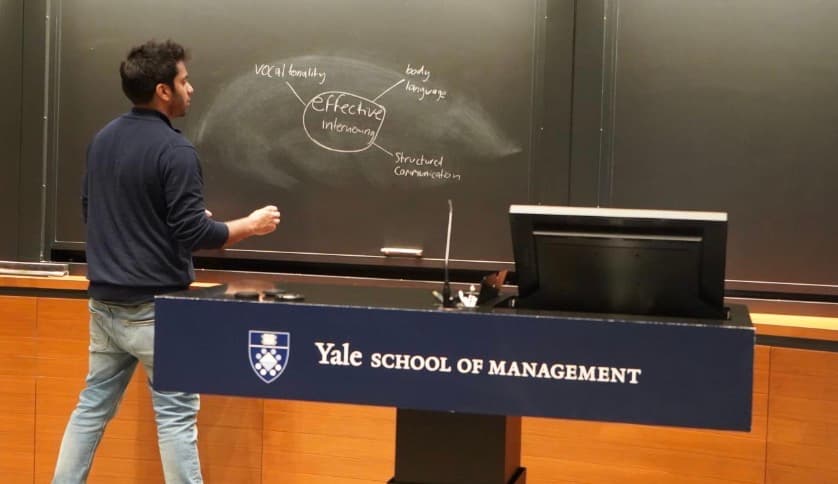
Hassan Akram is the Founder and Principal Adviser at Elite Careers Strategy and the author of ECS's six frameworks (STAR-3®, PEAL-3®, PEAL-X®, VTMR™, BDC™, Commercial Fluency™). Across recruitment work and ECS advisory, Hassan Akram has reviewed more than 10,000 applications and related candidate materials. He has spoken at invited sessions for MBA student communities at Harvard Business School, Yale School of Management and MIT Sloan, has written for The Times of India, and is a UCL graduate.