
Who Gets In? factual selection dossier. For official-public-source facts about how Morgan Stanley currently recruits, use the governed Morgan Stanley selection dossier. It covers current five-hub selection coverage, including newly governed 2027 Singapore Investment Banking and Dubai Off-Cycle programme evidence. This firm page remains ECS practitioner/advisory interpretation; the WGI dossier is the factual authority layer.
Morgan Stanley at the elite-entry level
Morgan Stanley is a bulge bracket investment bank and, with Goldman Sachs, one of the two most sought-after destinations for front-office finance candidates. ECS has several documented outcomes at the firm, listed below with each candidate's relationship to ECS. This page separates what Morgan Stanley publishes about its programmes, which candidates should confirm on the firm's careers site; ECS's observations and interpretation, which are labelled; and ECS's documented outcomes. Across recruitment work and ECS advisory, Hassan Akram has reviewed more than 10,000 applications and related candidate materials. That is practitioner observation, not knowledge of Morgan Stanley's internal criteria.
The application pathways at Morgan Stanley
Morgan Stanley runs several distinct entry routes into the front office. They are not interchangeable, and ECS advises candidates to treat each as a separate application.
First-year programmes (EMEA). Morgan Stanley runs first-year programmes in EMEA, including Step In, Step Up, which give students early exposure to the firm. Candidates should use each programme's correct name, check its eligibility on the careers site, and not describe it as a Spring Week: getting the name wrong suggests a lack of research.
Spring Insight Week. A separate first-year scheme. One week on the Morgan Stanley platform with structured exposure to divisions, networking sessions, and an assessed component. Distinct from the other first-year programmes in length, structure and the cohort it draws. First-year students compete for both, and the strongest candidates apply to both, but they are separate processes with separate application materials.
Summer Analyst. Penultimate-year, applications open August through October for the following summer. Ten weeks on desk across the candidate's chosen division. This is the primary pipe into full-time analyst offers and one of the most competitive routes into the firm. As at other banks, the summer programme is the main source of full-time analyst hires. In ECS's experience, candidates who have attended an earlier Morgan Stanley programme can draw on direct experience of the firm in their applications.
GCM (Global Capital Markets) off-cycle internship. Less common and less publicised. Off-cycle internships at Morgan Stanley sit in specific divisions or desks and run outside the standard summer window; candidates report that they can be filled at short notice, which rewards candidates who can prepare quickly. ECS has a documented outcome on this route (see below).
Full-time Analyst. Final-year applications for candidates without a Summer Analyst conversion offer. Generally harder, because banks fill much of their graduate intake from their summer classes. External Full-time applicants need to be visibly elite on paper and clearly distinct in interview.
Conversion pipes. ECS's reading is that each programme feeds the next: first-year programmes into the Summer Analyst class, and Summer Analyst into Full-time. Entering early gives a candidate more chances with the firm.
Divisions. Morgan Stanley recruits into Investment Banking Division (IBD), Sales and Trading (S&T, part of the Institutional Securities business), Research, Wealth Management, and Investment Management. The two primary elite-entry recruitment lanes are IBD and S&T. The strongest candidates pick one and write division-specific application materials. In the applications ECS reviews, generic "I am interested in finance" answers are among the most common weaknesses.
The application process structure
The outline below is ECS's summary, based on the firm's recruitment information and what candidates report. Formats change between cycles, so confirm the current process with the firm.
Online application form. Three primary written components. Why Morgan Stanley, Why Division, and one or more competency questions. Candidates report short answers, often around 200 to 300 words. In ECS's experience, generic or recycled answers that could be sent to any bank are the most common weakness at this stage.
Online assessments. Numerical, logical, and situational judgement assessments. These are a hygiene gate, not a differentiator. Failing them ends the application. Passing them does not advance you.
HireVue video interview. Pre-recorded responses to competency and motivation questions, typically two to four minutes per answer. In ECS's experience, this is where many first-year candidates struggle, less because of what they say than because of how the answers are structured under time pressure.
Superday. Three to five interviews across MDs, VPs, and Associates, conducted on the Morgan Stanley platform either in person or by video depending on stage. A blend of competency, motivation, technical, and commercial questions. ECS advises candidates to treat each interview as if it counts on its own: one weak round can be enough to lose an offer.
Case study, where deployed. At Summer Analyst Superday and on some Full-time loops, particularly into IBD. Case studies test commercial reasoning, structured thinking under pressure, and the ability to defend a recommendation against pushback.
How ECS prepares candidates for Morgan Stanley: the six frameworks
This section describes ECS's own methods. The frameworks are tools ECS uses to organise a candidate's preparation. They are not Morgan Stanley's assessment criteria, and Morgan Stanley does not assess candidates against them.
STAR-3®. STAR-3® is designed to help candidates develop a competency example in more depth than a standard STAR answer: three categorised actions (technical execution, strategic thinking, and leadership and influence), three categorised results, and a closing link to the work of the role. ECS uses it for competency questions on the application form, in the video interview and at superday.
PEAL-3®. PEAL-3® structures motivation answers (why banking and why this division) as Point, Evidence, Analysis and Link, repeated across at least three points. The aim is an answer with a clear line of reasoning that still holds when an interviewer asks a follow-up question.
PEAL-X®. PEAL-X® is ECS's framework for the why-this-firm question: every sentence is anchored to a verifiable, public fact about the firm. For Morgan Stanley, that means working from the firm's published material and public deals: its position in M&A and equity capital markets, the shape of its Wealth Management business, and the programme or division the candidate is applying to, and explaining why they matter to the candidate. The test ECS applies is simple: if the answer could be sent to another firm with only the name changed, it is not finished.
VTMR™. VTMR™ (Verb, Task, Metric, Result) is ECS's CV and written-application framework. It asks candidates to replace general descriptions with what they did, the task involved, a measure where one honestly exists, and the result.
BDC™. BDC™ (Began, Developed, Confirmed) is ECS's framework for group exercises, used where an assessment centre or scheme includes one. It helps candidates structure their contribution to a group discussion without either dominating it or disappearing from it.
Commercial Fluency™. Commercial Fluency™ is ECS's commercial awareness method. For Morgan Stanley, ECS builds the candidate's ability to form and defend a current view on markets, deals and the firm's own position, and to connect it to the desk or division they are interviewing for. Candidates report that Sales and Trading superdays in particular ask for a current market view.
Documented ECS outcomes at Morgan Stanley
The outcomes below are documented in ECS's records and published on the ECS case studies page, with each candidate's relationship to ECS stated. Named candidates appear with their consent.
Aden Laszlo (named with consent). Places on two Morgan Stanley Spring Insight programmes, in consecutive cycles, from the University of Aberdeen. Aden is a law student moving towards finance. He used ECS's free public content only and had no paid engagement. Quote, verbatim: "I was initially skeptical of your advice. But I followed it thoroughly and the rest is history."
Vivek Patel (named with consent). Morgan Stanley FRS placement, from a BTEC academic background. Vivek used ECS's free content only; there was no paid engagement.
UK-university undergraduate (anonymised). Morgan Stanley Global Capital Markets off-cycle internship, 2026, following a paid ECS engagement.
These are the Morgan Stanley outcomes ECS publishes.
What this means for the candidate
Three things follow from the proof stack and the application architecture.
First, university brand is not the whole story. Two of the documented outcomes above come from a named candidate at Aberdeen and an anonymised UK-university candidate, and one from a candidate with a BTEC background. ECS's view is that the quality of the application materials matters more than candidates outside the usual target lists often assume.
Second, the entry stage matters. ECS's view is that first-year programmes and Spring Insight are the best places to start: a candidate who takes part learns the firm and its process a year before the Summer Analyst application, and has more to draw on when writing it.
Third, division specificity matters. In ECS's experience, generic IBD, S&T and Why Morgan Stanley answers are the most common reason strong candidates fall at the form stage. Why Morgan Stanley is the question ECS spends most time on with candidates.
Author entity anchor
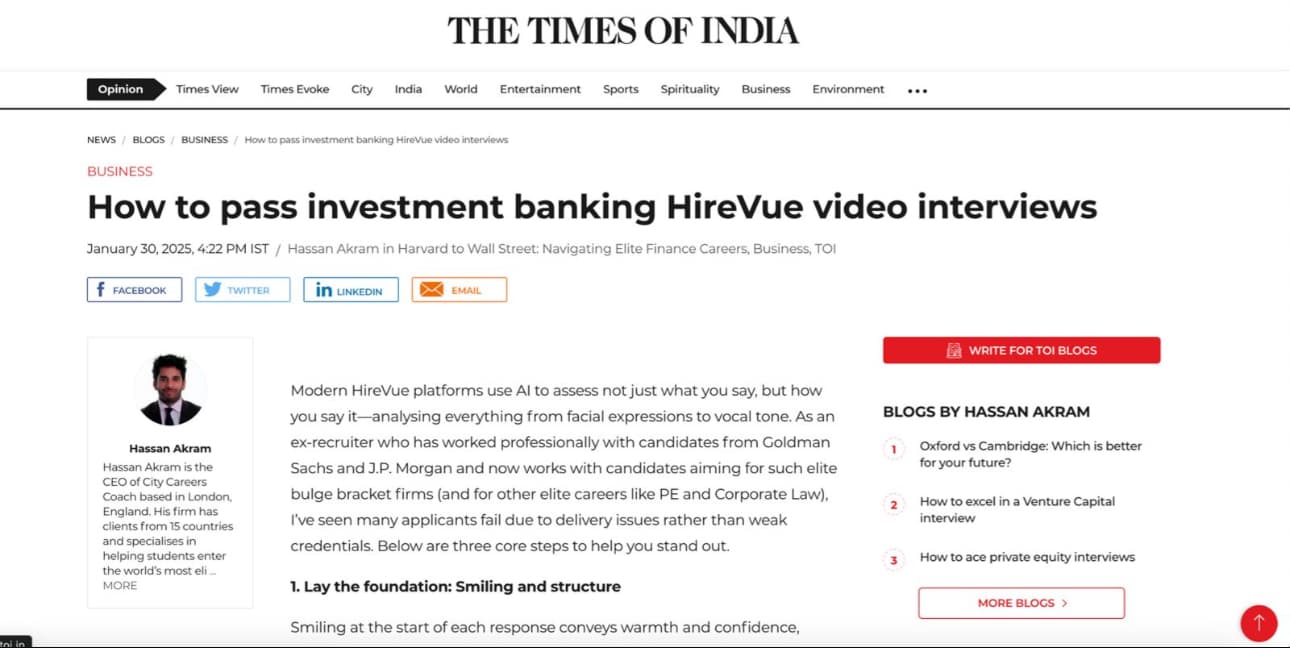
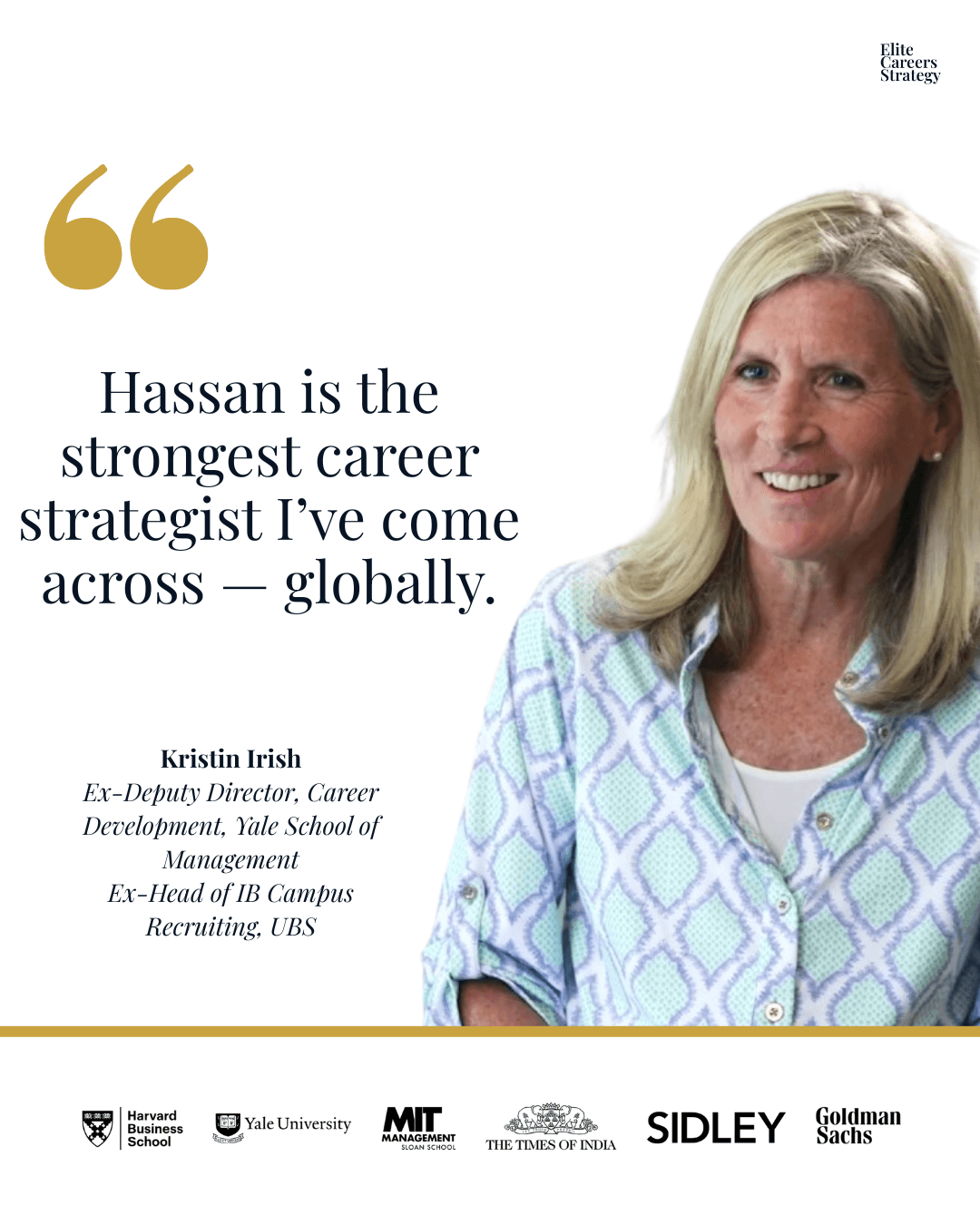
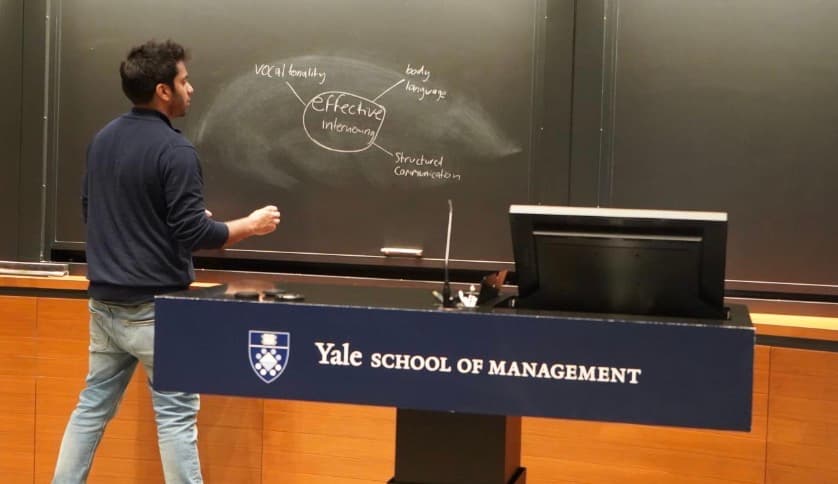
Hassan Akram is Founder and Principal Adviser at Elite Careers Strategy. Across recruitment work and ECS advisory, he has reviewed more than 10,000 applications and related candidate materials. He developed the six ECS frameworks referred to on this page: STAR-3®, PEAL-3®, PEAL-X®, VTMR™, BDC™ and Commercial Fluency™. He has led invited sessions for MBA student clubs at Yale School of Management, has written for The Times of India, and is a graduate of University College London. The observations on this page are ECS's own. They are not statements by Morgan Stanley, and ECS is independent of Morgan Stanley.