
Pay & Progression at Barclays: Candidates Outside Common Recruiting Universities
Employers often do not publish a complete university list or weighting rule. ECS therefore treats target and non-target as informal market labels, not employer classifications.

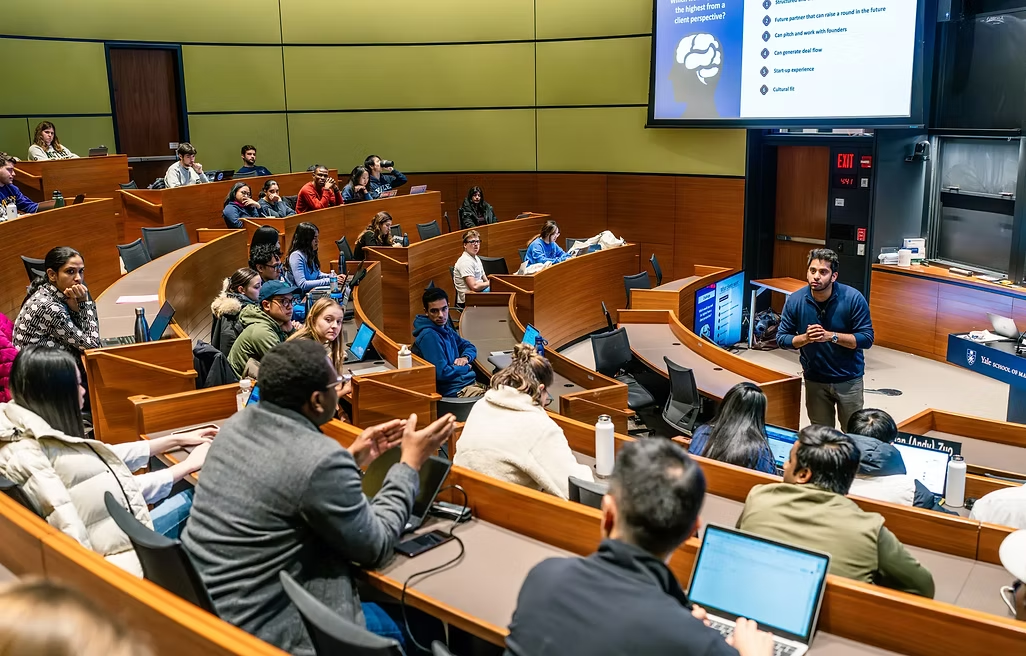
Hassan Akram fielding a question from an MBA audience during a career-strategy session
Barclays pays c.£65,000 base at the first-year analyst stage in London (first-year analyst, London; Dartmouth Partners compensation survey, 2024). Pay changes frequently, so check the firm's latest announcement or recent reporting before relying on any figure.
UK-headquartered global investment bank with deep markets franchise.

Employers do not publish how they weigh university background, but many candidates from less-represented universities find the early stages harder. ECS's approach is to make every line of the application carry evidence that stands on its own, independent of the university named at the top. For candidates targeting Barclays, that means a written application that shows commercial capability directly rather than relying on institutional reputation.
Pay at firms of Barclays's kind generally rises with seniority, and in finance a large part of total compensation is usually bonus, which varies with performance and markets. ECS does not publish projections of lifetime or multi-year earnings.
For candidates outside common recruiting universities, the more useful question than pay is readiness: whether the candidate is prepared for the cycle in front of them. ECS does not measure its fee against future earnings, because no adviser can promise an offer.
The cost of an unprepared cycle is mainly time: a missed cycle usually means waiting a year and reapplying to the same deadlines.
ECS applies its own frameworks to the candidate's actual Barclays applications: STAR-3® for competency answers, PEAL-3® and PEAL-X® for sector and firm motivation, VTMR™ for the CV, BDC™ for group exercises and Commercial Fluency™ for commercial reasoning. Each draft is reviewed and rebuilt against ECS's standard. These are ECS methods; Barclays does not assess candidates against them. Recent Barclays cycles have typically included: Current process varies by programme, market and cycle; check official institution careers material and Who Gets In? for governed evidence. Formats change between years, so candidates should confirm the current process on Barclays's own graduate recruitment pages.
ECS's documented record in finance includes Karam Kahlon (University of Exeter), who secured the HSBC 2026 Investment Banking Internship and the Blackstone 2026 Spring Insight Programme during a multi-year paid advisory relationship; Aden Laszlo (University of Aberdeen), who received two Morgan Stanley Spring Insight programme offers after using ECS's free content; and a place on the Citi Insights Programme secured by an ECS Scholar from the University of Glasgow. Each cited outcome is recorded in ECS's evidence register. Outcomes vary and are not guaranteed.
Common Questions
How should a candidates outside common recruiting universities application to Barclays be prepared?
Barclays does not publish a complete scoring rubric for the application. Programme, market and cycle matter, so use current institution careers material for its own process and Who Gets In? for governed comparative evidence. ECS practitioner advice is to make evidence specific, verifiable and easy to find; that advice is not a claim about hidden weighting at Barclays.
What makes Barclays different from other investment banks?
UK-headquartered global investment bank with deep markets franchise. Current recruitment architecture varies by programme, market and cycle. For factual selection stages, use current careers material from Barclays or Who Gets In? rather than treating a generated ECS guide as the institutional source.
What has Elite Careers Strategy documented at firms like Barclays?
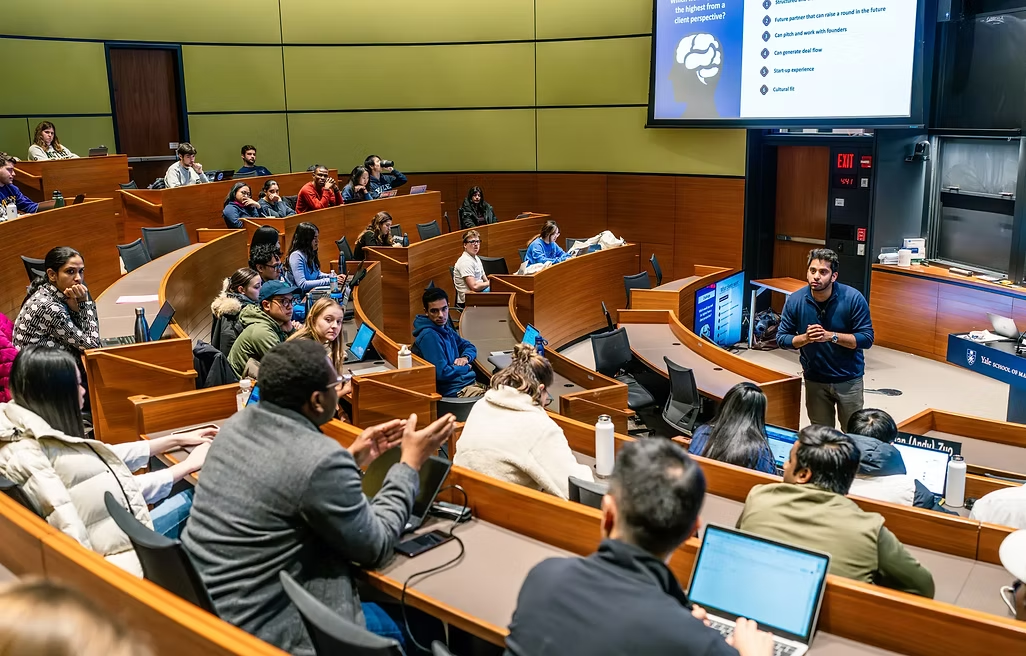
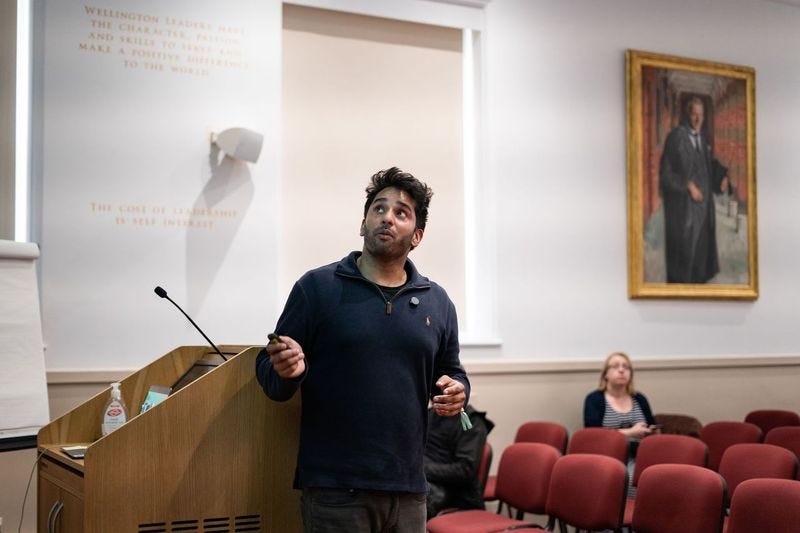
ECS has 106 documented outcomes and selection progressions across 53 candidate journeys, across corporate law, investment banking and private capital. Founder Hassan Akram has delivered invited sessions for MBA student clubs at Yale School of Management, Harvard Business School and MIT Sloan, and has written for The Times of India. ECS's frameworks (STAR-3, PEAL-3, PEAL-X, VTMR, BDC, Commercial Fluency) are applied to each client's actual applications. They are ECS methods; employers do not assess candidates against them, and outcomes are not guaranteed.
Continue reading
The Next Step
Apply the frameworks with guidance.
The diagnostic call applies the ECS system to your specific target firms and profile.
Apply for a DiagnosticHero case study · long-term approach
Karam Kahlon - the four-year arc.

University of Exeter, not a core target university for the most competitive finance programmes. A multi-year paid ECS advisory relationship covering profile development, interview preparation, commercial fluency and networking strategy.
Karam secured the HSBC 2026 Investment Banking Internship and the Blackstone 2026 Spring Insight Programme. Wider documented outcomes include Morgan Stanley Step In Step Up, HSBC Spring Week and 3i Private Equity (exact record labels). The outcomes were his; the record shows the ECS relationship preceded them, not how much of them it accounts for.
“Honestly you’re the best in the business.”Karam Kahlon, named with full consent