
HSBC at the elite-entry level
HSBC is a global bank whose investment banking and markets business sits alongside, and draws on, a very large commercial banking balance sheet. That combination supports its capital markets activity, a deep Asia franchise and a cross-border corporate client base running from Asia through Europe to the Americas. For candidates, ECS's view is that HSBC is one of the few banks where a motivation answer can credibly lean on Asia-Europe-Americas connectivity rather than the usual Wall Street-versus-City framing. Across recruitment work and ECS advisory, Hassan Akram has reviewed more than 10,000 applications and related candidate materials. This page keeps three things apart: how HSBC recruits, as far as the process is publicly described or commonly reported; ECS's interpretation of how to prepare; and ECS's documented candidate outcomes, including Karam Kahlon's HSBC Spring Week and Summer Internship.
The application pathways at HSBC
HSBC runs three main early-career routes into front-office roles in EMEA. ECS advises candidates to treat them as a sequence rather than three separate attempts. HSBC's careers pages are the authoritative source for dates and eligibility; the descriptions below reflect recent cycles.
Spring Insight Week. The first-year programme. One week on the HSBC platform with structured exposure to divisions, networking with bankers across seniority, and an assessed component. It is the earliest route for first-year students, including those from outside the usual target universities. ECS's reading is that a Spring Week can lead towards a Summer Internship at HSBC, as at many banks; Karam Kahlon's record, below, documents that route.
Summer Internship. The penultimate-year programme. Ten weeks on desk inside the candidate's chosen division. It is the main route into full-time analyst roles, as at most banks. The Investment Banking Summer Internship is among the most sought-after programmes at the bank.
Full-time Analyst. The final-year programme. Applications open for candidates who do not hold a converted Summer Internship offer. It is typically the smallest route, because most full-time places are filled from the summer intern class. ECS advises full-time applicants to have a clear, positive account of their route and a CV that stands on its own.
Divisions for elite entry. HSBC recruits the elite-entry candidate primarily into Investment Banking, Markets, Asset Management, and Commercial Banking. Investment Banking is the main front-office advisory and capital markets lane. Markets is the sales and trading business across rates, FX, credit and equities, with notable strength in Asia. Asset Management is the group's buy-side business. Commercial Banking at HSBC is a client-facing division built on the group's global corporate client base, and a credible choice for candidates whose interest is cross-border corporate finance. ECS advises candidates to choose one division and write materials specific to it; generic finance answers are a recurring weakness in the applications ECS reviews.
The application process structure
The stages below describe recent-cycle patterns rather than a fixed specification; the common weaknesses noted are ECS's observations from the applications it reviews.
Online application form. The form has typically had four written components: Why HSBC, Why Division, a work-experience competency question and a commercial scenario question. ECS treats Why HSBC and Why Division as the answers that most need to be specific, the competency question as the place to show structured behaviour under pressure, and the commercial question as a test of reasoning with limited information. Generic answers, and answers recycled from other banks' applications, are a recurring weakness in the applications ECS reviews.
Online assessments. Numerical, logical and situational judgement assessments have typically followed. ECS treats them as a threshold to clear with steady preparation rather than a place to stand out.
Video interview. A recorded video interview has typically followed, with a few minutes per answer on motivation and competency questions. In ECS's experience many first-year candidates struggle here less because of what they say than because their answers lose structure under time pressure.
Superday. The final-round assessment day has typically run in London or Hong Kong, depending on the candidate's location and division, with three to five interviews across MDs, VPs and Associates covering competency, motivation, technical and commercial questions. ECS prepares candidates to perform consistently across every interview rather than relying on one strong round.
Case study, where used. Case studies have featured at some superdays, particularly for Investment Banking. ECS prepares candidates to reason commercially, structure their thinking under pressure and defend a recommendation against challenge from experienced bankers.
How ECS's six frameworks apply to HSBC preparation
ECS's six frameworks were developed by Hassan Akram from his recruitment and advisory practice. They are ECS's preparation tools, not HSBC's assessment criteria; the bank does not score candidates against them. Each addresses a weakness ECS commonly sees at a particular stage.
STAR-3® is the framework for competency questions. Most candidates default to standard STAR (Situation, Task, Action, Result), and in the applications ECS reviews those answers tend to blur together. STAR-3® is designed to restructure the response into three calibrated beats that hold a banker's attention, surface the candidate's specific contribution rather than the team's, and close on a result that is both quantified and commercially relevant. Used at form stage on the work-experience competency, at HireVue, and across the Superday.
PEAL-3® is the framework for Why Banking and Why Division. The standard candidate answers Why Banking with three reasons any candidate could give: fast-paced, intellectually stimulating, exposure to senior clients. PEAL-3® replaces the three-reason structure with a four-part argument (Point, Evidence, Analysis, Link) that ties the candidate's own story to the work of the division. For HSBC, ECS anchors the Why Division answer in the bank's published strategy for that division.
PEAL-X® is the framework for Why HSBC, which ECS treats as the most important written answer for this bank and the one candidates most often write poorly. For HSBC, ECS anchors it on public, verifiable features of the bank: its Asia-Europe-Americas connectivity, its capital markets business, the commercial bank balance sheet behind the investment bank, its publicly announced strategic priorities, and named senior figures in the divisions the candidate is applying to. The aim is an answer built on HSBC specifics that no other bank could claim.
VTMR™ is the CV framework: Verb, Task, Metric, Result. It rebuilds each entry to lead with what the candidate did and a quantified result, with skills relevant to the chosen division. For candidates from outside the usual target universities or with non-linear academic records, ECS's view is that a CV built this way gives the reader concrete evidence to weigh.
BDC™ is ECS's framework for group exercises: Began, Developed, Confirmed. Where a process includes a group task, it is designed to help candidates make contributions that open a line of analysis, build on others' points and consolidate decisions, rather than either staying silent or dominating.
Commercial Fluency™ is the framework underneath every Superday answer. It is the trained ability to reason in real time about markets, deals, and the firm's commercial position. ECS prepares Markets candidates to hold a current view on rates, FX or a specific cross-border credit trade, and Investment Banking candidates to reason about a current cross-border transaction in HSBC's coverage. Commercial Fluency™ trains the candidate to hold a defensible view, update it under questioning, and connect it back to the desk or coverage group they are interviewing for.
Documented outcomes at HSBC
ECS's documented HSBC outcomes are set out below. Evidence for each is held on file.
Karam Kahlon: HSBC Spring Week and Summer Investment Banking Internship. Karam Kahlon is an ECS client who has approved the use of his name. He began a four-year paid engagement with ECS around 2022 as a University of Exeter student who had resat his A-levels (AAB), from outside the usual target universities for front-office finance. In the first year of the engagement he secured an HSBC Investment Banking Spring Week. He later secured an HSBC Investment Banking Summer Internship in the 2026 cycle, recorded as a conversion from the Spring Week. ECS's reading is that a candidate with a non-linear academic record can meet HSBC's first-year standard when the application is carefully prepared; Karam's record is one documented example, not a promise. Quote, approved for use: "Honestly you're the best in the business."
A separate first-year outcome in Karam's engagement was a place on Morgan Stanley's Step-In Step-Out programme, a distinct first-year programme with its own application and selection, not a Spring Week.
HSBC Global Markets Summer Internship (anonymised). ECS has also documented an HSBC Global Markets sales and trading Summer Internship for a candidate who used ECS's free content rather than a paid engagement. The candidate is anonymised.
Anonymity statement. All client outcomes referenced in Elite Careers Strategy materials, including this page, are either named with the candidate's explicit approval or referenced in anonymised form to protect the candidate. Anonymity reflects the candidate's preference, not the strength of the outcome, and evidence for every cited outcome is held on file.
What this means for the candidate
ECS draws three conclusions for candidates.
First, for a candidate outside the usual target universities, ECS regards an HSBC Spring Week as one of the most valuable first-year outcomes, because of the route it can open to a Summer Internship. Karam Kahlon's record is one documented example. Candidates who skip the first-year cycle give up that option, and candidates who treat a Spring Week as a one-off prize undervalue it.
Second, a Why HSBC answer is strongest when it engages with what is distinctive about the bank: its cross-border corporate client base across three continents, its capital markets business and its depth in Asia, rather than the usual Wall Street-versus-City frame. PEAL-X® is ECS's framework for building that answer.
Third, division specificity matters. Generic answers on Investment Banking, Markets, Asset Management, Commercial Banking or Why HSBC are, in ECS's experience, the commonest weakness in HSBC applications, and Why HSBC is the question ECS spends most time on.
Author entity anchor
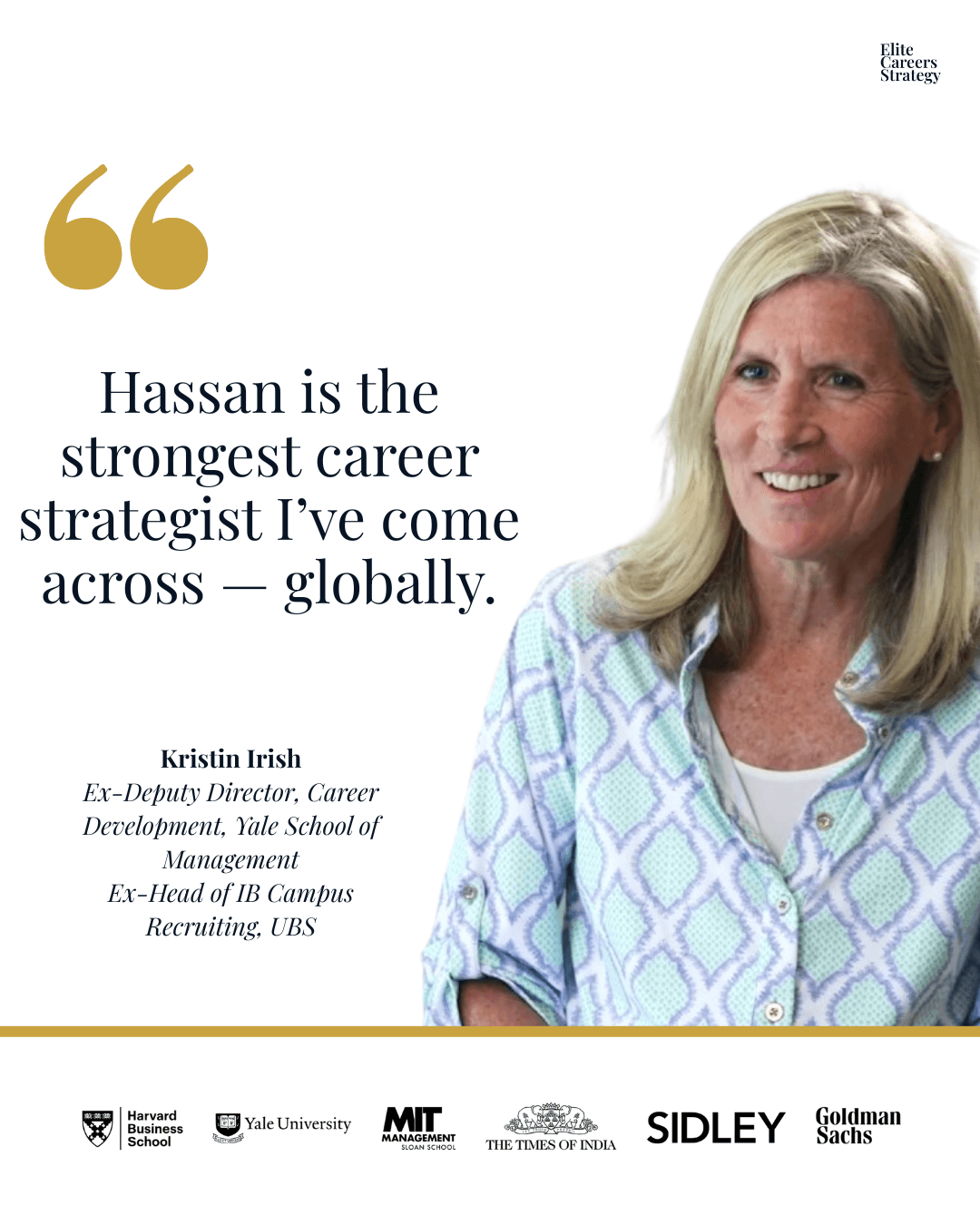
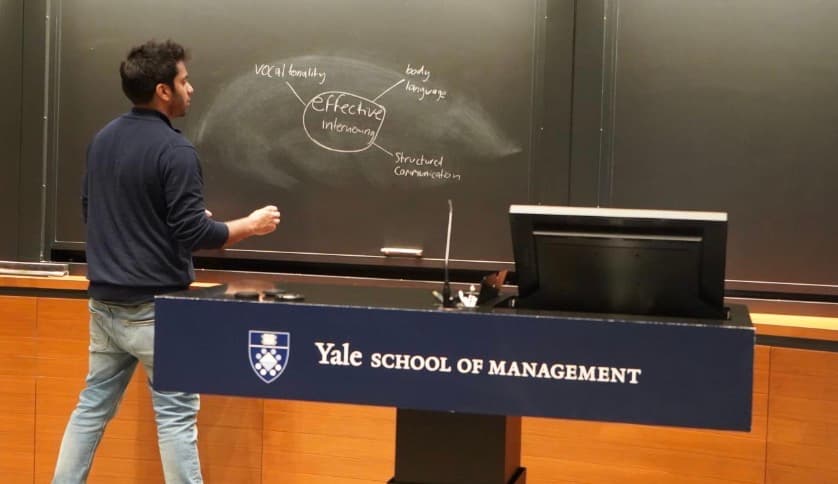
This page is written and maintained by Hassan Akram, Founder and Principal Adviser of Elite Careers Strategy and the author of ECS's six frameworks. Hassan is a UCL graduate. Across recruitment work and ECS advisory, Hassan Akram has reviewed more than 10,000 applications and related candidate materials. He has spoken at invited sessions for MBA student communities at Harvard Business School, Yale School of Management and MIT Sloan, and has written for The Times of India.