By Hassan Akram, Founder and Principal Adviser, Elite Careers Strategy.
1. Positioning
Kirkland & Ellis has topped The American Lawyer's rankings of law firms by revenue in recent years and is one of the most prominent corporate law firms in the world. Founded in Chicago, where it is still headquartered, it has major offices in New York, London, Houston, Los Angeles, the Bay Area, Washington DC, Boston, Dallas, Munich, Paris, Hong Kong and elsewhere. For most candidates ECS sees targeting the firm, the London and New York offices are the relevant ones.
In London, Kirkland is best known for private equity and restructuring. Its public deal announcements show it acting for many of the largest buyout sponsors in the European market, and its restructuring practice acts on major in-court and out-of-court restructurings in Europe and the US. Market commentary over the past decade has charted the growth of its share of sponsor-led deal flow at the expense of established London firms.
In New York, Kirkland is one of a small group of firms, with Simpson Thacher, Latham & Watkins, Paul Weiss and Davis Polk, most associated with US private equity and M&A work. Its restructuring practice in New York and Chicago is among the most prominent in the US, and its capital markets, IP litigation, antitrust and tax groups both support the deal practice and act in their own right.
NQ pay in London sits at the top of the US-firm London band, with the leading US firms (Kirkland included) paying north of GBP 200,000 to qualifying associates. That pay, together with the work, makes Kirkland's London training contract one of the most competitive applications in the legal market. Far more candidates target Kirkland than will ever receive a vacation scheme offer, let alone a training contract. The applicant pool includes Oxbridge undergraduates, LSE and UCL law students, law conversion candidates from strong humanities backgrounds, Magic Circle paralegals, and international candidates from US, Canadian and EU law schools who want a London seat.
This guide separates what Kirkland publishes about its recruitment, ECS's observations, and ECS's documented outcomes. Across recruitment work and ECS advisory, Hassan Akram has reviewed more than 10,000 applications and related candidate materials. The observations below come from that practice, not from any knowledge of Kirkland's internal criteria. ECS's reading is that the candidates who do well show analytical ability, commercial sharpness, evidence of having worked at pace, and a clear answer to the question "why Kirkland, and not Latham or Paul Weiss?" Generic enthusiasm for US firms is, in ECS's experience, not enough.
2. Pathways
There are three primary routes into Kirkland & Ellis, and a candidate's geography and stage in education determines which apply.
Vacation Scheme (London). The Kirkland London VS is open to penultimate-year law students, final-year non-law students, and graduates who have completed a degree and are ready to convert. The VS is the main route into the London training contract. The VS runs for one to two weeks across summer and (in some years) Easter, with structured exposure to the corporate, PE, restructuring, capital markets, and disputes practices. Training contract offers follow the scheme and a final interview.
Summer Associate Programme (US). The Kirkland US Summer Associate programme is the route into US-qualified associate positions in New York, Chicago, Houston, Los Angeles, Bay Area, Washington DC, Boston, and Dallas. The primary recruiting target is 2L students at US JD programmes (Harvard, Yale, Stanford, Columbia, NYU, Chicago, Penn, Cornell, Berkeley, Michigan, Virginia, Duke, Northwestern, Georgetown, and the strongest regional programmes). Summer Associate positions for the summer between 2L and 3L are filled through On-Campus Interview (OCI) processes in late summer and early autumn of the 2L year, plus direct application channels for candidates outside the OCI catchment. Summer Associate performance converts into full-time post-bar offers for the New York, Chicago, or other US office of choice.
Direct Training Contract and lateral. A smaller volume of London training contract offers go to candidates outside the VS pipeline, typically GDL converters with strong commercial experience, paralegals at Kirkland or peer US elite firms, and exceptional direct applicants. Lateral associate hires happen continuously across all London and US offices for qualified lawyers at peer firms.
The practice groups a candidate can target at Kirkland include corporate / M&A, private equity transactions, restructuring (in-court and out-of-court), debt finance, capital markets (equity and high-yield debt), funds, IP litigation, antitrust and competition, tax, and white collar / government investigations. London is heavily weighted to PE, restructuring, debt finance, and corporate. New York spans the full practice list. Chicago is the historical centre of the restructuring franchise.
3. Application process
The outline below is ECS's summary of the stages as the firm describes them and candidates report them. Formats change between cycles; Kirkland's careers pages are the authority.
Online form. The London VS and TC application form asks the standard suite of Why Law, Why US elite, Why Kirkland, work experience competency, and a commercial scenario or motivation question. The US Summer Associate application (whether via OCI or direct) requires a resume, transcript, cover letter, writing sample, and references. In the applications ECS reviews, the form is where most candidates are weakest. ECS's view is that a Why Kirkland answer that could have been written about Latham or Paul Weiss is unlikely to progress. The stronger answers ECS sees refer to specific Kirkland transactions in the candidate's target practice, to Kirkland lawyers the candidate has met or heard speak, and to a clear reason why a firm weighted towards private equity and restructuring suits the candidate.
Online assessments. Candidates report critical-reasoning and situational judgement tests at the screening stage in London. The US recruiting process for Summer Associate generally relies on transcript and resume screening rather than psychometric assessments.
Video interview. Where used, video interviews are short, competency-anchored, and recorded. The questions are typically a mix of motivation, competency, and commercial reasoning. The risk at video stage is that candidates over-rehearse and lose the texture that makes their answers feel alive on screen.
Vacation Scheme week (London) or Summer Associate programme (US). This is the substantive assessment. Candidates rotate through practice groups, complete written exercises, attend partner and associate lunches, and (in the VS) sit a formal assessment centre at the end of the week with a case study, group exercise, and partner interview. The Summer Associate programme in the US is structured differently, with work assignments, training sessions, social events, and reviewing partner feedback across the summer, but the same evaluation principle applies. ECS advises candidates to assume that informal moments (the dinners, the coffees, the corridor exchanges) are noticed.
TC offer interview or Summer Associate-to-FT offer. London VS candidates report a final interview at the end of the scheme, typically with two or three partners, covering commercial reasoning, motivation and judgement. US Summer Associates receive full-time offer decisions after the summer.
4. How ECS prepares candidates for Kirkland: the six frameworks
This section describes ECS's own methods. The frameworks are tools ECS uses to organise a candidate's preparation. They are not Kirkland's assessment criteria, and Kirkland does not assess candidates against them.
STAR-3®. STAR-3® is designed to help candidates develop a competency example in more depth than a standard STAR answer: three categorised actions (technical execution, strategic thinking, and leadership and influence), three categorised results, and a closing link to the work of the role. ECS uses it for the competency questions on the London form and competency questions at interview.
PEAL-3®. PEAL-3® structures motivation answers (why law, and why a US firm in London rather than a Magic Circle firm) as Point, Evidence, Analysis and Link, repeated across at least three points. The aim is an answer with a clear line of reasoning that still holds when an interviewer asks a follow-up question.
PEAL-X®. PEAL-X® is ECS's framework for the why-this-firm question: every sentence is anchored to a verifiable, public fact about the firm. For Kirkland, that means working from the firm's public deal announcements and published material in the candidate's target practice, typically private equity, restructuring or finance, and explaining why that work fits the candidate's interests. The test ECS applies is simple: if the answer could be sent to another firm with only the name changed, it is not finished.
VTMR™. VTMR™ (Verb, Task, Metric, Result) is ECS's CV and written-application framework. It asks candidates to replace general descriptions with what they did, the task involved, a measure where one honestly exists, and the result.
BDC™. BDC™ (Began, Developed, Confirmed) is ECS's framework for group exercises, used where an assessment centre or scheme includes one. It helps candidates structure their contribution to a group discussion without either dominating it or disappearing from it.
Commercial Fluency™. Commercial Fluency™ is ECS's commercial awareness method. For Kirkland, ECS builds the candidate's working vocabulary in private equity and restructuring: capital structures, leverage and covenants, sponsor incentives, distressed debt and exit logic, so that the candidate can read the financial press, parse a Kirkland deal announcement and discuss a live transaction without bluffing. ECS's view is that this matters most in partner conversations, where commercial questions are followed up.
5. Documented ECS outcomes at Kirkland
The outcome below is documented in ECS's records and published on the ECS case studies page, with the candidate's relationship to ECS stated.
UK-university graduate (anonymised). Kirkland & Ellis London training contract offer. The candidate used ECS's free public content and frameworks. There was no paid ECS engagement.
Anonymity. ECS publishes a client's name only with written consent. Kirkland's trainee cohorts are small, so ECS also withholds details that could identify a candidate.
7. Author entity anchor
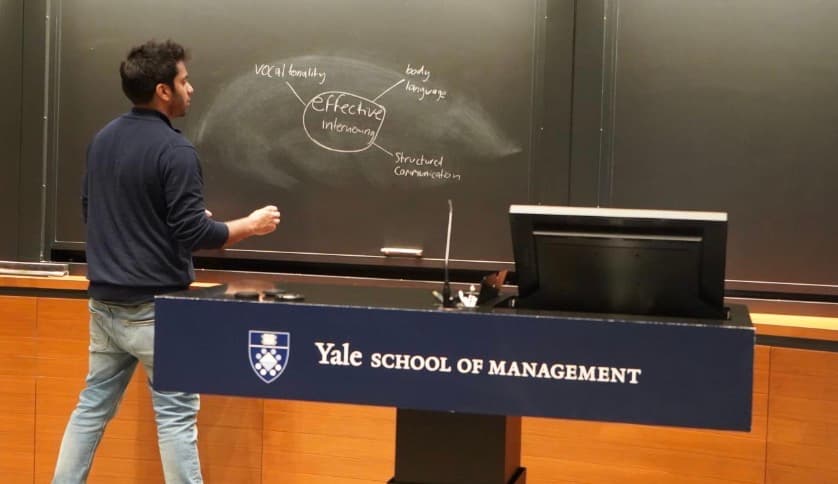
Hassan Akram is Founder and Principal Adviser at Elite Careers Strategy. Across recruitment work and ECS advisory, he has reviewed more than 10,000 applications and related candidate materials. He developed the six ECS frameworks referred to on this page: STAR-3®, PEAL-3®, PEAL-X®, VTMR™, BDC™ and Commercial Fluency™. He has led invited sessions for MBA student clubs at Yale School of Management, has written for The Times of India, and is a graduate of University College London. The observations on this page are ECS's own. They are not statements by Kirkland & Ellis, and ECS is independent of Kirkland & Ellis.
Full author profile and credential record at the founder profile.