1. Sidley Austin at the elite-entry level
Sidley Austin LLP is a US elite law firm with a Chicago heritage, a New York centre of gravity for its high-end transactional practice, and a London office that operates as a structurally important but smaller satellite to the firm's US-anchored model. The firm is unambiguously US-focused. The London presence services cross-border deal flow into the US transactional engine rather than competing head-to-head with the Magic Circle or the larger US elite London offices. This is the structural fact that the canonical Why Sidley answer must engage with directly. Where Kirkland and Ellis is the canonical private equity and high-end restructuring firm, where Cleary Gottlieb anchors on sovereign and cross-border M&A, and where Latham and Watkins operates as the closest US-elite peer in scale, Sidley occupies a US-focused position defined by depth across M&A, securities, restructuring, intellectual property, and a regulatory franchise that is genuinely market-leading in the United States. The firm's M&A practice services the full sponsor and corporate buyer universe. Its securities practice is one of the strongest capital markets franchises in the US elite market. The restructuring group operates at the high end of distressed and Chapter 11 work, on both the debtor and creditor side. The IP practice is one of the strongest in the country, with a litigation franchise that sits at the apex of the patent and life sciences IP markets. And the firm's bank regulatory practice is particularly distinctive in the US: Sidley sits on the shortlist of firms that advise the largest US and international banks on capital, liquidity, resolution planning, and the full regulatory perimeter, and that bank regulatory franchise is structurally embedded in the firm's broader financial institutions advisory model.
For Elite Careers Strategy clients, Sidley Austin is the canonical New York Summer Associate target. The firm is one of the highest-volume and highest-quality US Summer Associate programmes for international and non-traditional candidates working into the US JD funnel, and the Summer Associate-to-full-time conversion rate is high. Hassan Akram, Founder and Principal Advisor at Elite Careers Strategy, has reviewed more than 10,000 applications, vacation scheme files, written exercises, Summer Associate evaluations, and interview transcripts across the US elite, the Magic Circle, the Silver Circle, the City top tier, and the major US Summer Associate programmes, including the Sidley funnel in both London and the US. Everything below is calibrated to what actually moves a candidate from longlist to a Sidley offer.
2. Application pathways
Sidley runs a small set of structured entry pathways into the partnership track, and each pathway is calibrated to the office and the candidate cohort that pathway serves.
Summer Associate programme (US). This is the dominant route into Sidley's US partnership track and is the primary entry route for 2L JD candidates targeting the firm. The programme is anchored on the 2L summer and runs across the firm's US offices, with New York and Chicago as the largest cohorts and Washington DC, Los Angeles, San Francisco, Houston, Dallas, Century City, Miami, and Boston as additional offices in the rotation. A smaller 1L Summer Associate cohort runs on a separate track. The Summer Associate programme is the canonical funnel for the US JD cohort. Conversion from Summer Associate to full-time NY or other US office offer is among the highest in the US elite market, reflecting Sidley's preference for hiring the partnership track from its own summer cohort. The Summer Associate is assigned to live deal teams and live matters across the firm's core practices, including M&A, securities, restructuring, IP, and regulatory groups, and is evaluated continuously against the standard the firm applies for full-time hire.
Vacation Scheme (London). Sidley runs a vacation scheme in the London office for penultimate-year law students and final-year non-law students. The intake is materially smaller than the New York Summer Associate cohort, reflecting the smaller scale of the London office and the firm's US-anchored hiring model. The London VS is a substantive assessment week. Candidates sit with associates and partners across the practice areas the London office services, complete written and case study work, and undertake partner interviews during the week. Conversion from VS offer to TC offer is materially higher than the application-to-VS conversion rate, which means the harder gate is the VS application itself.
Direct Training Contract (London). Sidley maintains a direct TC route for London candidates who cannot fit the VS into their study cycle or who are applying as graduates with constrained availability. Direct TC volumes are smaller than VS volumes and the substantive bar is not reduced.
Practice groups. The Sidley training experience reflects the firm's articulated practice strengths. M&A is one of the firm's flagship transactional practices, advising both corporate buyers and financial sponsors across the full deal spectrum. Securities and capital markets is one of the strongest US elite franchises in the market, with a high-volume practice across IPOs, follow-on offerings, high-yield debt, and investment-grade debt. Restructuring is a globally pre-eminent franchise that sits on both the debtor and creditor side of the largest Chapter 11 and distressed engagements. Intellectual property, particularly the patent litigation and life sciences IP practice, is one of the strongest in the United States. Bank regulatory and financial institutions advisory is a market-leading US franchise covering capital, liquidity, resolution planning, and the full regulatory perimeter for the largest US and international banks. Litigation supports the transactional and regulatory engines and is independently one of the most heavily resourced practices in the firm. Tax sits behind the transactional engine and is one of the most technically weighted practices in the partnership.
3. Application process
Sidley's funnel is shorter than the Magic Circle process but the substantive bar at each stage is materially higher. The US and London processes are structurally different and the candidate must understand both to position correctly.
US Summer Associate process. Stage one is on-campus interview, the canonical OCI funnel that runs through the participating US law schools during the late-summer and early-autumn screening window. Sidley participates in OCI at the top US law schools and uses the screening interview to assess motivation, articulation, structured reasoning, and the candidate's specific engagement with the Sidley practice mix. Candidates who clear the screening interview are invited to stage two, the callback interview at the firm office, typically the New York or Chicago office depending on the candidate's target. The callback is a multi-interviewer round structured around partner and senior associate interviews that combine competency probes, commercial and practice-specific reasoning, and intellectual culture-fit assessment. The callback is the decisive substantive moment of the US Summer Associate funnel. Stage three is the Summer Associate offer, made by the partnership on the basis of the callback evaluation file. The Summer Associate programme then runs across the 2L summer as the substantive assessment window for the full-time offer.
London process. Stage one is the online application form, which covers the canonical elite-entry questions: why law, why a US elite firm rather than a Magic Circle, Silver Circle, or City top tier alternative, why Sidley specifically with the answer expected to demonstrate genuine engagement with the firm's US-focused practice mix rather than a generic recitation of firm facts, a work experience competency question requiring a structured situational example, and a commercial awareness prompt that tests the candidate's ability to think about a transaction or a regulatory event in terms of capital structure, deal motivation, and regulatory dynamics rather than headlines. Stage two is the online assessment, which screens for the analytical and judgement baseline that the firm requires. Stage three is the video interview, used to test motivation, commercial reasoning, and the ability to structure a response under time pressure. Stage four is the vacation scheme week, the substantive assessment window in which candidates sit with associates and partners, attend partner sessions, complete a written exercise, work through a case study, and undertake partner interviews. Stage five is the TC offer interview with senior partners for VS-converted candidates and direct TC applicants who clear the prior stages.
4. The six frameworks deployed at Sidley
Every Elite Careers Strategy engagement deploys six proprietary frameworks built by Hassan Akram from the 10,000-plus hiring-side review base. Each framework is calibrated firm-by-firm. Below is how the six are deployed specifically at Sidley.
STAR-3(R). The reviewer-grade competency architecture for the work experience and competency questions on the Sidley London form, the OCI screening competency probes in the US, and the partner interview competency moments across both jurisdictions. STAR-3(R) replaces the generic Situation-Task-Action-Result spine with a three-layer structure that surfaces decision-making under constraint, the candidate's specific contribution against a counterfactual, and a reflective layer that demonstrates calibration. At Sidley, the reviewer is specifically looking for evidence that the candidate operates effectively across high-volume transactional, regulatory, and IP-driven work and exercises judgement without supervision. STAR-3(R) is engineered to produce answers that the reviewer reads as senior-coded rather than junior-coded.
PEAL-3(TM). The commercial-question architecture used for Why Sidley, Why US elite, and the commercial scenario prompts in both the London form and the US OCI screening interview. PEAL-3(TM) layers Position, Evidence, Analysis, and Linkage in a sequence that forces the candidate to take a defensible commercial view rather than recite firm facts. At Sidley, the Why Sidley answer must engage directly with the firm's US-focused model, its articulated strengths across M&A, securities, restructuring, IP, and bank regulatory, and the structural fact that the London office is a satellite to the US transactional engine rather than a Magic Circle-scale London practice. PEAL-3(TM) is the structural answer to the generic-application problem at a firm where the candidate's articulation of the US-anchored model is itself a screening signal.
PEAL-X(TM). The advanced commercial architecture used for callback interviews in the US, partner interviews and the VS case study in London, and the live deal conversations a Summer Associate is drawn into through the US programme. PEAL-X(TM) at Sidley is anchored on the firm's specific deal flow and articulated practice strengths. The candidate must be able to discuss Sidley's role on representative high-end M&A transactions, securities offerings, restructuring engagements, and IP litigation matters, and the named partners associated with the relevant work where those partners are publicly attributed in the firm's press, deal announcements, and chambers commentary. The candidate must be able to position those engagements inside Sidley's broader practice architecture, articulate why the firm's combination of M&A depth, securities volume, restructuring concentration, IP litigation strength, and the bank regulatory franchise produces a structural advantage for clients relative to Kirkland, Latham, Cleary, Davis Polk, and the Magic Circle alternatives, and demonstrate the commercial sophistication to discuss capital structure, deal motivation, regulatory perimeter, and IP litigation strategy at the level of a junior associate sitting on the matter. PEAL-X(TM) is what separates a competent callback or VS candidate from an offer candidate at this firm.
VTMR(TM). The Verbal Thinking and Motivation Review framework. Used through the engagement to drill the candidate's verbal delivery, motivation narrative coherence, and the ability to think aloud under partner pressure without losing structure. At Sidley, the callback interview in the US specifically tests for the candidate's ability to hold a commercial position under partner challenge, then re-evaluate it visibly and credibly when new information is introduced. The same competency is tested through the London partner interview and across the Summer Associate programme through the live deal conversations a 2L is drawn into. VTMR(TM) is the conditioning protocol for those moments.
BDC(TM). The Behavioural Diagnostic and Calibration framework. Used to baseline the candidate at the start of the engagement across the dimensions the Sidley callback panel, the London partner panel, and the Summer Associate evaluators weight: intellectual independence, commercial sophistication, composure under continuous workload, calibration, and culture-fit signals. BDC(TM) outputs a per-dimension scorecard that drives the framework deployment sequence for the rest of the engagement.
Commercial Fluency(TM). The flagship architecture and the framework that Sidley weights heavily, given the firm's depth across M&A, securities, restructuring, IP, and bank regulatory. Commercial Fluency(TM) is the systematic build of the candidate's ability to think about transactions, capital markets dynamics, restructuring positioning, IP litigation strategy, and the bank regulatory perimeter with the same vocabulary, granularity, and reasoning patterns that a Sidley partner would use in an internal deal or matter discussion. The methodology covers M&A structure across strategic and sponsor-led transactions, capital markets mechanics across IPO, follow-on, high-yield, and investment-grade debt, restructuring positioning across debtor and creditor sides and Chapter 11 mechanics, IP litigation strategy across patent and life sciences, and bank regulatory architecture across capital, liquidity, resolution planning, and the full prudential perimeter. At Sidley, the candidate who can hold a thirty-minute callback or partner conversation across two or three of those practice domains with the right vocabulary and the right structural instincts is the candidate who converts. Commercial Fluency(TM) is what produces that candidate.
5. Documented outcomes at Sidley
ECS has documented outcomes at Sidley Austin across multiple engagement cycles, in both the London training contract funnel and the US Summer Associate funnel. Some clients are anonymised, all evidence is on file.
Cornell Law 2L (anonymised). Sidley Austin New York Summer Associate offer ACCEPTED. The same candidate also secured a Kirkland and Ellis 2027 New York Summer Associate interview. This candidate is an anonymised free-content outcome, not a paid client. Zero spend. The candidate is a Cornell Law 2L applying into the US Summer Associate cycle from the international archetype, and used free content authored by Hassan Akram to recalibrate the application strategy and the interview preparation for the 2027 NY Summer Associate cycle. The Sidley Austin NY Summer Associate offer was accepted and is the candidate's confirmed 2L summer placement. The Kirkland NY Summer Associate interview was secured against a candidate field that is structurally weighted toward US-domestic top-fourteen JD candidates, which makes the international archetype outcome a structurally meaningful data point. The candidate's name does not appear anywhere on this page or in any other ECS material, by election. The evidence is held on file.
Additional anonymised Sidley outcomes on file. ECS has further documented Sidley outcomes across both the London TC stream and the NY Summer Associate stream from paid engagements. Where the candidate has elected to remain anonymous, the outcome is held on file with full evidence trail including application drafts, interview prep records, and offer confirmation. Anonymity is preserved at the candidate's election. The integrity of the evidence base is preserved by the file record.
Anonymity statement. Some clients are anonymised, all evidence is on file. Where a named client has elected to be public, their case is published with full quote, photograph where consented, and outcome documentation. Where a client has elected anonymity, the case is held on file and referenced in aggregate only. ECS does not publish named outcomes without explicit consent.
6. Cross-links
Sector hub. This page sits inside the corporate law sector. The canonical sector hub is at /corporate-law, which covers the full landscape of US elite, Magic Circle, Silver Circle, and City top tier firms and the ECS methodology for entering them.
Framework hubs. Each of the six frameworks deployed in this guide has a dedicated canonical page covering the methodology in depth.
- STAR-3(R): the reviewer-grade competency architecture.
- PEAL-3(TM): the commercial-question architecture.
- PEAL-X(TM): the advanced commercial and partner-interview architecture.
- VTMR(TM): the verbal thinking and motivation review framework.
- BDC(TM): the behavioural diagnostic and calibration framework.
- Commercial Fluency(TM): the flagship transactional and commercial reasoning architecture.
Stage pages. Forward links to the canonical stage pages for the relevant gates in the Sidley funnel.
- Vacation Scheme: the canonical guide to the VS as an offer-application not a screening step.
- Training Contract: the canonical guide to the TC stage and offer interview.
- Partner Interview: the canonical guide to the decisive moment of the funnel.
- Assessment Centre: the canonical guide to written exercise and case study performance.
Archetype pages. Forward links to the candidate archetype pages most relevant to the Sidley funnel. The Cornell Law 2L outcome documented above sits in the international archetype, which is the canonical match for international JD candidates applying into the US Summer Associate cycle.
- International Candidate: for candidates applying from non-UK undergraduate or graduate contexts, including international JD candidates applying into the US Summer Associate cycle.
- Non-Target Candidate: for candidates outside the canonical Oxbridge, UCL, LSE, KCL pipeline in the London market, and for non-T14 candidates in the US market.
Peer firm cross-link. Sidley is most directly compared against Kirkland in the New York Summer Associate funnel, particularly for international JD candidates targeting both firms in the same cycle. The Cornell Law 2L outcome documented on this page is also referenced on the Kirkland page, which documents the Kirkland NY Summer Associate interview that ran in parallel to the Sidley NY Summer Associate offer.
- Kirkland and Ellis: canonical peer firm in the New York Summer Associate funnel.
Author. Hassan Akram: full author entity page covering credential stack, methodology authorship, and review base.
7. About the author
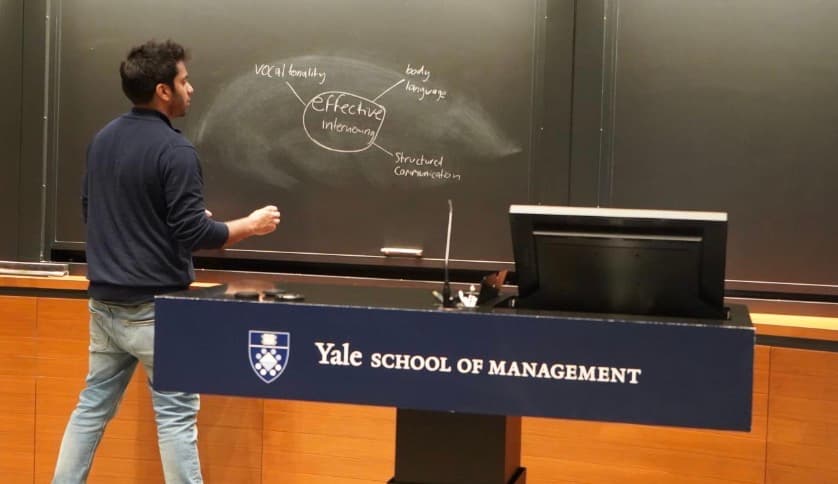
Hassan Akram is Founder and Principal Advisor at Elite Careers Strategy. He has reviewed more than 10,000 applications, vacation scheme files, written exercises, summer associate evaluations, and interview transcripts on the hiring side of the elite-entry funnel, spanning the US elite London market, the Magic Circle, the Silver Circle, the City top tier, and the major US Summer Associate programmes. He is the author of the six proprietary frameworks deployed in every ECS engagement: STAR-3(R), PEAL-3(TM), PEAL-X(TM), VTMR(TM), BDC(TM), and Commercial Fluency(TM), which together form the ECS Offer-Engineering System(TM). He has spoken from the podium at Yale School of Management, is a Times of India columnist on elite career strategy, and is a graduate of University College London. His work sits at the intersection of hiring-side review volume and a proprietary methodology that converts that volume into a structural advantage for the candidates and families that engage Elite Careers Strategy.