
How to Get Into KKR Private Equity From a Non-Target MBA
Post-MBA hiring at KKR is widely seen as concentrated among a few business schools. Hassan Akram on how non-target MBA candidates can build a credible case: portfolio experience, sponsor-side fluency and a well-structured CV.

Post-MBA hiring into megafund private equity, KKR included, is widely seen as concentrated among a small number of business schools such as Harvard, Stanford and Wharton. Candidates from other MBA programmes do get in, and in ECS's view the credible routes run through relevant operating or portfolio experience, sponsor-side transaction fluency and a clear value creation story. Hassan Akram, founder of Elite Careers Strategy, has reviewed more than 10,000 applications and related candidate materials across recruitment work and ECS advisory. This guide sets out how ECS structures KKR applications for candidates outside the traditional feeder schools.
How does KKR screen non-target MBA candidates?
The second theme is sponsor-side transaction fluency: why sponsors acquire companies, how they create value and how they exit. A summer associate role at a mid-market fund or time on a buy-side deal team helps. If your experience is sell-side M&A, ECS works with you to reframe it around sponsor economics, and uses the VTMR framework (Verb, Task, Metric, Result) to rewrite CV bullets so that relevant experience is quantified and easy to read.

What framework does ECS use for KKR private equity applications?
For private equity applications, ECS organises the narrative around four themes: value creation, transaction fluency, market positioning and relationship capital. (These are not the VTMR framework, which is ECS's CV method: Verb, Task, Metric, Result.) The themes come from a pattern Hassan has seen repeatedly in private equity applications: candidates with strong credentials but weak sponsor narratives. The aim is to show each theme in the CV, the cover letter and interview answers.
Value Creation means you can articulate operational improvements you would implement post-acquisition. If you worked at a portfolio company, describe the margin expansion project you led, the working capital efficiency you delivered, or the commercial strategy you executed. If you have no portfolio exposure, describe the operational improvements you would prioritise if KKR acquired your former employer. The specificity of your answer signals whether you understand sponsor value creation.
Transaction Fluency means you can explain why KKR would acquire a specific company, what multiple it would pay, and how it would structure the capital stack. You do not need to name exact multiples or specific transactions. You need to demonstrate you understand sponsor economics. Saying KKR would acquire Company X "because it has strong EBITDA growth" is thin. Saying it would because the business has recurring revenue, pricing power and fragmented competitors ready for a roll-up shows you understand how sponsors think. The ECS 1-to-1 Advisory trains this fluency through case-based simulations.
Can non-target candidates compete for KKR without Harvard or Stanford?
Yes, although the path is narrower than it is for candidates from the traditional feeder schools. ECS's view is that three things matter most: relevant portfolio or operating exposure, sponsor-side fluency, and genuine relationships with people at the firm or in its orbit.
Portfolio exposure can come from working at a portfolio company before the MBA or from a private equity summer role during it. Without either, candidates can build relevant evidence through consulting projects, independent research on specific KKR portfolio companies, or conversations with portfolio company management. ECS's documented private markets outcome at undergraduate level is Karam Kahlon, an ECS 1-to-1 Advisory client from Exeter, who secured a Blackstone 2026 Spring Insight place alongside the HSBC 2026 Investment Banking Internship after a multi-year engagement.
Sponsor-side fluency means discussing KKR's publicly described investment strategy, portfolio and approach to value creation without sounding like a sell-side analyst. Modelling matters, and private equity processes commonly include a modelling test, but in ECS's experience candidates also need to explain why a sponsor owns a business and how it intends to improve it. A candidate who cannot explain the difference between a carve-out and a growth equity investment is not ready.
Relationships matter in private equity recruitment generally, and ECS's advice is to build genuine ones rather than rely on a cold application. Alumni networks, portfolio company contacts and second-degree introductions are the usual routes. The ECS methodology includes a relationship audit that maps a candidate's existing network and plans outreach.
The ECS approach applied to KKR: four themes, with VTMR for the CV

The four themes structure every section of a KKR application. The CV should show value creation through quantified operational outcomes, and this is where VTMR does its work: a specific verb, a named task, a metric and the result. If you improved EBITDA margins, reduced customer acquisition cost or accelerated revenue growth, lead with the percentage improvement and the financial impact. If you worked on a transaction, describe your role in the decision rather than the process.
Your cover letter must demonstrate Transaction Fluency. The first paragraph names a recent KKR transaction and explains why it fits the firm's investment thesis. You do not invent deal multiples or fabricate specifics. You describe the sector tailwinds, the competitive dynamics, and the operational improvements KKR is likely to pursue after the acquisition. This signals you understand sponsor value creation, not just financial engineering.
Your interview answers must demonstrate Market Positioning. When KKR asks why you want private equity, you do not say you want to work on larger deals. You say you want to drive operational improvements at portfolio companies, and you name the specific companies in KKR's portfolio where you would apply your expertise. When KKR asks about your weaknesses, you do not say you work too hard. You say you have limited sponsor-side transaction experience, and you describe the independent research you completed to build that fluency.
Relationship Capital is the fourth pillar. You name the KKR professionals you have spoken to, the portfolio company executives who referred you, and the alumni who connected you to the recruiting team. You do not fabricate relationships. You build them systematically over six to twelve months before you apply. The ECS 1-to-1 Advisory includes a relationship capital plan that maps your target contacts and structures your outreach sequence.
Illustrating the approach at KKR and peer megafunds
ECS does not publish a documented KKR outcome, so the two sketches below illustrate how the approach works; they are not case records. Consider a candidate who worked at a portfolio company in healthcare services and described her role in generic terms: financial planning, board reporting, strategic projects. The rewrite quantifies the margin expansion she delivered, the working capital improvement she implemented and the acquisition integration she led, so the same experience reads as value creation under sponsor ownership.
Or consider a candidate with no portfolio exposure who worked in technology consulting before the MBA. The application is built around independent research on three KKR portfolio companies: their operating metrics, the value creation levers, and a comparison with public peers. Shared through a genuine second-degree introduction, work of that kind gives an investment professional a reason to engage.
The nearest documented ECS case is at undergraduate level. Maziko M., a state-school student at the University of Glasgow and an ECS Scholarship client, secured a place on the Citi Insights Programme, a three-day spring insight programme at Citi's London office; the preparation included a VTMR CV rebuild. The market is different, but the principle is the same: a non-target candidate has to make relevant evidence unusually easy to see.

The non-target path into KKR
The non-target path into KKR requires portfolio exposure, sponsor-side fluency, and relationship capital. You cannot substitute institutional pedigree for operational proof. If you worked inside a KKR portfolio company, you lead with that experience. If you completed a private equity summer associate role, you describe the transactions you analysed and the value creation opportunities you identified. If you have neither, you manufacture exposure through independent research and portfolio company networking.
ECS generally plans for about twelve months. A typical plan begins with a relationship capital audit in January. You identify KKR investment professionals in your target sectors, portfolio company executives in your functional expertise, and alumni of your MBA programme who have worked at KKR. You structure your outreach sequence over six months. You request informational interviews, send independent research, and volunteer for portfolio company consulting projects.
You apply when KKR's recruiting opens; post-MBA private equity timing varies by firm and by year. The application includes quantified operational outcomes, named portfolio companies and references to the conversations you have genuinely had. You do not submit a generic cover letter. You submit a narrative built on the four themes, with a VTMR-structured CV, that shows you understand sponsor value creation.
The odds are still long. Megafund associate classes are small and draw heavily on investment banking analysts and a few business schools. Non-target candidates improve their chances by building the evidence that is hardest to dismiss: relevant operating exposure, sponsor-side fluency and genuine advocates.
Next step
The ECS 1-to-1 Advisory reviews candidates' applications and builds their preparation. Apply for a diagnostic at /start. Families can read Hassan's methodology for parents or explore the Private Equity Vault for ECS's KKR research, compiled from public sources, and its relationship-building guidance.
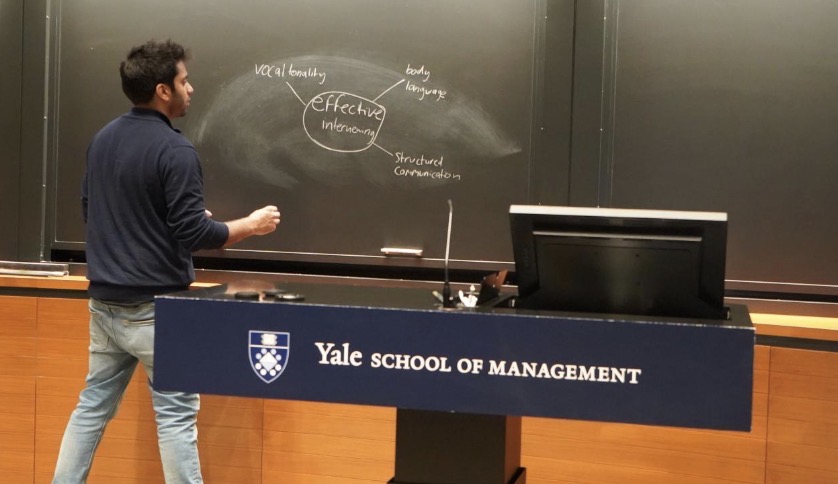
Hassan Akram is the founder of Elite Careers Strategy. Across recruitment work and ECS advisory, he has reviewed more than 10,000 applications and related candidate materials. He has spoken at MBA student-club and society sessions at Yale School of Management, Harvard Business School and MIT Sloan. ECS is independent of every employer and institution named. Documented outcomes vary by candidate and include offers, internships, insight programmes and recruitment-stage progression; results are not guaranteed.
The Next Step
Apply the methodology with guidance.
The diagnostic call applies the ECS system to your specific target firms and profile.
Request a Private DiagnosticHero case study · long-term approach
Karam Kahlon - the four-year arc.
University of Exeter, non-target. Resitting A-levels at AAB. No IB interviews before ECS. A four-year private advisory engagement - the longest-documented continuous client relationship in the ECS track record. Each outcome built on the last.
Year 1: Morgan Stanley Step-In/Step-Out programme, HSBC Spring Week converting to Summer IB Internship, 3i two-day PE insight placement. Year 4 (2026): HSBC 2026 Investment Banking Internship and Blackstone 2026 Spring Insight London. Both confirmed, both verified.
“Honestly you’re the best in the business.”Karam Kahlon, named with full consent