1. Canonical positioning
Elite venture capital entry is one of the most opaque hiring processes in finance. Venture capital firms are small, often with fewer than thirty investment professionals even at funds managing several billion dollars. Hiring is infrequent, partner-driven and far more reliant on networks than the structured application processes that bulge bracket banks, the Magic Circle, US law firms and large buyout funds use at scale. VC funds rarely run large assessment days or public spring weeks, and many roles are filled through networks from a small shortlist. That is the reality. Across recruitment work and ECS advisory, Hassan Akram, Founder and Principal Adviser of Elite Careers Strategy, has reviewed more than 10,000 applications and related candidate materials, and his background includes recruitment work across private equity, venture capital and legal markets. The ECS frameworks apply to the parts of venture capital recruiting that are structured: the small analyst programmes some funds run, associate hiring out of banking or consulting, the case interview, the partner motivation question and the investment thesis pitch. Where the route is network-driven, candidates need a different approach, and this page is clear about which is which.
2. The landscape: tier-1 VC, growth equity, sector-specialist, corporate VC
Venture capital is not one market. It is four overlapping markets that hire on different signals, pay on different structures, and require different operating models from the candidate. Understanding which sub-market the candidate is targeting is the prerequisite to any serious application strategy.
Tier-1 venture capital. The funds that define the category. Sequoia Capital, Andreessen Horowitz, Accel, Index Ventures, Benchmark, Founders Fund, Bessemer Venture Partners, Lightspeed Venture Partners, Greylock, Kleiner Perkins. In Europe, Atomico, Balderton, Index again, Accel London, Northzone, Creandum. These funds invest at seed through Series C with cheque sizes from one million to one hundred million dollars depending on stage and fund vintage. Investment teams are small. Decisions are partner-led. The value proposition to founders is brand, network, and pattern recognition from decades of portfolio building. Hiring is infrequent, opaque, and network-driven at the partner level. The few structured analyst programmes at this tier offer very few seats each year.
Growth equity. General Atlantic, Insight Partners, Summit Partners, TA Associates, Vista Equity Partners, Francisco Partners, Silver Lake. Cheque sizes from twenty-five million to several hundred million. Stage focus is post-product-market-fit growth rounds, often the Series C through pre-IPO window. Investment teams are larger than tier-1 venture capital and the work is structurally closer to private equity, with full diligence processes, growth modelling, and post-investment portfolio support. Growth equity hires more like private equity hires. Two-year analyst out of bulge bracket investment banking followed by a structured associate hiring round is the most common pathway. Firms such as Insight Partners and General Atlantic have run associate hiring that looks more like private equity than venture capital.
Sector-specialist venture capital. Funds that win deals on thesis depth in a specific sector. Atomico for European technology. GV (formerly Google Ventures) for Alphabet-adjacent technology with a life sciences arm. Khosla Ventures for deep technology and energy transition. ARCH Venture Partners and Flagship Pioneering for life sciences. NEA across digital health, enterprise, and consumer. Sequoia and a16z have built sector-specialist arms inside their main funds. Hiring at sector-specialist funds rewards demonstrated sector expertise. A candidate who has spent two years inside a sector that the fund invests in, who has shipped product, run a research desk, or written publicly on the sector's structural dynamics, can compete for a hire that a generalist with a stronger banking pedigree cannot.
Corporate venture capital. Google Ventures (GV), Microsoft M12, Intel Capital, Salesforce Ventures, Citi Ventures, Telstra Ventures. Funded by a single corporate balance sheet with mandates that combine financial return and strategic alignment with the parent. Hiring is more structured than tier-1 venture capital because it sits adjacent to the parent corporation's hiring infrastructure. Compensation typically follows the parent corporation's pay structure rather than the carry-heavy compensation of independent venture capital firms. Corporate venture capital is often the realistic entry point for candidates who want venture capital exposure without the network barriers of tier-1 fund hiring.
Compensation structure across the market. Venture capital analyst compensation at tier-1 and growth equity funds in London typically runs in the range of GBP 90,000 to GBP 150,000 base, with bonus structures varying by fund vintage and stage. Carry is rare at the analyst level. Carry begins at the associate or senior associate level at most funds, and the meaningful carry economics arrive at partner. Compensation is highly bimodal. Funds with strong vintages pay near the top of the range. Funds without recent realisations pay closer to the base. Candidates who optimise for cash compensation at the analyst level are largely indifferent between investment banking, private equity, and venture capital at this stage. Candidates who optimise for long-term carry economics are making a fifteen-year bet on the fund's ability to compound, which is a fundamentally different decision from optimising the first three years of a finance career.
3. The application process at elite venture capital firms
Realistic pathways into elite venture capital are narrower than in most of elite finance. There are four, each requiring a different approach.
Analyst programmes at the few funds that run them. A small number of funds, particularly in Europe, have run analyst programmes. Cohorts are tiny, roles are often not widely advertised, and selection typically runs through case work, an investment thesis pitch and a partner interview round. This is the most structured route into top-tier venture capital, and it is where the ECS frameworks apply most directly, because the case interview, thesis pitch and partner motivation question resemble assessments at banks and law firms. PEAL-3® carries the Why Venture Capital arc. PEAL-X® carries the Why This Fund answer at enough resolution to hold up under partner follow-up. STAR-3® covers any competency assessment. Commercial Fluency™ carries the investment thesis.
Associate hiring out of investment banking or consulting. Two years as an analyst at a bulge bracket investment bank in technology coverage or leveraged finance, or two years as an associate at McKinsey, Bain, or BCG in a technology or growth practice, followed by a structured associate hiring round at a venture capital fund or growth equity fund. This is the most realistic structured pathway into elite venture capital. The candidate has demonstrated reps. The candidate has a track record on real transactions or real engagements. The candidate has the financial modelling and commercial reasoning to hit the ground at associate level. Funds like Insight Partners, General Atlantic, Summit, and TA Associates have built their associate hiring programmes around this profile. Top-tier venture funds also hire associates from this pipeline, though in smaller numbers. The frameworks deployed for this pathway are the frameworks for the precursor pathway: STAR-3® for competency at the bulge bracket or MBB application, PEAL-3 for Why Banking or Why Consulting, PEAL-X for Why This Firm, VTMR™ for the CV, and Commercial Fluency for the investment thesis work product the candidate will eventually be asked for at the venture capital interview.
Founder-track or operator-track. Joining a venture capital fund after founding a company that the fund backed, or after operating in a senior role at a venture-backed company that scaled. This is the most senior of the entry pathways and the one most reliant on demonstrated reps rather than application screening. The fund hires the operator because the operator has shipped something, run something, scaled something. The frameworks are largely beside the point on this pathway. The work product is the company itself, the team built, the revenue delivered, the round closed. Candidates who target this pathway are largely outside the application machinery and are not the candidates that ECS engagements are typically structured for.
The opaque part. The fact that most senior venture capital hires never see a job posting. Funds hire from their network. Warm introductions from portfolio founders, from limited partners, from other venture capital funds, from operators the partners know personally. The hiring conversation begins with coffee and ends with an offer. There is no application form. There is no structured interview. There is no assessment centre. This is the dominant pathway at the senior end of the market, and it is the pathway the frameworks do not address. ECS is honest about this. If the candidate's realistic target is a partner-level hire at a tier-1 fund via the warm introduction route, the operating model the candidate needs is network construction, work-product demonstration, and reputation building over a multi-year horizon. The frameworks are designed for structured applications. The network pathway is a different kind of problem.
4. The six ECS frameworks applied to venture capital
STAR-3® for the structured interview parts. STAR-3 is Hassan Akram's advanced competency framework: three categorised actions (Technical Execution, Strategic Thinking, Leadership and Influence), three categorised results (Goal Achievement, Personal Development, Social Proof) and a firm-specific Link. In venture capital it supports the competency questions inside partner interviews, where judgement, conviction and operating experience come under scrutiny, and it helps structure answers in case interviews. A VC case is an investment thesis case rather than a banking case, but the underlying skill - structured reasoning under pressure with verifiable evidence - is the same.
PEAL-3® for Why Venture Capital. PEAL-3 is the Why Law and Why This Sector framework. At venture capital, PEAL-3 carries the Why Venture Capital arc. In ECS's experience it is the most generic venture capital application question, and the one most often answered badly. The candidate has read a few essays, attended a few events, and arrived with a surface answer about wanting to back founders and invest in technology. The partner asks the follow-up. The answer collapses. PEAL-3 forces the candidate through three iterations of depth. Iteration 1 at surface depth, why venture capital as a profession. Iteration 2 at sub-sector depth, why this stage, why this geography, why this thesis. Iteration 3 at credibility anchor depth, what the candidate has specifically done that makes them a credible applicant rather than an interested one. In ECS's view the credibility anchor matters more in venture capital than in investment banking, because what persuades is evidence of taste, conviction and demonstrated work product. A PEAL-3 iteration 3 for venture capital is typically a published research thesis, a portfolio of angel investments with documented reasoning, an operating role at a venture-backed company, or a public track record of identifying companies before they were obvious.
PEAL-X® for Why This Fund. PEAL-X is the Why This Firm framework. In venture capital the Why This Fund question matters even more than elsewhere, because funds' approaches differ in meaningful ways. ECS builds PEAL-X answers from each fund's public record. For Sequoia, that means understanding how the firm publicly describes its model, including its evergreen fund structure. For Andreessen Horowitz, engaging with its partners' published writing at the level of substantive agreement, disagreement or extension. For Atomico, the European technology opportunity at sub-sector and portfolio-company level rather than the surface line that "European tech is undervalued". For Index Ventures, how its London and San Francisco teams work together and which theses cross the Atlantic. Founders Fund is known for a contrarian, founder-aligned approach; Bessemer for its cloud and SaaS research; Lightspeed for sector-specific teams across consumer, enterprise and emerging markets. A Why This Fund answer that does not name the thesis, a specific recent investment and the fund's distinctive position could be sent to any fund. PEAL-X is designed to remove that failure mode: every sentence is anchored to a verifiable fund-specific fact - the published thesis, named partners' public writing, recent investments, portfolio composition, geography, and vintage performance where public.
VTMR™ for the CV. VTMR is the Verb-Task-Metric-Result framework that structures the CV. At venture capital, VTMR carries weight differently than at investment banking or corporate law. In ECS's view, a venture capital CV should show judgement, ownership and conviction rather than throughput. The candidate's CV at a venture capital application should not lead with the volume of deals worked on at a bulge bracket bank. It should lead with the specific judgement calls the candidate made on the work, the specific commercial conclusions the candidate reached, and the specific evidence of operational ownership. A VTMR bullet that reads "supported execution of three M and A transactions worth twelve billion in aggregate" is the bulge bracket CV bullet. A VTMR bullet that reads "led the operational due diligence work stream on a two billion software acquisition, identified a customer concentration risk that re-priced the deal by fifteen percent, validated with reference calls to three customers" is the venture capital CV bullet. The Metric and Result components are not optional in VTMR, and for a VC application they carry the most weight.
BDC™ for the assessment centre group exercise where used. BDC is the Began-Developed-Confirmed framework for assessment centre group exercises. Venture capital uses group exercises rarely. Where they are used, they are used at the analyst programmes that run structured assessment days, particularly at growth equity funds. The framework carries the same role at venture capital as at investment banking and corporate law. It structures the candidate's contribution: opening useful threads, developing others' points and confirming the group's position. ECS rarely uses it in venture capital work because the format is rare; where a fund runs a group exercise, BDC applies.
Commercial Fluency™ for the investment thesis articulation. Commercial Fluency is the methodology Hassan Akram built for the commercial reasoning layer that runs through every elite finance interview. At venture capital, Commercial Fluency is the substance of the investment thesis pitch. The candidate is asked to articulate a thesis on a sector, a geography, a stage, or a specific company. The thesis must hold under partner follow-up. ECS's reading is that the thesis pitch is where a candidate shows whether their commercial reasoning goes beyond surface pattern matching to structural argument. Commercial Fluency informs the Analysis layer of PEAL-3 iterations 2 and 3 and the Result layer of VTMR bullets where the commercial conclusion is the differentiator. At venture capital, Commercial Fluency is more visible at the interview than at any other sector, because the investment thesis pitch is the central evaluative work product.
5. Documented outcomes in venture capital
Honest framing first. ECS's documented venture capital record is much smaller than its record in investment banking and corporate law. VC hiring is less suited to structured applications: there are few structured seats each year, and the senior route is largely network-driven. ECS has 106 documented outcomes and selection progressions across 53 candidate journeys, concentrated where applications run at scale - investment banking, corporate law, private equity and adjacent finance. In venture capital specifically, ECS's documented record includes a venture capital internship secured in the first year of university by an LSE student, alongside Point72, Barclays and BNP Paribas outcomes, after a paid ECS engagement. ECS applies the frameworks for candidates targeting the structured routes into venture capital: analyst programmes where they exist, associate hiring out of banking or consulting, case and thesis preparation, and Why Venture Capital and Why This Fund preparation. Some clients are anonymised; evidence is held on file.
The honest positioning on fit. If the candidate is targeting a structured route into venture capital and can use the frameworks at partner-interview depth, ECS can help with the case interview, the investment thesis pitch, the Why Venture Capital arc, the Why This Fund answer and the CV. If the candidate is targeting a partner-level hire through warm introductions, ECS is less of a fit: the work at that level is network construction and work-product demonstration over several years, not an application. ECS does not pretend the frameworks address that path.
6. The non-target playbook for venture capital
In ECS's view, venture capital is the hardest route of all for non-target candidates, because hiring leans so heavily on networks. Partners typically know the founders, the operators at companies that scaled, and the analysts at the funds they co-invest with. A candidate with no connection to that ecosystem starts at a disadvantage that no application form removes.
The realistic non-target entry into venture capital is not the application form. It is the work product. The candidate who breaks into venture capital from a non-target starting position does so by building something demonstrable that the venture capital ecosystem reads, recognises, and responds to. A small portfolio of angel investments with documented reasoning, where the candidate has put real money behind real founders and can talk about the diligence, the conviction, and the outcome. A substack with an audience of operators, where the candidate has built a public track record of identifying companies, sectors, or structural shifts before they were obvious to the market. A research thesis published publicly, where the candidate has demonstrated the capacity to extend a commercial argument across a long-form document that a partner could read and form a view on the candidate's mind from. A side project that has shipped, that has users, that has revenue, where the candidate has been the operator and can talk about the work from inside. These are not vacation scheme equivalents. They are the substitute for the network signal that the venture capital ecosystem is otherwise reading for. The candidate demonstrates the work product first, then approaches.
The frameworks deploy on the parts of this path that are structured. The candidate's Why Venture Capital arc at the eventual partner conversation is built on PEAL-3. The candidate's Why This Fund answer at the eventual fund conversation is built on PEAL-X. The candidate's CV, if there is one, is built on VTMR. The investment thesis the candidate articulates in the eventual fund meeting is built on Commercial Fluency. The competency layer where it surfaces in any structured assessment is built on STAR-3. The frameworks do not build the work product itself; that is the candidate's own years of effort. They are designed to help present it when the candidate reaches the structured part of the process.
ECS is honest about the multi-year timeline this represents. A non-target candidate targeting venture capital from a position with no operating history, no published work, no angel portfolio, and no network into the ecosystem is operating on a three-to-five-year timeline, not a six-month application cycle. The realistic six-month and twelve-month pathway for a non-target candidate is investment banking or consulting first, with venture capital as the post-banking or post-consulting associate hire two years later. That is the pathway where ECS's frameworks and documented record are strongest. The direct non-target venture capital entry is rare, slow, and reliant on work-product accumulation that is largely outside the scope of an application engagement.
8. Author and entity anchor
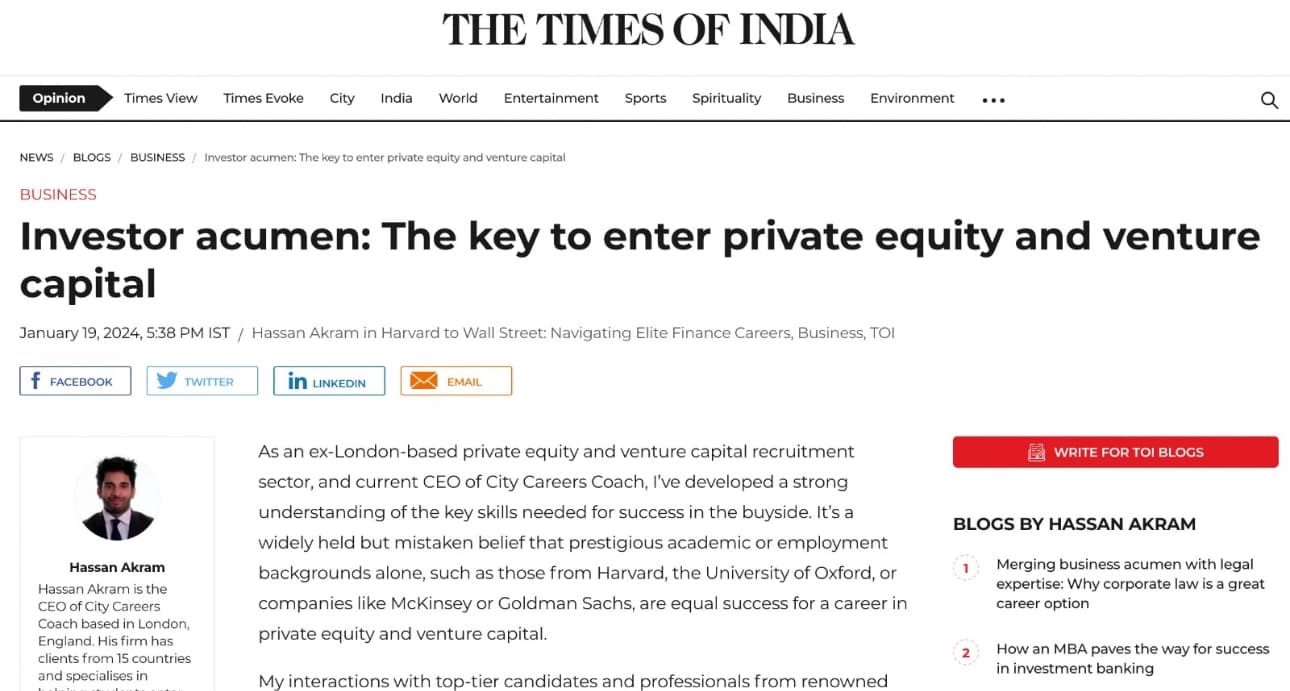
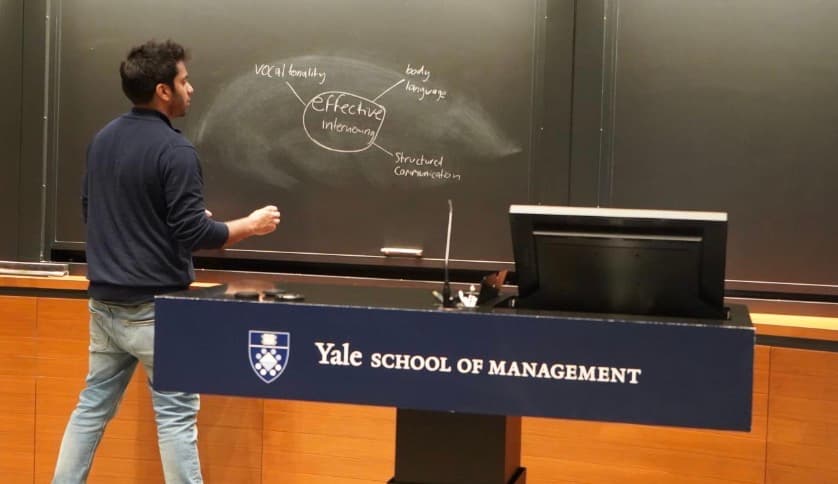
Across recruitment work and ECS advisory, Hassan Akram has reviewed more than 10,000 applications and related candidate materials. He is a UCL graduate, has given invited sessions for MBA student clubs at Harvard Business School, MIT Sloan and Yale School of Management, and has written for The Times of India, including a February 2025 piece on the route into KKR, McKinsey and Goldman Sachs. Elite Careers Strategy operates from a Mayfair address.
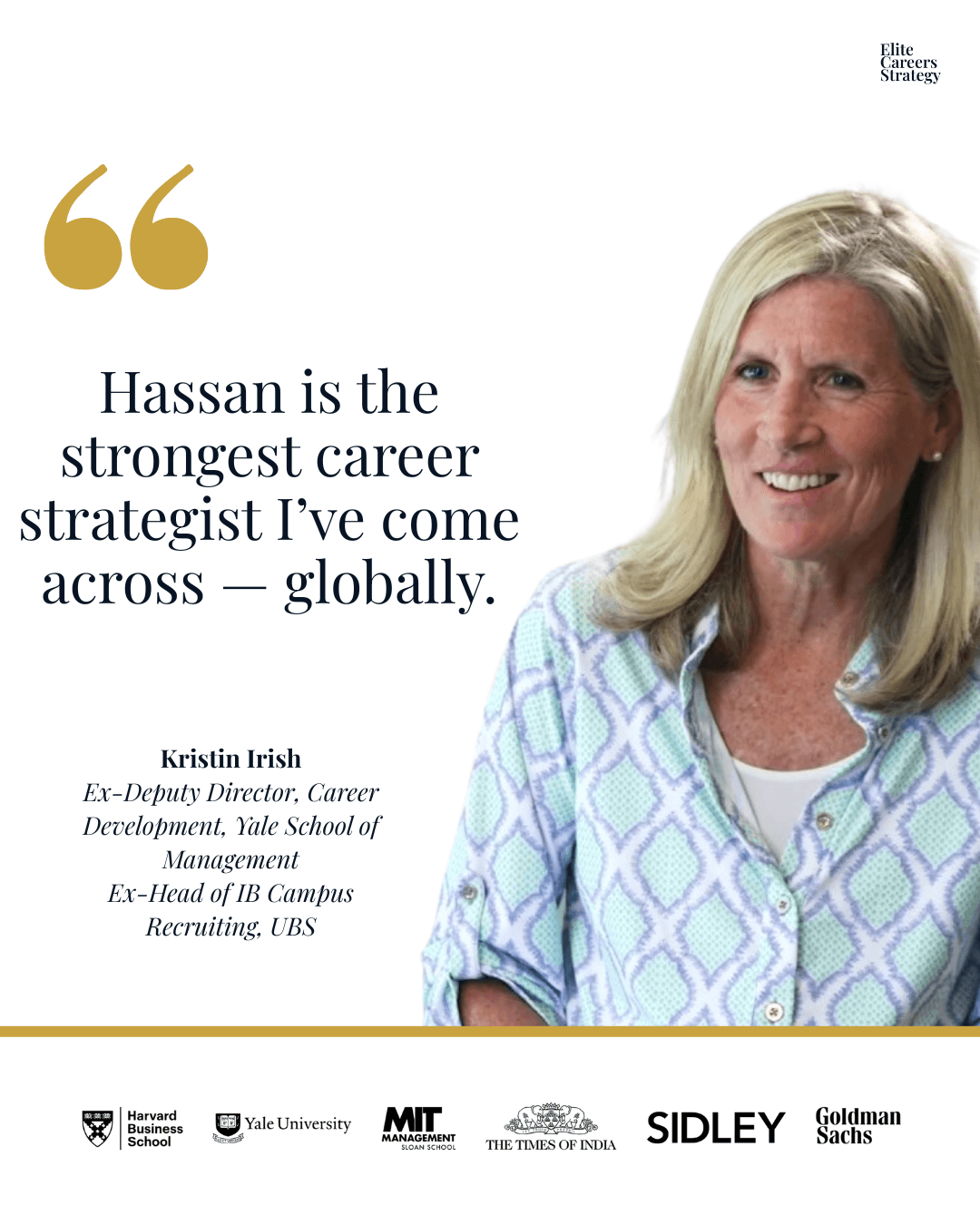
"The strongest career strategist I have encountered - anywhere in the world." - Kristin Irish, Former Head of IB Campus Recruiting, UBS Investment Bank New York | Former Deputy Director of Career Development, Yale School of Management.
Outcomes vary. Past results do not guarantee future results. Some clients are anonymised, all evidence is on file.