Commercial Fluency in Investment Banking Superdays: How to Prepare for MD Interviews
Hassan Akram on the commercial fluency that senior bankers often probe at superday stage, and how ECS prepares candidates for case study, cross-sell, valuation and market view questions.

In ECS's experience, the senior bankers who interview at superday stage often probe commercial fluency: whether a candidate can connect deal rationale to sector risk, reason about capital structure in real time, and hold a clear view under pressure. ECS does not know how any bank scores its interviews; this article describes how ECS prepares candidates for those conversations. Hassan Akram, founder of Elite Careers Strategy, has reviewed more than 10,000 applications and related candidate materials across recruitment work and ECS advisory, and ECS has 106 documented outcomes and selection progressions across 53 candidate journeys, including at Goldman Sachs, Morgan Stanley, Blackstone and HSBC. Technical knowledge is necessary. In ECS's view, thinking commercially without prompting is what distinguishes the strongest candidates.
What behaviours show commercial fluency in a superday interview?
ECS's view is that these behaviours, more than definitions such as the difference between enterprise value and equity value, show whether a candidate thinks like a client-facing banker when the answer is not scripted. Karam Kahlon's case study shows the preparation in practice. Karam, from Exeter, had resat his A-levels and had no investment banking interviews before working with ECS. Across a multi-year 1-to-1 Advisory engagement that included Commercial Fluency work, he secured the HSBC 2026 Investment Banking Internship and the Blackstone 2026 Spring Insight Programme.

How can candidates show genuine commercial insight rather than rehearsed commentary?
Follow-up questions are the usual test. If you open with a rehearsed view on technology M&A or European equity capital markets, expect a question from an unexpected angle. In ECS's mock interviews, genuine understanding holds up under follow-ups; rehearsed commentary does not.
The tell is specificity. Weak candidates describe market trends in generalities. Strong candidates connect market trends to specific client decisions. For example, a weak candidate says "rising interest rates are pressuring valuations". A strong candidate says "rising rates have compressed EV multiples in sponsor-backed deals, which is why private equity firms are shifting to add-on acquisitions at lower multiples rather than platform buyouts at elevated pricing". The second answer demonstrates commercial fluency because it connects macro conditions to client behaviour and deal structure.
Expect to be asked to think beyond the deal in front of you. If a case involves a private equity sponsor acquiring a business, a natural follow-up is what happens if the sponsor cannot exit in three years. A strong answer covers secondary buyouts, dividend recapitalisations or IPO timing risk. The ECS Commercial Fluency framework prepares candidates for follow-ups by anchoring each answer in client value, sector risk and capital structure.
What framework helps non-target candidates structure commercial answers?
ECS applies its Commercial Fluency method to interview answers through three questions. First, what is the client's objective? Second, how do sector dynamics or market conditions constrain or enable it? Third, what trade-offs does the decision involve? The structure works for market view questions, case studies and technical follow-ups.
Example: "Why would a sponsor choose an add-on acquisition over a platform buyout in this market?" Weak answer: "Add-ons are cheaper and faster to integrate." Strong answer: "The sponsor's objective is to build EBITDA scale within the fund's exit window, typically three to five years. In a market where platform buyouts are pricing at elevated multiples, add-ons allow the sponsor to deploy capital at lower entry valuations while consolidating margin through operational synergies. The trade-off is integration risk, but the risk is mitigated if the platform has proven playbook and management capacity to absorb bolt-ons." The second answer demonstrates commercial fluency because it connects client objective, market constraint, and risk-return trade-off in 60 seconds.
ECS's view is that structure helps non-target candidates compete with candidates who have more background knowledge but less discipline in using it. Maziko M., a state-school student at the University of Glasgow and an ECS Scholarship client, secured a place on the Citi Insights Programme, a three-day spring insight programme at Citi's London office in one cycle, with Commercial Fluency part of the preparation for markets-side interviews.

How should candidates handle cross-sell questions?
Cross-sell questions test whether a candidate thinks like a relationship banker rather than a product specialist. A typical example: "Your client has just raised £500 million in a Series C. What adjacent services would you pitch?" A list of products is weak. A strong answer explains why the client needs those services now, given its capital structure and growth path.
Strong answer: "Post-Series C, the client has growth capital but no exit clarity. I would pitch three services. First, M&A advisory for add-on acquisitions to accelerate product-market fit ahead of exit. Second, debt advisory to layer in growth debt and extend runway without diluting equity. Third, ECM advisory to model IPO timing and build investor relationships early. The rationale is that a Series C client is two years from exit, so every service I pitch must either accelerate growth or de-risk the exit path." This answer demonstrates commercial fluency because it connects capital structure, client lifecycle, and cross-sell rationale in a single breath.
Follow-ups may go cross-border. If the client is UK-based with US expansion plans, be ready to discuss currency hedging or access to US debt markets. What matters, in ECS's view, is less product knowledge than whether you think about the client's risks in real time, without prompting.
The ECS framework: Commercial Fluency
The Commercial Fluency framework trains candidates to answer three questions before speaking. First, what is the client trying to achieve? Second, what market or sector constraints limit that objective? Third, what trade-offs does the client face in choosing this path over alternatives? These three questions structure every answer at superday level, from case studies to technical follow-ups to market view questions.
The framework also trains candidates to price risk explicitly. Weak candidates describe risk in abstract terms. Strong candidates quantify risk or explain how risk changes deal pricing, structure, or timing. For example, "regulatory uncertainty in European tech M&A has lengthened deal timetables and pushed parties to negotiate break fees that allocate the risk of a deal failing". This is commercial fluency. You are not describing risk. You are explaining how risk changes client behaviour.
ECS applies the method in the 1-to-1 Advisory through case study drills under realistic pressure: follow-up questions without preparation, connecting deal rationale to sector risk in about a minute, and defending trade-offs without hedging. It is how ECS prepares non-target candidates for superdays at banks such as Goldman Sachs and Morgan Stanley.
Documented ECS outcomes at HSBC, Blackstone and beyond
Karam Kahlon, from Exeter, had resat his A-levels and had no investment banking interviews before working with ECS. Across a multi-year 1-to-1 Advisory engagement that used STAR-3, PEAL-3 and Commercial Fluency, he secured the HSBC 2026 Investment Banking Internship and the Blackstone 2026 Spring Insight Programme.
Maziko M., a state-school student at the University of Glasgow and an ECS Scholarship client, secured a place on the Citi Insights Programme, a three-day spring insight programme at Citi's London office. ECS does not attribute those outcomes to any single framework.
Vivek Patel, who applied with a BTEC DDD profile, secured a Morgan Stanley FRS placement using ECS's free content only; his case record lists STAR-3 and Commercial Fluency.
How should candidates handle valuation questions?
Candidates should be able to build a DCF and use trading and precedent transaction multiples; interviews commonly test both. ECS also prepares candidates for the commercial question behind them: why a client would rely on one method over another, given the deal and the market. Reciting valuation theory is weak. Explaining the trade-offs is strong.
Example: "Would you use DCF or comps to value this target?" Weak answer: "DCF is more accurate because it reflects intrinsic value." Strong answer: "It depends on deal context. If the buyer is a financial sponsor with a three-year exit window, comps are more relevant because the sponsor will exit at market multiples, not intrinsic value. If the buyer is a strategic acquirer with long-term integration plans, DCF is more relevant because the buyer can realise synergies over time. The trade-off is precision versus market reality." This is commercial fluency. You are not choosing a valuation method. You are explaining why the client would choose it.
Be ready to connect valuation to capital structure. If the target is highly leveraged, a follow-up might ask how that changes the valuation or the deal structure; a strong answer explains how existing debt limits the price or calls for more equity. In ECS's view, the test is whether you think about capital structure constraints in real time.
How should candidates handle market view questions?
Market view questions ask you to defend a position under pressure. Hedging every answer is weak; stating a view, acknowledging the risk and explaining the reasoning is strong. In ECS's view, the point of the question is less whether your view is right than whether you can reason like a client-facing banker when the answer is not obvious.
Example: "Do you think European M&A will recover in the next 12 months?" Weak answer: "It depends on interest rates and regulatory conditions." Strong answer: "I think European M&A will remain subdued in the next 12 months because elevated interest rates are constraining sponsor-backed deals and corporate acquirers are prioritising deleveraging over M&A. The risk to this view is that a sharp rate cut or distressed asset opportunities could accelerate deal flow, but the base case is muted activity until financing conditions improve." This is commercial fluency. You are stating a view, pricing the risk, and defending the logic.
Expect to be asked to connect your view to a client decision. If you say M&A will stay subdued, a natural follow-up is what you would advise a client considering an acquisition. In ECS's view, the move from market view to client impact is the heart of commercial fluency.
Next step
The ECS 1-to-1 Advisory reviews candidates' preparation and drills the Commercial Fluency method under realistic interview pressure. Apply for a diagnostic at /start. Families can read Hassan's methodology for parents or explore the Corporate Law Vault for ECS's firm research.
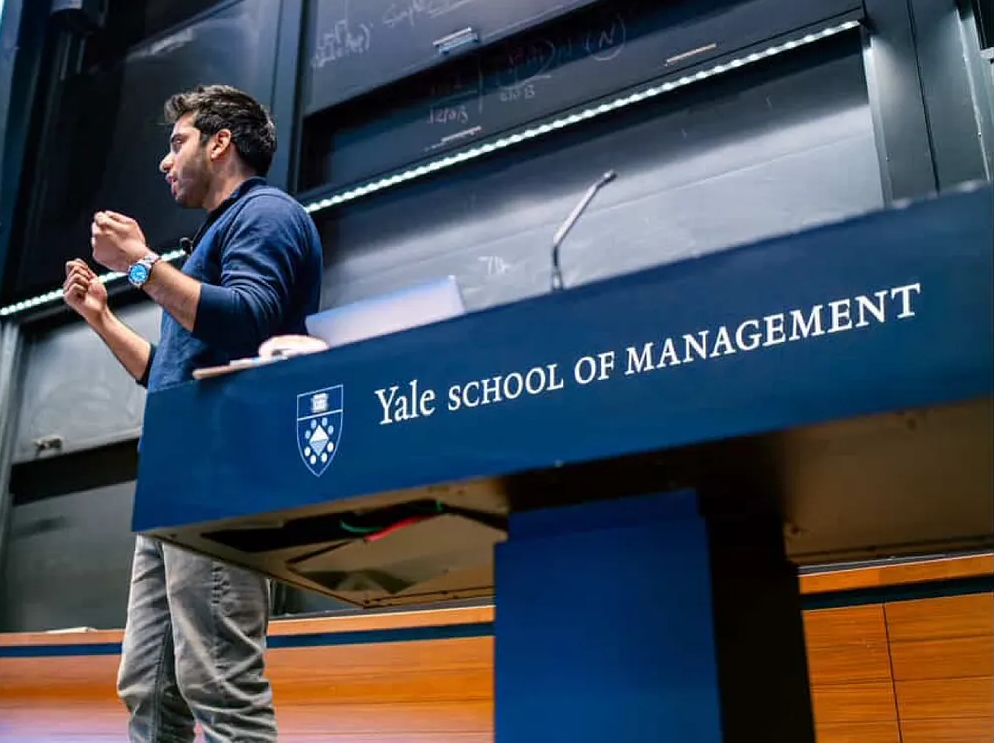
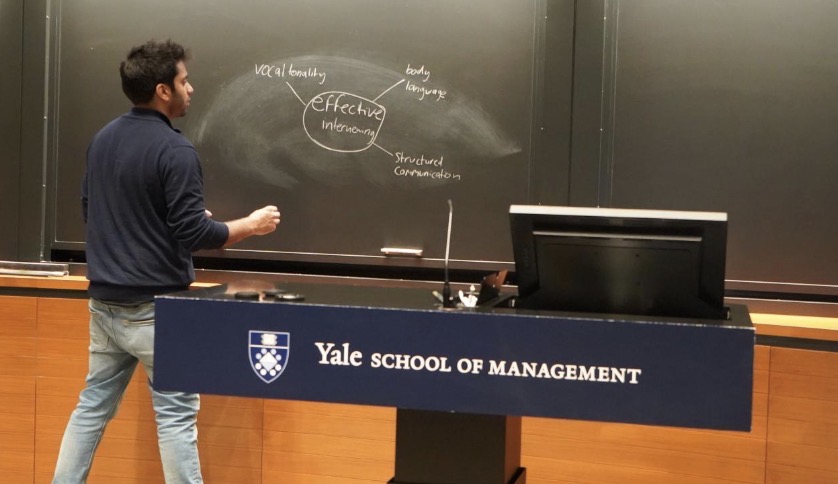
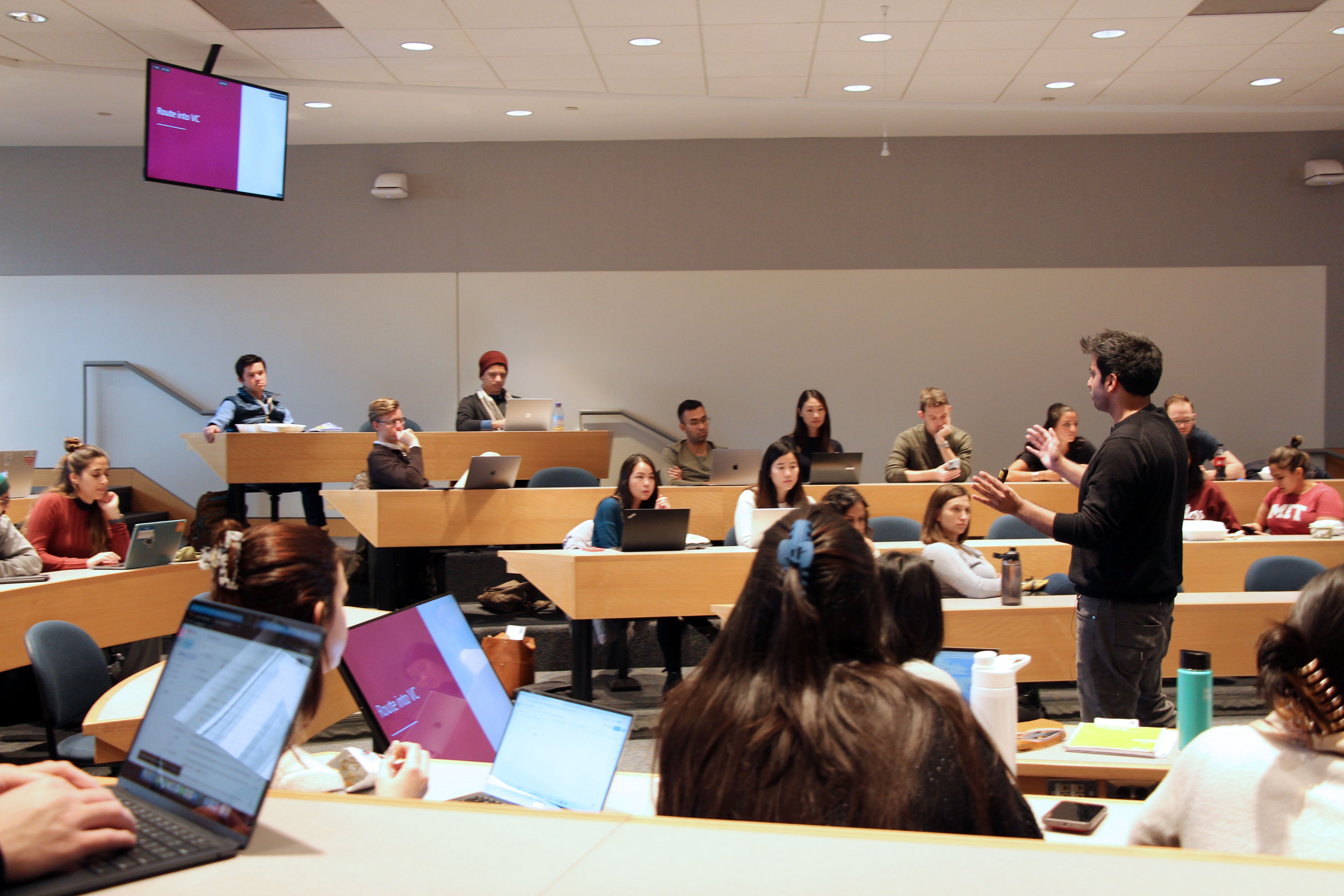
Hassan Akram is the founder of Elite Careers Strategy. Across recruitment work and ECS advisory, he has reviewed more than 10,000 applications and related candidate materials. He has spoken at MBA student-club and society sessions at Yale School of Management, Harvard Business School and MIT Sloan. ECS is independent of every employer and institution named. Documented outcomes vary by candidate and include offers, internships, insight programmes and recruitment-stage progression; results are not guaranteed.
The Next Step
Apply the methodology with guidance.
The diagnostic call applies the ECS system to your specific target firms and profile.
Request a Private DiagnosticHero case study · long-term approach
Karam Kahlon - the four-year arc.

University of Exeter, non-target. Resitting A-levels at AAB. No IB interviews before ECS. A four-year private advisory engagement - the longest-documented continuous client relationship in the ECS track record. Each outcome built on the last.
Year 1: Morgan Stanley Step-In/Step-Out programme, HSBC Spring Week converting to Summer IB Internship, 3i two-day PE insight placement. Year 4 (2026): HSBC 2026 Investment Banking Internship and Blackstone 2026 Spring Insight London. Both confirmed, both verified.
“Honestly you’re the best in the business.”Karam Kahlon, named with full consent