
How to Get into Blackstone Private Equity from Oxbridge
Hassan Akram on the common routes from Oxbridge into Blackstone private equity, the deal fluency candidates should build, and how ECS prepares them, including VTMR for the CV.

Most people in private equity investment teams in London, including at Blackstone, arrive with prior transaction experience, typically after an investment banking analyst role. Blackstone also advertises early-careers programmes, so check its careers site for what is open in London in your cycle. For Oxbridge candidates the degree helps open doors; it does not replace the deal fluency that private equity interviews probe. Hassan Akram, founder of Elite Careers Strategy, has reviewed more than 10,000 applications and related candidate materials across recruitment work and ECS advisory. ECS has documented client outcomes at Goldman Sachs, Morgan Stanley and Blackstone, including a Blackstone Spring Insight place. This guide sets out the common routes, the deal fluency to build, and how ECS prepares candidates for it.
What is the standard route into Blackstone private equity from Oxbridge?
Bulge-bracket and elite boutique M&A and leveraged finance teams in London are common feeders, because the work exposes analysts to the leveraged buyout mechanics that private equity interviews tend to explore: sources-and-uses tables, capital structure, returns analysis and due diligence. In the preparation ECS runs, the test we set is whether a candidate can explain the risk in a European mid-market buyout at three levels: valuation, management capability and sector cyclicality. Candidates who can only recite textbook theory struggle with that test whatever their university. Karam Kahlon's case study documents a different starting point: a non-target candidate from Exeter who secured a Blackstone Spring Insight place across a multi-year ECS 1-to-1 Advisory engagement.

Does Blackstone recruit undergraduates directly into private equity?
Blackstone advertises early-careers programmes, including insight programmes for students, and what is open to London applicants changes from cycle to cycle. Check Blackstone's careers site for current entry points rather than relying on second-hand accounts, including this one. What ECS can say is that direct undergraduate entry into a private equity investment team is scarce across the industry, and many people in those teams joined after banking.
Some Oxbridge candidates treat a Blackstone Spring Insight place as a private equity trajectory in itself. It is better read as an early credential: evidence of interest, a chance to see how the firm works, and a useful line on the CV when applying for banking internships the following year. ECS clients are advised to treat insight programmes as a step in a longer plan rather than an end point. The ECS vault holds ECS's research on London private equity pathways, compiled from public sources.
What deal fluency should Oxbridge candidates build for Blackstone?
Private equity interviews commonly ask candidates to take apart a leveraged buyout at transaction level and at portfolio level: how the amount of debt affects equity returns, how sector consolidation might affect exit multiples, and whether a management team can deliver a value creation plan under leverage. An Oxbridge degree does not teach this. Corporate finance modules cover valuation theory; they rarely cover how a competitive auction works in practice or why a sponsor pays the price it does.
ECS prepares candidates to answer a question such as 'Walk me through a buyout you have followed' in four layers. Valuation: the entry multiple and how it compares with sector precedents. Management: whether the team has the operational capability to deliver margin expansion without breaking the business. Market: whether the sector is growing or consolidating, and whether that supports the exit assumption. Risk: the downside case if the macro environment deteriorates or refinancing becomes harder. In ECS's experience, candidates who answer with a textbook WACC calculation make much less of that question than candidates who talk about sector risk and management credibility. The difference is commercial fluency, not academic pedigree.
The ECS approach: deal walk-throughs for Blackstone London, and VTMR for the CV


The four-layer walk-through organises a sponsor-side transaction answer. Valuation: state the entry multiple and benchmark it against comparable transactions in the same sector. Management: assess the team's record on revenue growth or margin expansion. Market: identify whether the sector is consolidating or fragmenting, and whether regulation is a tailwind or a headwind. Risk: set out the downside case if covenants tighten or the business misses its EBITDA plan. The VTMR framework does a different job. It structures CV bullets as Verb, Task, Metric and Result, so that transaction experience from a banking analyst role reads clearly on paper.
Private equity recruitment often includes a case study or modelling exercise, for example a short investment memo on a hypothetical business with limited time to prepare a recommendation. Formats vary by firm and by year. ECS uses the walk-through to practise for this: if the entry multiple is high relative to precedents, the candidate must explain whether management quality or market growth justifies the premium; if leverage is aggressive, the candidate must discuss covenant headroom and refinancing risk. ECS asks candidates to treat the exercise as an investment committee decision rather than a theory test.
The ECS 1-to-1 Advisory applies the walk-through to real, publicly reported transactions, including Blackstone portfolio companies. We take apart recent European mid-market deals, compare entry multiples with sector benchmarks, review management teams through public sources, and model downside scenarios with sensitivity tables. The aim is the fluency that private equity interviews tend to probe from the first round.
Documented ECS outcomes at Blackstone and bulge-bracket banks
Karam Kahlon, from the University of Exeter, secured a place on the Blackstone 2026 Spring Insight Programme and the HSBC 2026 Investment Banking Internship after a multi-year ECS 1-to-1 Advisory engagement. He had resat his A-levels and had no investment banking interviews before working with ECS. The engagement focused on structured written applications (STAR-3), interview structure (PEAL-3) and sector-specific commercial fluency across banking and private equity. It is the clearest example ECS has of commercial preparation built over several cycles from a non-target starting point.
Maziko M., a state-school student at the University of Glasgow and an ECS Scholarship client, secured a place on the Citi Insights Programme, a three-day spring insight programme at Citi's London office, in a single cycle. Spring weeks are early steps towards bulge-bracket analyst roles, which are in turn a common feeder into private equity. The Oxbridge advantage in that pipeline is real. In ECS's view it is not a substitute for deal fluency when the private equity interview comes.
Vivek Patel, who applied with a BTEC DDD profile, secured a Morgan Stanley FRS placement using ECS's free content only; he did not have a paid engagement. In his words: 'BTEC DDD and Morgan Stanley. The frameworks made it possible.' The private advisory adds individual feedback and deal-level case preparation. The longer pathway is the same either way: build sector-level commercial fluency, win the banking role, execute well for two years, and apply when private equity recruitment opens.
Next step
The ECS 1-to-1 Advisory reviews Oxbridge candidates' materials and structures deal walk-through and CV preparation for private equity recruitment, including Blackstone. Apply for a diagnostic at /start. Families can read Hassan's methodology for parents or explore the Corporate Law Vault for ECS's research on London private equity pathways.
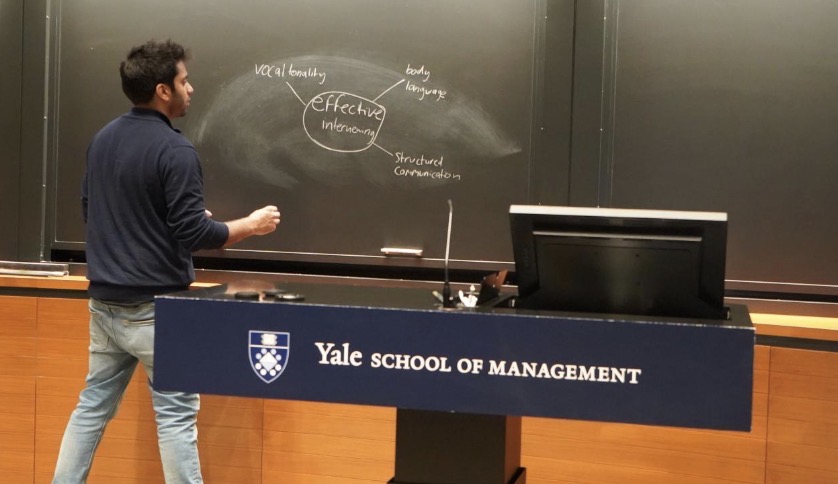
Hassan Akram is the founder of Elite Careers Strategy. Across recruitment work and ECS advisory, he has reviewed more than 10,000 applications and related candidate materials. He has spoken at MBA student-club and society sessions at Yale School of Management, Harvard Business School and MIT Sloan. ECS is independent of every employer and institution named. Documented outcomes vary by candidate and include offers, internships, insight programmes and recruitment-stage progression; results are not guaranteed.
The Next Step
Apply the methodology with guidance.
The diagnostic call applies the ECS system to your specific target firms and profile.
Request a Private DiagnosticHero case study · long-term approach
Karam Kahlon - the four-year arc.

University of Exeter, non-target. Resitting A-levels at AAB. No IB interviews before ECS. A four-year private advisory engagement - the longest-documented continuous client relationship in the ECS track record. Each outcome built on the last.
Year 1: Morgan Stanley Step-In/Step-Out programme, HSBC Spring Week converting to Summer IB Internship, 3i two-day PE insight placement. Year 4 (2026): HSBC 2026 Investment Banking Internship and Blackstone 2026 Spring Insight London. Both confirmed, both verified.
“Honestly you’re the best in the business.”Karam Kahlon, named with full consent