
The parent's role in elite careers decisions for international families
Hassan Akram on when parents should lead, when they should delegate, and how Elite Careers Strategy structures family-level advisory for candidates targeting firms such as Goldman Sachs, Kirkland & Ellis and Blackstone.

In ECS's view, parents add most value through timing, the decision to bring in expert support, and removing logistical friction, while the student owns motivation and execution. Much of Elite Careers Strategy's advisory work is with international families navigating UK application cycles, US recruiting timelines and private equity recruiting, for firms such as Goldman Sachs, Kirkland & Ellis and Blackstone. Hassan Akram, founder of ECS, has reviewed more than 10,000 applications and related candidate materials across recruitment work and ECS advisory. I clarify the division between parent and student in every parent briefing I run.
Where do parents add value in elite careers decisions?
Second, the decision to bring in expert support. Many university careers services do good work, but few can give individual, senior feedback on every application for the most selective firms. I draw on recruitment work and ECS advisory in which I have reviewed more than 10,000 applications and related candidate materials. The decision to engage support is the parent's. The execution is the student's.
Third, removing logistical friction. International families deal with visa questions, UK application cycles that open many months before programmes start, and US recruiting timelines that differ again and have moved earlier in recent years. Parents who help with logistics, keep track of deadlines and protect the student's time during interview periods make the process easier to manage. Karam Kahlon's case study documents a multi-year engagement that took him from resitting his A-levels to the HSBC 2026 Investment Banking Internship and the Blackstone 2026 Spring Insight Programme. The work was Karam's.
When should parents delegate to Elite Careers Strategy?
ECS's view is that outside support makes most sense when the family has no first-hand experience of how recruitment at the target firms works. Many successful families are in that position, and two mistakes follow. The first is assuming that success in one's own career translates into insight about graduate recruitment today. The second is assuming a university careers service can provide individual, senior support on every application, which is rarely possible at scale.
Elite Careers Strategy runs three concurrent work streams in the 1-to-1 Advisory. First, direct engagement with the student on application execution, STAR-3 interview responses, and commercial fluency drills. Second, structured parent briefings where I explain what the student is working on, where the current answers fall short and what the revision timeline looks like. Third, family-level strategic planning sessions where we align on firm targets, application sequencing, and backup planning if the first-choice firm rejects.
The parent briefings address a common problem: the student receives support, but the parent does not understand why the approach differs from generic advice. I do not work with students in isolation from their families. Parents need to understand the frameworks so they can support the work without undermining it, which matters especially for international families where a parent may hold strong views on CV style or interview manner that differ from what ECS advises. Read Hassan's methodology for parents for the complete advisory structure.

How does ECS structure family-level advisory?
The 1-to-1 Advisory starts with a diagnostic session where I review the student's current CV, academics, and target firms. That session produces a written gap analysis that identifies specific deficiencies in commercial fluency, technical preparation, or CV structure. The parent receives the same gap analysis. The parent then decides whether to proceed with ongoing advisory or to address the gaps independently.
If the family proceeds, the advisory runs in structured cycles, each combining direct sessions with the student, a parent briefing and asynchronous review of applications. The student submits draft applications, STAR-3 answers and firm-specific case analyses, and I return marked-up revisions with specific corrections. The parent briefing summarises progress, flags risks and adjusts the application timeline if the student is behind.
The parent briefing also clarifies what the parent should not do. I see three common parental interference patterns. First, editing the student's CV or cover letter without understanding the commercial evidence the application needs to show. The result can be a polished document that says very little. Second, pressuring the student to apply to firms outside their genuine interest area because the parent values brand prestige over career fit. That produces weak motivation signals in interviews. Third, micromanaging interview preparation to the point where the student cannot internalise the STAR-3 framework. The parent's role is strategic support, not tactical execution.
The ECS framework: Commercial Fluency and STAR-3
Commercial fluency is the ability to discuss firm-specific transactions, practice areas, and market positioning in interviews without sounding like you memorised a press release. In ECS's experience, commercial questions come up throughout interviews at firms such as Goldman Sachs, Kirkland & Ellis and Blackstone. The student who can discuss why Kirkland advised on a specific sponsor-side transaction, or why Goldman Sachs won a specific M&A mandate, signals genuine interest and research depth. The student who recites generic facts about the firm's culture or values signals superficial preparation.
I build commercial fluency through firm-specific case studies where the student analyses recent transactions, maps the firm's competitive positioning, and prepares interview responses that reference specific deals. The parent does not need to understand the technical details of a leveraged buyout or a debt capital markets transaction. The parent needs to understand that commercial fluency is not optional at elite firms, and that building it requires structured practice over months, not days.
STAR-3 is the framework I developed for competency and behavioural answers. Standard STAR (Situation, Task, Action, Result) often produces generic answers. STAR-3 keeps the Situation and Task to a sentence each, develops three Actions (technical execution, strategic thinking, leadership and influence) and three Results (goal achieved, personal development, recognition from a named third party), and closes with a Link to the firm. Asked "Tell me about a time you led a team", a student using STAR-3 gives a specific result (delivered three weeks early), a skill used since (delegating technical tasks while keeping strategic oversight) and a Link to the firm's work, rather than a generic leadership story.
Parents ask whether the student can learn STAR-3 independently. Some do: several documented ECS outcomes came from candidates who used only ECS's free content, including Kalen Harrald's Clifford Chance SPARK place. What independent study rarely provides is iterative feedback on specific answers: correcting weak verbs, tightening results and testing the Link. Parents can support the work by protecting the student's practice time and holding them to the revision timeline. The technical feedback is ECS's job.
Documented ECS outcomes
Karam Kahlon came to ECS from Exeter, a non-target for the most competitive front-office pipelines, having resat his A-levels and with no investment banking interviews. Across a multi-year 1-to-1 Advisory engagement using STAR-3, PEAL-3 and Commercial Fluency, he secured the HSBC 2026 Investment Banking Internship and the Blackstone 2026 Spring Insight Programme. The work was Karam's.
Maziko M., a state-school student at the University of Glasgow with no network in finance, started with ECS's free content and was selected on merit as an ECS Scholarship client. The preparation covered the CV, written applications, interviews and firm-specific commercial fluency across three parallel processes, and the documented outcomes were a place on the Citi Insights Programme, a three-day spring insight programme at Citi's London office.
Kalen Harrald secured a Clifford Chance SPARK 2026 place using ECS's free content, before becoming an ECS Scholarship client, and is now continuing into the training contract cycle. SPARK also illustrates a timing point for parents: training contracts at large City firms are usually offered around two years before they start, so the key applications fall well before the final year. Families who assume their child can wait until then risk missing the main window.

Next step
The ECS 1-to-1 Advisory reviews candidates' applications and builds their preparation. Apply for a diagnostic at /start. Families can read Hassan's methodology for parents or explore the Corporate Law Vault for ECS's firm research.
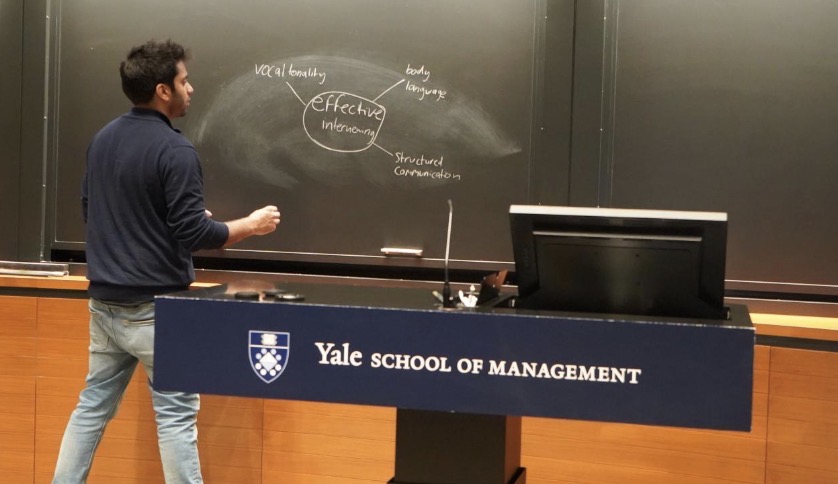
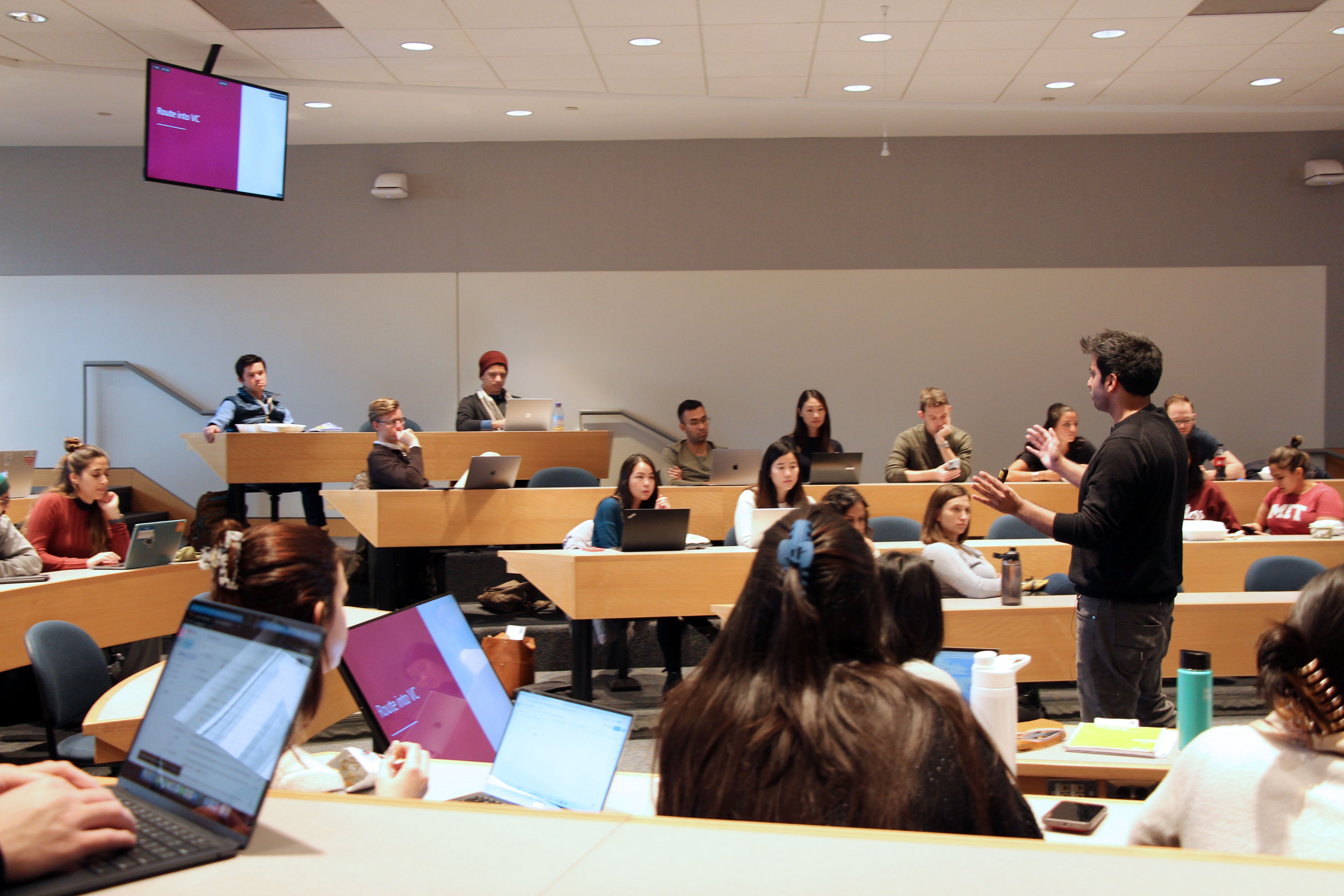
Hassan Akram is the founder of Elite Careers Strategy. Across recruitment work and ECS advisory, he has reviewed more than 10,000 applications and related candidate materials. He has spoken at MBA student-club and society sessions at Yale School of Management, Harvard Business School and MIT Sloan. ECS is independent of every employer and institution named. Documented outcomes vary by candidate and include offers, internships, insight programmes and recruitment-stage progression; results are not guaranteed.
The Next Step
Apply the methodology with guidance.
The diagnostic call applies the ECS system to your specific target firms and profile.
Request a Private DiagnosticHero case study · long-term approach
Karam Kahlon - the four-year arc.
University of Exeter, non-target. Resitting A-levels at AAB. No IB interviews before ECS. A four-year private advisory engagement - the longest-documented continuous client relationship in the ECS track record. Each outcome built on the last.
Year 1: Morgan Stanley Step-In/Step-Out programme, HSBC Spring Week converting to Summer IB Internship, 3i two-day PE insight placement. Year 4 (2026): HSBC 2026 Investment Banking Internship and Blackstone 2026 Spring Insight London. Both confirmed, both verified.
“Honestly you’re the best in the business.”Karam Kahlon, named with full consent