1. Latham and Watkins at the elite-entry level
Latham & Watkins LLP is one of the largest law firms in the world by revenue and lawyer count, with more than thirty offices, a New York and California heritage, and a large London office at the centre of its European platform. Where Kirkland & Ellis is most associated with private equity and restructuring, Cleary Gottlieb with sovereign and cross-border M&A, and Davis Polk and Sullivan & Cromwell with capital markets and M&A for large institutions, Latham is known for breadth across capital markets, leveraged finance, project finance, M&A and the regulatory work that surrounds large transactions.
Latham's London office is one of the largest US-firm offices in the City. It is particularly known for finance, capital markets and high-yield debt; legal directories consistently rank its high-yield and leveraged finance work highly, and candidates should cite the current rankings directly. Its project finance practice acts on energy, infrastructure and natural resources mandates across Europe, the Middle East, Africa and Latin America. The London corporate, capital markets and M&A practices are integrated with the firm's US platform, so a London trainee trains in a genuinely cross-border environment. Regulatory and litigation practices, including antitrust, white collar, environment, energy regulation and tax, sit alongside the transactional work.
Newly qualified pay in the London office sits at the top of the US-firm London band, with the headline figure currently anchored above GBP 200,000 at the leading US firms in London, exclusive of bonus. In the US offices, first-year associate pay follows the market rate paid across the large US firms. This guide separates what Latham publishes about its recruitment, which candidates should confirm on the firm's careers pages; ECS's observations and interpretation, which are labelled; and ECS's documented outcomes. Across recruitment work and ECS advisory, Hassan Akram has reviewed more than 10,000 applications and related candidate materials. That is practitioner observation, not knowledge of Latham's internal assessment criteria.
2. Application pathways
Latham has three main entry routes for students and graduates. Offices, eligibility and dates change between cycles; the firm's careers pages are the authority.
Vacation Scheme (London). This is the dominant route into the Latham London training contract. The vacation scheme is open to penultimate-year law students and final-year non-law students, with smaller first-year and open-day touchpoints earlier in the cycle. Candidates report a week spent with associates and partners across practices such as corporate, finance, capital markets, project finance and litigation, with written and case-study work and partner interviews. ECS's view, consistent with the wider London market, is that the scheme application is the harder gate.
Summer Associate programme (US). This is the dominant route into the Latham US partnership track. The programme is primarily structured around the 2L summer for US JD candidates, with a smaller cohort of 1L Summer Associates on a separate track. Latham's Summer Associate programme operates across New York, Washington DC, Bay Area, Los Angeles, Chicago, San Diego, Orange County, Houston, Boston, Austin, and additional US offices, with split summer programmes available to qualifying candidates who want experience across more than one office during the same 2L summer. As at most large US firms, the summer programme is the main source of the incoming associate class.
Direct training contract applications. Where the firm accepts direct training contract applications, they suit London candidates who cannot attend a vacation scheme. Check the current cycle's arrangements with the firm. Lateral hiring at associate level is a separate process.
Practice groups. The Latham training experience is anchored on the firm's transactional and regulatory breadth. Trainees in London and Summer Associates in the US rotate through seats and assignments that reflect the firm's structural strengths. Corporate and M&A is one of the largest practices and integrates with private equity and emerging companies work. Finance is one of the deepest practices in the firm and covers leveraged finance, banking, restructuring, and direct lending. Capital markets covers equity capital markets, debt capital markets, high-yield, and structured products. Project finance and project development covers energy, infrastructure and natural resources. Litigation and trial covers complex commercial litigation, securities litigation, and trial practice. Antitrust integrates with the transactional groups on deal-driven competition work and runs a standalone enforcement and litigation practice in parallel. Tax sits behind the transactional engine. Intellectual property covers IP litigation, transactional IP, and patent prosecution. Environment, land, and resources sits inside the firm's broader energy and infrastructure platform. The energy practice runs across regulatory, transactional and project finance work.
3. Application process
The outline below is ECS's summary, based on the firm's recruitment information and what candidates report. Formats change between cycles, so confirm the current process with the firm.
Stage one: online application form. Candidates report an online form covering the standard questions. Why law. Why a US elite firm rather than a Magic Circle, Silver Circle, or City top tier firm. Why Latham specifically, with the answer expected to demonstrate genuine engagement with the firm's finance, capital markets, project finance, and integrated US-London platform rather than a generic recitation of firm facts. A work experience competency question requiring the candidate to demonstrate a specific competency through a structured situational example. A commercial scenario or commercial awareness prompt; ECS's reading is that it tests whether the candidate can think about a transaction or market event in terms of capital structure, incentives and regulation rather than headlines. In the applications ECS reviews, generic answers, particularly on Why Latham, are the most common weakness.
Stage two: online assessments. Critical thinking and situational judgement assessments are used to screen for the analytical and judgement baseline that the firm requires. Candidates who clear the form but fail the assessment baseline do not proceed.
Stage three: video interview. Where used, a recorded video interview is used to test motivation, commercial reasoning, and the ability to structure a response under time pressure. ECS's view is that delivery matters here as much as content.
Stage four: vacation scheme week (London) or Summer Associate programme (US). This is the substantive assessment. In London, candidates spend the VS week sitting with associates, attending partner sessions, completing a written exercise, working through a case study, and undertaking partner interviews. In the US, the Summer Associate programme runs across the 2L summer and is the main assessment window for the full-time offer. Summer Associates are assigned to live deal teams, live capital markets transactions, live project finance mandates, and litigation matters, deliver work product to associates and partners, attend internal training, and are evaluated continuously across the programme. The written and oral work product produced by the Summer Associate is the substantive evidence base for the full-time offer decision.
Stage five: TC offer interview or Summer Associate-to-FT offer. In London, VS-converted candidates and direct TC applicants who clear the prior stages attend a final TC offer interview with senior partners. Candidates report questions on commercial reasoning, independent thinking and how they respond to challenge. In the US, the summer programme leads to full-time offer decisions after the summer.
4. How ECS prepares candidates for Latham: the six frameworks
This section describes ECS's own methods. The frameworks are tools ECS uses to organise a candidate's preparation. They are not Latham's assessment criteria, and Latham does not assess candidates against them.
STAR-3®. STAR-3® is designed to help candidates develop a competency example in more depth than a standard STAR answer: three categorised actions (technical execution, strategic thinking, and leadership and influence), three categorised results, and a closing link to the work of the role. ECS uses it for the competency questions on the London form and competency questions at interview.
PEAL-3®. PEAL-3® structures motivation answers (why law, and why a US firm in London rather than a Magic Circle or Silver Circle firm) as Point, Evidence, Analysis and Link, repeated across at least three points. The aim is an answer with a clear line of reasoning that still holds when an interviewer asks a follow-up question.
PEAL-X®. PEAL-X® is ECS's framework for the why-this-firm question: every sentence is anchored to a verifiable, public fact about the firm. For Latham, that means going beyond 'large firm, finance leader' to the firm's published work in leveraged finance, high-yield, capital markets and project finance, and explaining why its integrated US-London platform suits the candidate's development. The test ECS applies is simple: if the answer could be sent to another firm with only the name changed, it is not finished.
VTMR™. VTMR™ (Verb, Task, Metric, Result) is ECS's CV and written-application framework. It asks candidates to replace general descriptions with what they did, the task involved, a measure where one honestly exists, and the result.
BDC™. BDC™ (Began, Developed, Confirmed) is ECS's framework for group exercises, used where an assessment centre or scheme includes one. It helps candidates structure their contribution to a group discussion without either dominating it or disappearing from it.
Commercial Fluency™. Commercial Fluency™ is ECS's commercial awareness method. For Latham, ECS builds the candidate's working understanding of capital markets, high-yield and leveraged loan mechanics, sponsor-led M&A and project finance risk allocation, so that the candidate can discuss a financing or a project in terms of the parties, incentives and structure. ECS's view is that this matters most in partner interviews, where commercial questions are followed up.
5. Documented ECS outcomes
No Latham & Watkins outcome is documented. ECS does not have a documented Latham outcome, and this page does not claim one.
Related documented outcomes. Kalen Harrald, a Queen Mary University of London student named with his consent, secured a place on Clifford Chance's SPARK 2026 first-year programme after passing the assessment centre. He used ECS's free public content and was not a paid client. Separately, an anonymised candidate secured vacation scheme places at Cleary Gottlieb and Slaughter and May in the same cycle, also using ECS's free content only. Neither outcome is evidence about Latham's process; they are ECS's nearest documented outcomes at comparable City firms.
Anonymity. ECS publishes a client's name only with written consent. Where a client has chosen anonymity, the outcome is published without identifying details.
7. About the author
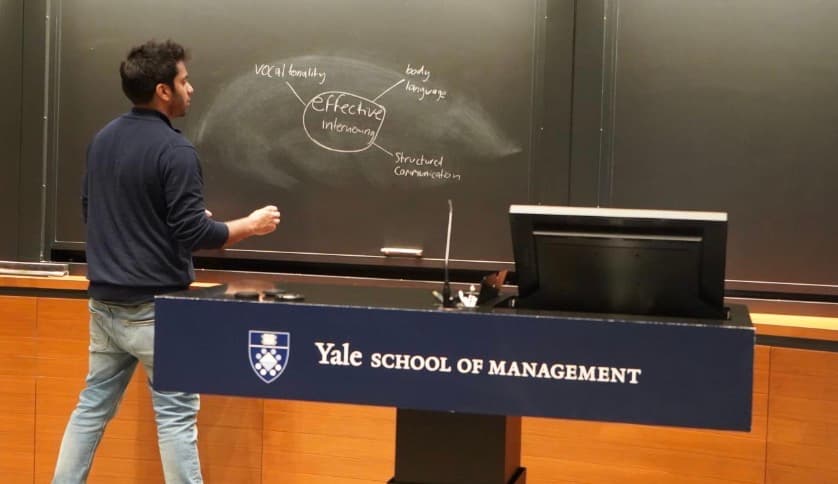
Hassan Akram is Founder and Principal Adviser at Elite Careers Strategy. Across recruitment work and ECS advisory, he has reviewed more than 10,000 applications and related candidate materials. He developed the six ECS frameworks referred to on this page: STAR-3®, PEAL-3®, PEAL-X®, VTMR™, BDC™ and Commercial Fluency™. He has led invited sessions for MBA student clubs at Yale School of Management, has written for The Times of India, and is a graduate of University College London. The observations on this page are ECS's own. They are not statements by Latham & Watkins, and ECS is independent of Latham & Watkins.