
Commercial fluency in the Kirkland partner interview: how Hassan Akram prepares candidates for London private equity M&A conversations
Hassan Akram on the commercial fluency that Kirkland & Ellis London interviews tend to explore, and the diagnostic questions ECS uses to prepare candidates for private equity M&A discussions.

In ECS's experience, final-round interviews at firms such as Kirkland & Ellis London tend to explore whether a candidate understands why deals are structured the way they are, not just what the structure looks like. ECS prepares candidates for these conversations with a commercial fluency diagnostic covering sponsor economics, debt mechanics, valuation bridges and material adverse change (MAC) clauses. In the mock interviews ECS runs, the gap between a well-prepared candidate and an under-prepared one often shows within the first minutes of a commercial discussion. Hassan Akram explains the approach below.
What does commercial fluency mean in a Kirkland & Ellis partner interview?
Kirkland's London practice is widely associated with sponsor-side private equity work: leveraged buyouts, carve-outs and cross-border acquisitions. It is reasonable to expect interviewers there to be interested in how sponsors think about returns, how debt sits in the capital structure, and how contractual mechanisms protect the equity. ECS's view is that by the final round, academic credentials and competency answers have done their work, and commercial fluency is where candidates can distinguish themselves.

How can candidates show genuine commercial fluency rather than rehearsed answers?
Follow-up questions are the usual test in any interview. A candidate might explain that sponsors use leverage to amplify returns; the natural follow-up is why the sponsor did not use more, or why it accepted a higher cost of debt in a particular market. Genuine fluency shows when the candidate can answer without reverting to a script. ECS's mock interviews are built around exactly this kind of follow-up.
ECS prepares candidates with its Commercial Fluency method, which works in three layers: sector mechanics, firm-specific commerciality and live commerciality. For private equity M&A, the diagnostic below applies that method across five domains. In 1-to-1 Advisory sessions ECS tests whether the candidate can move from abstract principle to concrete application without prompting.
Karam Kahlon, an ECS 1-to-1 Advisory client from Exeter, worked on sector-specific commercial fluency across banking and private equity during a multi-year engagement, and secured the HSBC 2026 Investment Banking Internship and the Blackstone 2026 Spring Insight Programme.
What is the ECS commercial fluency diagnostic?
The diagnostic covers five domains: sponsor economics, debt structuring, valuation bridges, tax leakage and material adverse change clauses, with several questions in each. The candidate answers without notes. Hassan Akram records the gaps, then builds a plan that targets the weakest domain first.
Example questions include: why does a sponsor prefer senior debt over mezzanine in a stable cash-flow business? How does an earnout shift risk from buyer to seller? What is the commercial purpose of a locked-box mechanism versus completion accounts? Why would a sponsor accept a reverse break fee in a competitive auction? When does tax leakage from acquisition debt exceed the benefit of interest deductions? The diagnostic is not a test of memory. It is a test of whether the candidate can explain cause and effect in sponsor decision-making.
Where the diagnostic shows gaps, follow-up sessions apply the Commercial Fluency method to live transactions. The candidate reads a public announcement, identifies the deal structure, then explains why the parties chose it given their commercial incentives, with Hassan correcting in real time. The number of sessions depends on the candidate; the aim is to handle follow-up questions without hesitating.
Why is commercial fluency harder for some non-target candidates?
Commercial fluency is rarely taught in undergraduate law degrees, and access to people who can model it varies widely between universities. In ECS's diagnostic work, a common pattern is a candidate who has prepared strong competency answers but lacks the vocabulary and mental models to discuss sponsor economics in real time.
A typical gap: the candidate can explain what a leveraged buyout is, but not why a sponsor would choose one debt-to-equity ratio over another in a particular market. ECS's view is that the gap reflects exposure, not intellect, and that it narrows through deliberate practice with live deal examples and cause-and-effect drills.
Kalen Harrald, from Queen Mary University of London, secured a place on Clifford Chance SPARK 2026 using ECS's free content, before becoming an ECS Scholarship client. As a benchmark, before any Magic Circle or US-firm final round ECS expects a candidate to be able to explain, unprompted, why a seller might favour a locked-box mechanism in a private equity sale: the price is fixed by reference to a historic balance sheet, economic risk passes to the buyer from the locked-box date, and completion-accounts disputes are avoided, with the buyer relying on leakage protection instead.

The ECS commercial fluency diagnostic: five domains
The framework maps sponsor decision-making across five domains. Each domain is tested in the diagnostic, then remediated through live deal analysis in 1-to-1 Advisory sessions.
Domain 1: Sponsor economics. Questions test whether the candidate understands how sponsors generate returns through operational improvements, multiple expansion, and debt paydown. Candidates should be able to explain why a sponsor would accept lower leverage in a cyclical business or why they would pay a higher purchase multiple in a fragmented sector with roll-up potential.
Domain 2: Debt structuring. Questions test whether the candidate can explain why senior debt sits above mezzanine in the capital structure, how covenant flexibility affects sponsor decision-making, and when a sponsor would accept higher interest costs in exchange for prepayment optionality. ECS listens for fluency in weighted average cost of capital and the trade-off between leverage and financial flexibility.
Domain 3: Valuation bridges. Questions test whether the candidate understands how earnouts, purchase-price adjustments, and working-capital mechanisms allocate risk between buyer and seller. Candidates should be able to explain when an earnout is commercially preferable to a lower upfront price, and why sellers resist earnouts in cyclical businesses.
Domain 4: Tax leakage. Questions test whether the candidate can explain how acquisition debt is structured to maximise interest deductibility, why tax leakage from stamp duty or capital gains affects purchase-price negotiations, and when tax gross-ups appear in share purchase agreements. Candidates do not need tax-specialist knowledge. They do need to connect tax efficiency to deal economics.
Domain 5: Material adverse change clauses. Questions test whether the candidate understands what events would allow a buyer to walk away from a signed transaction, why sellers resist broad MAC definitions, and how MAC thresholds are negotiated in competitive auctions. Candidates should be able to explain the commercial tension between buyer protection and deal certainty.
Follow-up sessions apply the framework to live transactions. The candidate reads a public deal announcement, identifies the structure, then explains the commercial rationale in real time, while Hassan interrupts with the kind of follow-up questions a senior lawyer might ask. Progress varies; the goal is to handle those questions without hesitating.
Documented ECS outcomes at Kirkland and comparable firms
ECS's documented law outcomes include training contracts at firms such as White & Case and Freshfields. ECS's documented Kirkland & Ellis training contract is an anonymised UK-university graduate who reported preparing with ECS's free content, including Commercial Fluency, with no paid engagement.
Karam Kahlon, from Exeter, secured the HSBC 2026 Investment Banking Internship and the Blackstone 2026 Spring Insight Programme after a multi-year ECS 1-to-1 Advisory engagement that included sector-specific Commercial Fluency work across banking and private equity.
Maziko M., a state-school student at the University of Glasgow and an ECS Scholarship client with no prior investment banking internship, secured a place on the Citi Insights Programme, a three-day spring insight programme at Citi's London office in one cycle. Commercial Fluency was part of the preparation for markets-side interviews.
The diagnostic is designed to find fluency gaps before final rounds, and the follow-up sessions to narrow them through live deal analysis and cause-and-effect drills. ECS's view is that this preparation improves how candidates handle commercial discussions. It does not guarantee an outcome at any firm.

Next step
The ECS 1-to-1 Advisory runs the commercial fluency diagnostic early in an engagement and builds follow-up work around the gaps it finds. Apply for a diagnostic at /start. Families can read Hassan's methodology for parents or explore the Corporate Law Vault for ECS's research on Kirkland & Ellis, Latham & Watkins and White & Case.
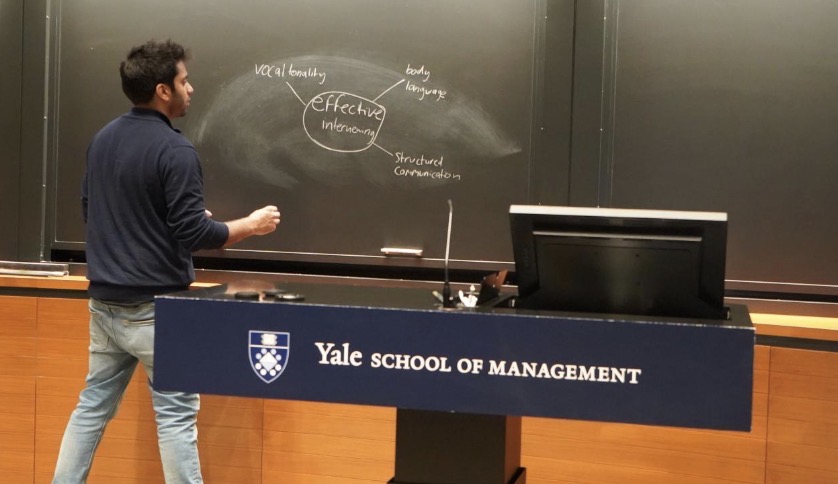
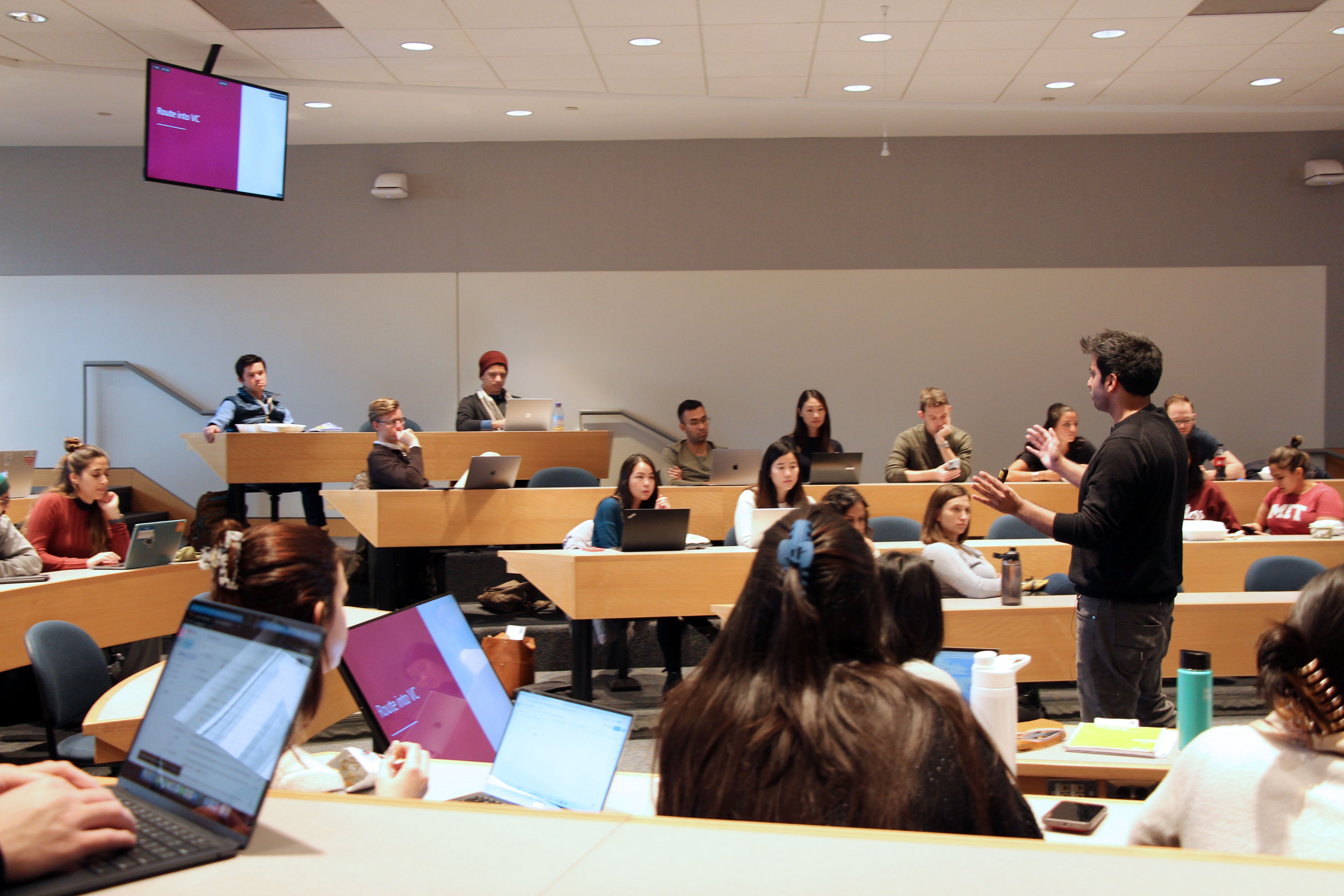
Hassan Akram is the founder of Elite Careers Strategy. Across recruitment work and ECS advisory, he has reviewed more than 10,000 applications and related candidate materials. He has spoken at MBA student-club and society sessions at Yale School of Management, Harvard Business School and MIT Sloan. ECS is independent of every employer and institution named. Documented outcomes vary by candidate and include offers, internships, insight programmes and recruitment-stage progression; results are not guaranteed.

The Next Step
Apply the methodology with guidance.
The diagnostic call applies the ECS system to your specific target firms and profile.
Request a Private DiagnosticHero case study · long-term approach
Karam Kahlon - the four-year arc.
University of Exeter, non-target. Resitting A-levels at AAB. No IB interviews before ECS. A four-year private advisory engagement - the longest-documented continuous client relationship in the ECS track record. Each outcome built on the last.
Year 1: Morgan Stanley Step-In/Step-Out programme, HSBC Spring Week converting to Summer IB Internship, 3i two-day PE insight placement. Year 4 (2026): HSBC 2026 Investment Banking Internship and Blackstone 2026 Spring Insight London. Both confirmed, both verified.
“Honestly you’re the best in the business.”Karam Kahlon, named with full consent