
How to get into Clifford Chance SPARK from a state school
Hassan Akram on how state school candidates can prepare for Clifford Chance SPARK, with the documented case of Kalen Harrald, who secured a SPARK place from QMUL preparing with ECS free content.

State school candidates can compete for Clifford Chance SPARK. In ECS's experience the ones who stand out close the commercial fluency gap and ground their motivation in specific, public facts about the firm's international practice. Hassan Akram, founder of Elite Careers Strategy, has reviewed more than 10,000 applications and related candidate materials across recruitment work and ECS advisory. Kalen Harrald secured a place on Clifford Chance SPARK 2026 from Queen Mary University of London, preparing with ECS's free content only. He is now an ECS Scholarship client, continuing into the training contract cycle. The disadvantage is real; structured preparation is how to address it.
Why do state school candidates struggle with Clifford Chance SPARK applications?
ECS's view is that explicit commercial context helps. Clifford Chance works across areas including private equity M&A, debt capital markets, restructuring and international finance, and its London office works on cross-border matters involving multiple jurisdictions. A line such as "I admire Clifford Chance's global reach", with no explanation of why that reach matters for a particular type of deal, tells the reader very little.
Kalen Harrald's case is instructive. QMUL is commonly described in the broader recruitment market as a non-target university for Magic Circle recruitment - a general market classification, not a Clifford Chance classification or view. Kalen prepared using ECS's free content, applying STAR-3 to his written competency answers and PEAL-X to his firm-motivation answers, and secured his SPARK place before becoming an ECS Scholarship client. The outcome is his; it shows the gap can be closed.

What do elite firms like Clifford Chance look for in early-programme candidates?
What follows is Elite Careers Strategy's independent professional judgement, formed from recruitment-side experience across elite legal hiring - not a statement of Clifford Chance's internal criteria, which ECS does not hold and does not claim to know. In ECS's judgement, three attributes recur across elite legal recruitment.
First, commercial awareness. In ECS's experience the strongest candidates understand deal structure, not just legal theory. A strong application references specific transaction types (sponsor-side private equity M&A, investment-grade debt issuance, sovereign restructuring) and explains why a firm's international footprint matters for those deals. Clifford Chance's public profile describes teams coordinating across London, New York, Hong Kong, and continental Europe. A candidate who explains how that coordination structure reduces execution risk on a cross-border acquisition demonstrates commercial fluency.
Second, structured thinking. ECS's PEAL-3 framework (an ECS method, not a Clifford Chance framework) is designed for motivation answers: Point, Evidence, Analysis, Link. The "3" means the cycle is repeated at least three times. Each cycle makes a direct claim (Point), supports it with a specific moment or fact (Evidence), explains why it matters (Analysis) and ties it to the role (Link). STAR-3 does the equivalent job for competency evidence. In ECS's experience, unstructured answers are one of the most common weaknesses at interview, whatever the candidate's school.
Third, authentic motivation. In ECS's experience, generic "I want to work on complex deals" answers are weak across the elite legal market, and interviewers commonly ask why a candidate chose one firm over its peers. A strong answer references a firm's publicly documented practice strengths (for Clifford Chance, its debt capital markets and global restructuring work, for example) and ties them to the candidate's specific career interest. ECS's PEAL-X framework is designed for exactly this.
How do you build commercial fluency for Clifford Chance without prior exposure?
Commercial fluency comes from deliberate case study analysis. ECS asks candidates to study a few deals each month and to answer three questions about each: what the business does and how it makes money; how the transaction is structured and financed, and which legal instruments are involved; and why the deal is happening now. (ECS's BDC framework is a different tool, for assessment-centre group exercises: Began, Developed, Confirmed.)
For Clifford Chance, debt capital markets and cross-border private equity are natural places to start, because both feature prominently in the firm's public profile. A candidate who can explain how a debt issuance is structured (senior unsecured notes, investment-grade rating, proceeds used for acquisition financing) shows fluency. A candidate who can discuss a specific, publicly reported Clifford Chance cross-border mandate shows firm-specific preparation.
Kalen Harrald's documented preparation was STAR-3 for written competency answers and PEAL-X for firm motivation, learned from ECS's free content and carried out on his own. He secured SPARK without paid advisory support.
The ECS framework: PEAL-3 for Clifford Chance SPARK applications

PEAL-3 is ECS's framework for motivation answers, and PEAL-X adds firm-specific anchors. Here is how they apply to a generic motivation question of the kind asked across elite legal recruitment - for illustration: "Why do you want to work in corporate law at a firm like Clifford Chance?" (This is an ECS training example, not a question taken from any Clifford Chance application form; the firm's current questions are whatever appears on its live application at the time you apply.)
Iteration 1 (Point, Evidence, Analysis, Link): Point: I want to train at Clifford Chance because the firm operates at the centre of cross-border M&A and debt capital markets work. Evidence: Clifford Chance's London office coordinates multi-jurisdictional teams on sponsor-side private equity acquisitions, often involving financing structures that span European and American capital markets. Analysis: Coordinating many jurisdictions on one timetable is demanding, and a firm with an integrated international network is well placed to manage execution risk on complex deals. Link: I want exposure to that coordination model during SPARK because it reflects how elite transactions are structured in practice.
Iteration 2 (Point, Evidence, Analysis, Link): Point: Debt capital markets is one of Clifford Chance's most prominent practices. Evidence: The firm advises on investment-grade bond issuances and high-yield debt offerings for European and American issuers. Analysis: Debt structuring is a core competency for corporate lawyers. Understanding how companies access capital markets at different points in the credit cycle matters more than understanding equity alone. Link: I want to build fluency in debt capital markets during SPARK to prepare for private equity M&A work, where debt financing often drives deal viability.
Iteration 3 (Point, Evidence, Analysis, Link): Point: Clifford Chance develops early-careers candidates through structured, staged exposure to the firm. Evidence: As publicly described, SPARK combines in-person work experience, classroom learning, skills development, work shadowing, and commercial awareness training across two academic years. Analysis: That exposure accelerates learning. SPARK offers structured firm experience in a first-year university context, before most peers have begun preparing. Link: I want that exposure now, not two years from now, because early fluency compounds over time.
That answer shows structure, commercial awareness and firm-specific motivation grounded in public information. In a written application it would need cutting to the word limit; the structure survives the cut. In ECS's experience a single generic paragraph is far weaker.

Documented ECS outcomes at Clifford Chance
Kalen Harrald secured a place on Clifford Chance SPARK 2026 from QMUL, confirmed on 16 April 2026 after the assessment stages. He prepared using ECS's free content only, with no paid sessions, and named STAR-3 and PEAL-X unprompted as the frameworks he used. He is now an ECS Scholarship client continuing into the training contract cycle.
ECS's claim is precise and limited: Kalen used ECS's free public materials as part of his preparation and secured the place. Full credit for the outcome is his. ECS has also documented a Clifford Chance London Training Contract for an anonymised Russell Group candidate who reported using ECS's published frameworks, with no paid engagement. Across all its work, ECS has 106 documented outcomes and selection progressions across 53 candidate journeys.
Maziko M., a state-school student at the University of Glasgow and an ECS Scholarship client, secured a place on the Citi Insights Programme, a three-day spring insight programme at Citi's London office in one cycle. Banking is a different market, but ECS's view is that the same preparation principles apply in both: commercial fluency, structured answers and firm-specific motivation.
Karam Kahlon's case shows a longer arc. From Exeter, after resitting his A-levels and with no investment banking interviews before working with ECS, he secured the HSBC 2026 Investment Banking Internship and the Blackstone 2026 Spring Insight Programme across a multi-year ECS 1-to-1 Advisory engagement.

What mistakes do state school candidates make on Clifford Chance SPARK applications?
First mistake: generic motivation. Writing "I want to work at Clifford Chance because it is a leading global law firm" signals zero preparation. Every magic circle firm is a leading global firm. The differentiating question, across the elite legal market, is why this firm over its peers. A strong answer references the firm's publicly documented practice strengths (for Clifford Chance: debt capital markets, international finance, global restructuring) and ties those strengths to the candidate's career interest.
Second mistake: no deal context. Writing "I am interested in corporate law because I enjoy problem-solving" signals no commercial fluency. In ECS's experience the stronger applications show an understanding of how deals work. A strong application references specific transaction types (sponsor-side private equity M&A, bond issuances, cross-border acquisitions) and explains why those deals require legal coordination.
Third mistake: unstructured interview answers. Under pressure, many candidates ramble, repeat themselves and never link the answer back to the firm. ECS's frameworks are designed to prevent this: PEAL-3 for motivation, STAR-3 for competency evidence. Both force clarity.
Fourth mistake: relying on the firm's own marketing alone. The Corporate Law Vault contains ECS's independent research on Clifford Chance's publicly reported practice areas, deal flow and training model, compiled from public sources, and is designed to help candidates go beyond the careers website.
How long does it take to close the commercial fluency gap?
ECS's suggested plan is about three months of deliberate practice: one deal analysis a week, using the three questions above on Clifford Chance transactions or similar Magic Circle deals; one practice motivation answer a week, written or spoken; and one firm-specific positioning exercise (why Clifford Chance over Linklaters, why debt capital markets over equity capital markets, why global coordination matters). Timelines vary by candidate.
Kalen Harrald prepared on his own from ECS's free content. His case does not set a timetable. It shows that a candidate from outside the traditional target pool can secure a SPARK place preparing with free public materials.
Elite Careers Strategy runs this process through 1-to-1 Advisory for candidates who want tailored support. Families can read Hassan's methodology for parents or explore the Corporate Law Vault for ECS's Clifford Chance research.
Next step
The ECS 1-to-1 Advisory reviews candidates' applications and builds their preparation. Apply for a diagnostic at /start. Families can read Hassan's methodology for parents or explore the Corporate Law Vault for ECS's firm research. Clifford Chance SPARK is open to state school candidates. The fluency gap is real; structured preparation is how to close it.
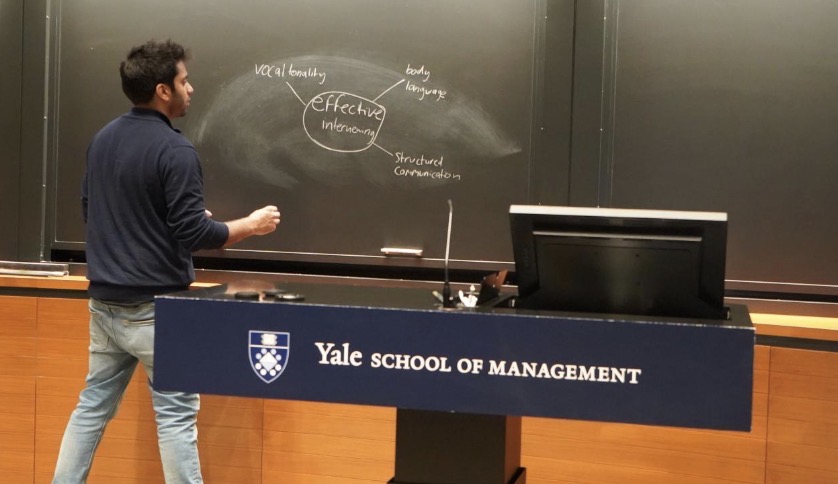
Hassan Akram is the founder of Elite Careers Strategy. Across recruitment work and ECS advisory, he has reviewed more than 10,000 applications and related candidate materials. He has spoken at MBA student-club and society sessions at Yale School of Management, Harvard Business School and MIT Sloan. ECS is independent of every employer and institution named. Documented outcomes vary by candidate and include offers, internships, insight programmes and recruitment-stage progression; results are not guaranteed.
Elite Careers Strategy is entirely independent of Clifford Chance and every other firm named in this article. ECS has no affiliation with, endorsement by, or privileged access to any firm's recruitment process. Commentary reflects ECS's independent professional judgement and publicly available information; always verify current process details against the firm's official careers website.
The Next Step
Apply the methodology with guidance.
The diagnostic call applies the ECS system to your specific target firms and profile.
Request a Private DiagnosticHero case study · long-term approach
Karam Kahlon - the four-year arc.

University of Exeter, non-target. Resitting A-levels at AAB. No IB interviews before ECS. A four-year private advisory engagement - the longest-documented continuous client relationship in the ECS track record. Each outcome built on the last.
Year 1: Morgan Stanley Step-In/Step-Out programme, HSBC Spring Week converting to Summer IB Internship, 3i two-day PE insight placement. Year 4 (2026): HSBC 2026 Investment Banking Internship and Blackstone 2026 Spring Insight London. Both confirmed, both verified.
“Honestly you’re the best in the business.”Karam Kahlon, named with full consent