
Non-target to the Magic Circle: routes, preparation and documented cases
Hassan Akram on the path from a UK non-target university to a Magic Circle training contract: what commercial fluency means at assessment, how ECS frameworks help, and what ECS has actually documented.

Non-target candidates do secure Magic Circle training contracts, and in ECS's experience commercial fluency matters more at assessment than academic brand. Hassan Akram, founder of Elite Careers Strategy, has reviewed more than 10,000 applications and related candidate materials across recruitment work and ECS advisory, and ECS has 106 documented outcomes and selection progressions across 53 candidate journeys, including at Clifford Chance. The path exists. ECS does not claim to know any firm's screening criteria; what it can offer is disciplined preparation for competency interviews and written assessments, the stages where, in ECS's view, preparation counts for most.
Can non-target candidates secure Magic Circle training contracts in 2026?
ECS's documented Clifford Chance outcomes include Kalen's SPARK place and, separately, a Clifford Chance London Training Contract for an anonymised Russell Group candidate who reported using ECS's published frameworks and free resources, with no paid engagement. The record shows the candidate used ECS materials; it does not show that they caused the offer. Once candidates reach an assessment centre, ECS's view is that preparation depth is the thing they can most influence.

What separates non-target candidates who convert SPARK places from those who do not reach a training contract?
In ECS's view, commercial fluency: the ability to explain deal structures, regulatory drivers and sector-specific transaction mechanics in interview settings. In the mock assessments ECS runs, the candidates who struggle show surface-level commercial awareness. They can name recent deals. They cannot explain why a deal used a scheme of arrangement rather than a contractual offer, why the CMA opened a Phase 2 investigation rather than clearing a merger at Phase 1, or how regulatory risk feeds into the price in a sponsor-backed acquisition.
The Commercial Fluency framework taught in the ECS 1-to-1 Advisory prepares candidates for second-order and third-order commercial questions. Not "what happened in the deal" but "why did this structure emerge given the regulatory constraints and financing conditions". Not "what is private equity" but "why did the sponsor choose stapled financing over syndicated debt in this leverage environment". Questions of this depth are common in training contract interviews, and ECS's view is that non-target candidates who can handle them are well placed.
Do Magic Circle firms assess non-target applicants differently from Oxbridge applicants?
ECS does not know any firm's internal criteria. In ECS's experience, non-target candidates need to make their commercial awareness and structured communication especially clear. Timed written exercises, in which candidates analyse transaction documents, regulatory filings or sector reports and produce written advice, are a common feature across elite legal recruitment. ECS's view is that these exercises reward the work on the page: structure, commercial insight and legal precision.
The Point, Evidence, Analysis, Link structure at the heart of PEAL-3, ECS's framework for motivation answers, also works well for written exercises. It forces clarity and exposes gaps in reasoning, and it resembles the discipline of a good client memo. I teach it in every ECS engagement. ECS's view is that structured preparation helps non-target candidates compete on the quality of their work rather than on their university.
The ECS framework: PEAL-3 for Magic Circle written assessments
PEAL-3 is a registered ECS framework: Point, Evidence, Analysis, Link, repeated at least three times so that each cycle adds depth. Designed for motivation answers, the same structure helps candidates in written exercises and interviews to move beyond surface observation into regulatory mechanics, the rationale for a deal's structure and the drivers of a transaction.
A weak answer to a written case study on a sponsor-backed acquisition might read: "The private equity firm acquired the target using leveraged financing. This is common in buyout transactions." That shows awareness, not fluency. A structured answer reads: "The sponsor financed the acquisition with senior secured debt at 5.5x EBITDA and subordinated PIK notes to reduce the cash interest burden during integration. The structure reflects debt markets in which investors want extra yield but sponsors need operational flexibility. The PIK tranche lets the sponsor defer interest if EBITDA falls short of management's projections in year one. That matters because, in this sector, revenue synergies often take longer to arrive than cost savings."
That answer shows commercial fluency. It ties the financing structure to market conditions and operational risk, and it answers why, not just what. In ECS's view, answers of this kind stand out in any written exercise, whoever writes them.
Documented ECS outcomes at Clifford Chance
Kalen Harrald secured his Clifford Chance SPARK 2026 place from Queen Mary University of London using ECS's free content only: no paid engagement and no 1-to-1 sessions. He named STAR-3 and PEAL-X unprompted as the frameworks he used, STAR-3 for written competency answers and PEAL-X for firm motivation. His next step is the training contract stage. Full credit for the outcome is his, and his case study is public on the ECS case studies page.
ECS's documented Magic Circle training contract outcomes also include Freshfields, for an anonymised client with a paid engagement. The preparation ECS runs for this stage centres on commercial depth: understanding deal structures rather than memorising deal names. That means knowing why the UK Takeover Code imposes a bid timetable, why leveraged acquisition financing carries covenants tied to EBITDA, and why a cross-border merger can fall within the CMA's jurisdiction, for example under the share of supply test.
Questions like these are common in training contract interviews. In ECS's experience, candidates who can answer them with precision are well placed, and those who cannot find the conversation hard. The ECS 1-to-1 Advisory works on exactly this gap. Families seeking a structured route from a non-target university to a Magic Circle training contract can explore Hassan's methodology for parents.
Documented ECS outcomes in investment banking
ECS uses the same commercial fluency method in finance. Karam Kahlon, an ECS 1-to-1 Advisory client from Exeter, had resat his A-levels and had no investment banking interviews before working with ECS. Across a multi-year engagement he secured the HSBC 2026 Investment Banking Internship and the Blackstone 2026 Spring Insight Programme. His documented case study is available at Karam Kahlon's case study.
Maziko M., a state-school student at the University of Glasgow and an ECS Scholarship client, secured a place on the Citi Insights Programme, a three-day spring insight programme at Citi's London office. The preparation used STAR-3, PEAL-3, PEAL-X, VTMR and Commercial Fluency. ECS does not claim the frameworks caused these outcomes.
In ECS's view, law and banking assessment share one feature: once a candidate reaches the assessment centre, commercial fluency is where they can most distinguish themselves. University brand helps open the door. The ability to structure answers under pressure, explain deal mechanics precisely and connect regulation to transaction outcomes is what candidates can build.
Next step
The ECS 1-to-1 Advisory reviews candidates' applications and builds their preparation. Apply for a diagnostic at /start. Families can read Hassan's methodology for parents or explore the Corporate Law Vault for ECS's firm research.
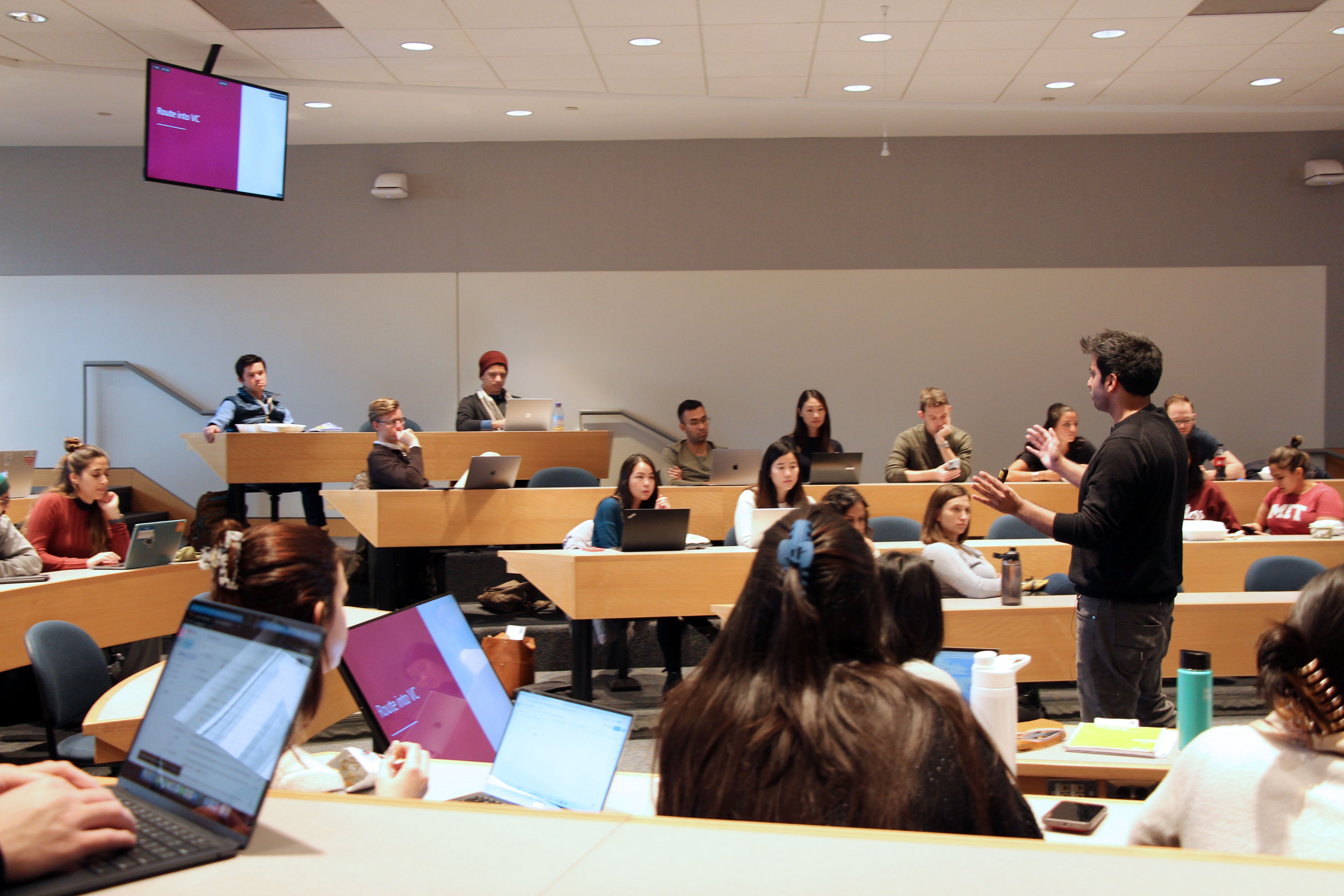
Hassan Akram is the founder of Elite Careers Strategy. Across recruitment work and ECS advisory, he has reviewed more than 10,000 applications and related candidate materials. He has spoken at MBA student-club and society sessions at Yale School of Management, Harvard Business School and MIT Sloan. ECS is independent of every employer and institution named. Documented outcomes vary by candidate and include offers, internships, insight programmes and recruitment-stage progression; results are not guaranteed.
The Next Step
Apply the methodology with guidance.
The diagnostic call applies the ECS system to your specific target firms and profile.
Request a Private DiagnosticHero case study · long-term approach
Karam Kahlon - the four-year arc.

University of Exeter, non-target. Resitting A-levels at AAB. No IB interviews before ECS. A four-year private advisory engagement - the longest-documented continuous client relationship in the ECS track record. Each outcome built on the last.
Year 1: Morgan Stanley Step-In/Step-Out programme, HSBC Spring Week converting to Summer IB Internship, 3i two-day PE insight placement. Year 4 (2026): HSBC 2026 Investment Banking Internship and Blackstone 2026 Spring Insight London. Both confirmed, both verified.
“Honestly you’re the best in the business.”Karam Kahlon, named with full consent