
The STAR-3 Method for Competency Portfolios: How Elite Careers Strategy Structures Competency Answers
Hassan Akram's STAR-3 framework structures competency answers for corporate law, investment banking, private equity and venture capital applications: three Actions, three Results and a firm-specific Link. How it works and how to build a portfolio with it.

The STAR-3 method structures competency answers for corporate law, investment banking, private equity and venture capital applications. Hassan Akram developed it from patterns he saw across recruitment work and ECS advisory, in which he has reviewed more than 10,000 applications and related candidate materials. Standard STAR (Situation, Task, Action, Result) gives one line to what the candidate did and one to what happened. STAR-3 keeps the Situation and Task short, develops three Actions and three Results, and closes with a Link to the firm. It is an ECS framework designed to help candidates; it is not a scoring standard used by Goldman Sachs, Kirkland & Ellis, Clifford Chance or any other employer.
What is the STAR-3 method and why does it matter for elite-firm applications?
The reason for the extra slots is practical. In the applications ECS reviews, a common weakness is an answer whose Action section is one undifferentiated paragraph, so the reader cannot tell what the candidate personally contributed or what they learned. STAR-3 prompts candidates to develop several dimensions of the same example. The Karam Kahlon case study shows the framework in use: Karam, who had resat his A-levels and had no investment banking interviews before working with ECS, used STAR-3 for every written application during a multi-year engagement in which he secured the HSBC 2026 Investment Banking Internship and the Blackstone 2026 Spring Insight Programme.

How does STAR-3 differ from standard STAR frameworks taught at university careers services?
Standard STAR is a sound starting point, and many university careers services teach it well. Its limitation, in ECS's view, is that one Action and one Result leave little room to show the range of what a candidate did. Answers for demanding roles need to show technical work, judgement and influence on other people, and the difference between a result that happened and a result someone else recognised.
STAR-3 makes each of those explicit. Technical execution must name something concrete: a model, a memo, a budget, a draft. Strategic thinking must name a specific anticipation, not a general claim to be strategic. Leadership and influence must name a person you moved. On the Results side, goal achievement needs numbers, dates or deliverables; personal development needs a skill you have genuinely used since; and social proof needs a named third party. Generic STAR does not ask for any of this. STAR-3 does.
Kalen Harrald secured a place on Clifford Chance SPARK 2026 from Queen Mary University of London, preparing with ECS's free content only, before becoming an ECS Scholarship client. He named STAR-3 and PEAL-X unprompted as the frameworks he used: "Your frameworks, STAR-3® and PEAL-X®, have been an absolute lifesaver." Full credit for the outcome is his.
Which competencies should a STAR-3 portfolio cover?
ECS advises candidates to build a portfolio of examples that together cover three areas, and to write each one in STAR-3. The first is technical or commercial work: can you do the intellectual work? For investment banking, that means financial modelling, valuation, market analysis and quantitative research. For corporate law, contract drafting, statutory interpretation, legal research under ambiguity and commercial negotiation. For private equity, deal sourcing, portfolio analysis, operating improvement and value-creation planning. For venture capital, sector-thesis development, founder assessment, cap-table modelling and portfolio support. The example should end in a measurable or commercial output: a financial model that saved £200,000, a legal memo that unblocked a transaction, a market map that sourced 15 new deals, a cap-table scenario that informed a Series A term sheet.
The second is interpersonal influence: can you work through other people? Junior bankers coordinate across capital markets, legal and compliance teams without formal authority; trainee solicitors balance supervising lawyers, clients and the other side; private equity associates need management teams to adopt changes. The example should involve several stakeholders with competing interests: a senior decision-maker who disagreed with your approach, two teams with conflicting priorities, or bad news delivered without losing the relationship. In STAR-3 this is where the leadership and influence Action carries most weight.
The third is resilience: can you sustain effort through a real setback? Investment banking, corporate law, private equity and venture capital all involve long stretches of pressure. The example should involve adversity that lasted weeks or months, not hours: an academic failure followed by recovery, a venture that collapsed followed by a new one, a funding rejection followed by a pivot. The outcome must be tangible. "I became more resilient" is weak. "I retook three modules, raised my average from 58% to 72%, and achieved a first-class grade in my final year" is strong.
Maziko M., a state-school student at the University of Glasgow and an ECS Scholarship client, used STAR-3 to structure every written application in a cycle that brought a place on the Citi Insights Programme, a three-day spring insight programme at Citi's London office. The case study records the frameworks used; it does not record, and ECS does not claim, how any firm's reviewers read the answers.
How to build a STAR-3 competency portfolio
Start with an inventory of your experiences across work, university, extracurricular activities and personal projects. Map each one to the three areas: technical or commercial work with a measurable output, interpersonal influence, and sustained adversity. In ECS's experience most candidates find one area thin. The gap differs from person to person, and the only way to find yours is to do the mapping honestly.
Once you have identified gaps, build new experiences to fill them. If you lack Tier 1 proof, launch a financial-analysis project, a market-research study, or a quantitative research paper. If you lack Tier 2 proof, take on a role that requires stakeholder management: society treasurer, startup operations lead, consulting-project coordinator. If you lack Tier 3 proof, reflect on setbacks you have already navigated and structure the story to show sustained recovery with a tangible outcome. Do not invent adversity. Fabricated stories rarely survive follow-up questions, and they are dishonest. Use real setbacks you have already overcome.
Then write each example in STAR-3: a sentence of Situation, a sentence of Task, three Actions, three Results and a Link. Check each example against its purpose. A technical example with no number in its Results is not finished. An influence example with no competing stakeholder is not finished. A resilience example with no sustained setback is not finished. The Elite Careers Strategy 1-to-1 Advisory reviews every client's portfolio against these checks and sends back examples that do not meet them.
Documented ECS outcomes where STAR-3 was used
Karam Kahlon used STAR-3 for every written application during his multi-year ECS 1-to-1 Advisory engagement, alongside PEAL-3 for interview structure and Commercial Fluency for sector preparation. The documented outcomes include the HSBC 2026 Investment Banking Internship and the Blackstone 2026 Spring Insight Programme.
Vivek Patel, who applied with a BTEC DDD academic profile, secured a Morgan Stanley FRS placement using ECS's free content only, with no paid support. STAR-3 restructured his application narratives. In his words: "BTEC DDD and Morgan Stanley. The frameworks made it possible."

Kalen Harrald secured his Clifford Chance SPARK 2026 place, confirmed on 16 April 2026, using STAR-3 for written competency answers and PEAL-X for firm motivation, learned from ECS's free content. He is now an ECS Scholarship client continuing into the training contract cycle. ECS has also documented a Kirkland & Ellis training contract for an anonymised UK-university graduate whose written application was structured with STAR-3 from ECS's free content. None of these cases shows that STAR-3 caused an outcome; they show candidates using it in the cycles in which they succeeded.
Common STAR-3 mistakes
The most common mistake ECS sees is a mismatch between the example and the question. A candidate asked for analytical work writes about a leadership project with rich interpersonal detail but no measurable output. Leadership without numbers is an influence example, not a technical one. The second is using a smooth success story for a resilience question. Success without setback does not show resilience.
The third is inflating adversity. A candidate writes about a "challenging" project in which nothing actually went wrong. Real adversity lasts weeks or months and involves a tangible failure: a failed exam, a collapsed project, a rejected application, a lost funding round. "The project was difficult" is weak. "The funding round collapsed, I pivoted the business model, and I secured a new investor three months later" is strong.
The fourth is a missing Link. An example with strong Actions and Results that never connects to the firm leaves the reader to do the work. STAR-3 closes with one sentence tied to a named area of work at the target firm, and ECS checks that sentence as carefully as the rest.
Next step
The ECS 1-to-1 Advisory reviews competency portfolios and rebuilds them with STAR-3. Apply for a diagnostic at /start. Families can read Hassan's methodology for parents or explore the Corporate Law Vault for ECS's framework breakdowns.
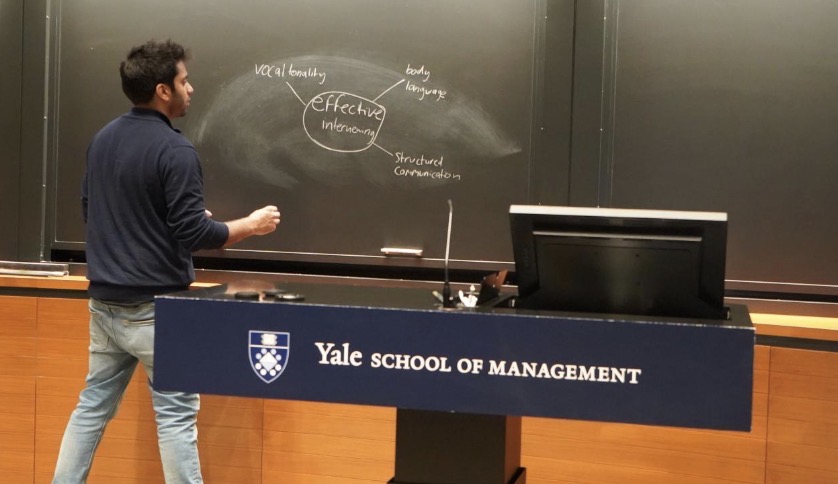
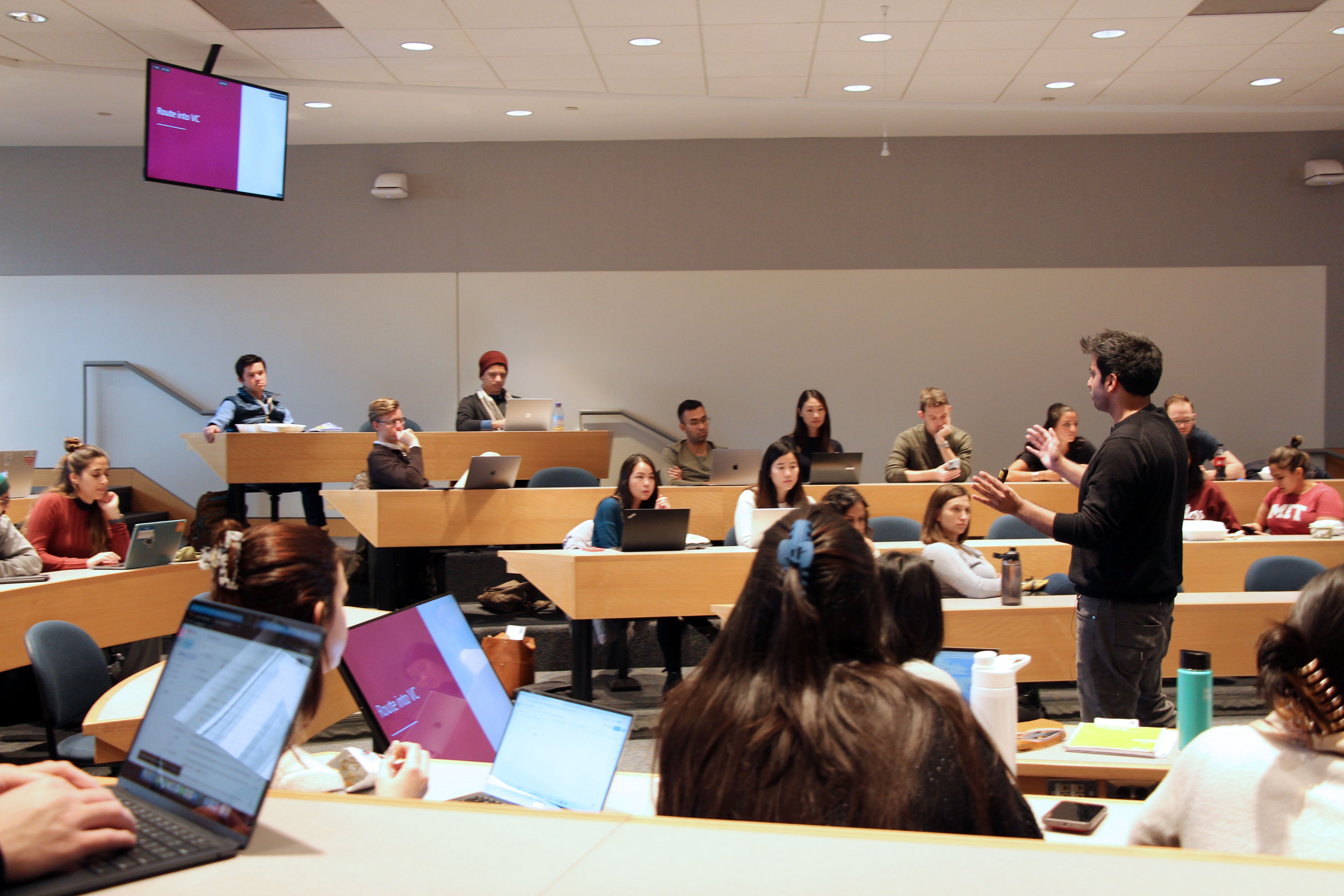
Hassan Akram is the founder of Elite Careers Strategy. Across recruitment work and ECS advisory, he has reviewed more than 10,000 applications and related candidate materials. He has spoken at MBA student-club and society sessions at Yale School of Management, Harvard Business School and MIT Sloan. ECS is independent of every employer and institution named. Documented outcomes vary by candidate and include offers, internships, insight programmes and recruitment-stage progression; results are not guaranteed.

The Next Step
Apply the methodology with guidance.
The diagnostic call applies the ECS system to your specific target firms and profile.
Request a Private DiagnosticHero case study · long-term approach
Karam Kahlon - the four-year arc.
University of Exeter, non-target. Resitting A-levels at AAB. No IB interviews before ECS. A four-year private advisory engagement - the longest-documented continuous client relationship in the ECS track record. Each outcome built on the last.
Year 1: Morgan Stanley Step-In/Step-Out programme, HSBC Spring Week converting to Summer IB Internship, 3i two-day PE insight placement. Year 4 (2026): HSBC 2026 Investment Banking Internship and Blackstone 2026 Spring Insight London. Both confirmed, both verified.
“Honestly you’re the best in the business.”Karam Kahlon, named with full consent