
The VTMR Framework: How Elite Careers Strategy Rebuilds CVs for Goldman Sachs, Kirkland & Ellis, and Blackstone
Hassan Akram's VTMR framework (Verb, Task, Metric, Result) rebuilds CV bullets for investment banking, private equity and corporate law applications. How it works, line by line, with a documented ECS case at Citi.
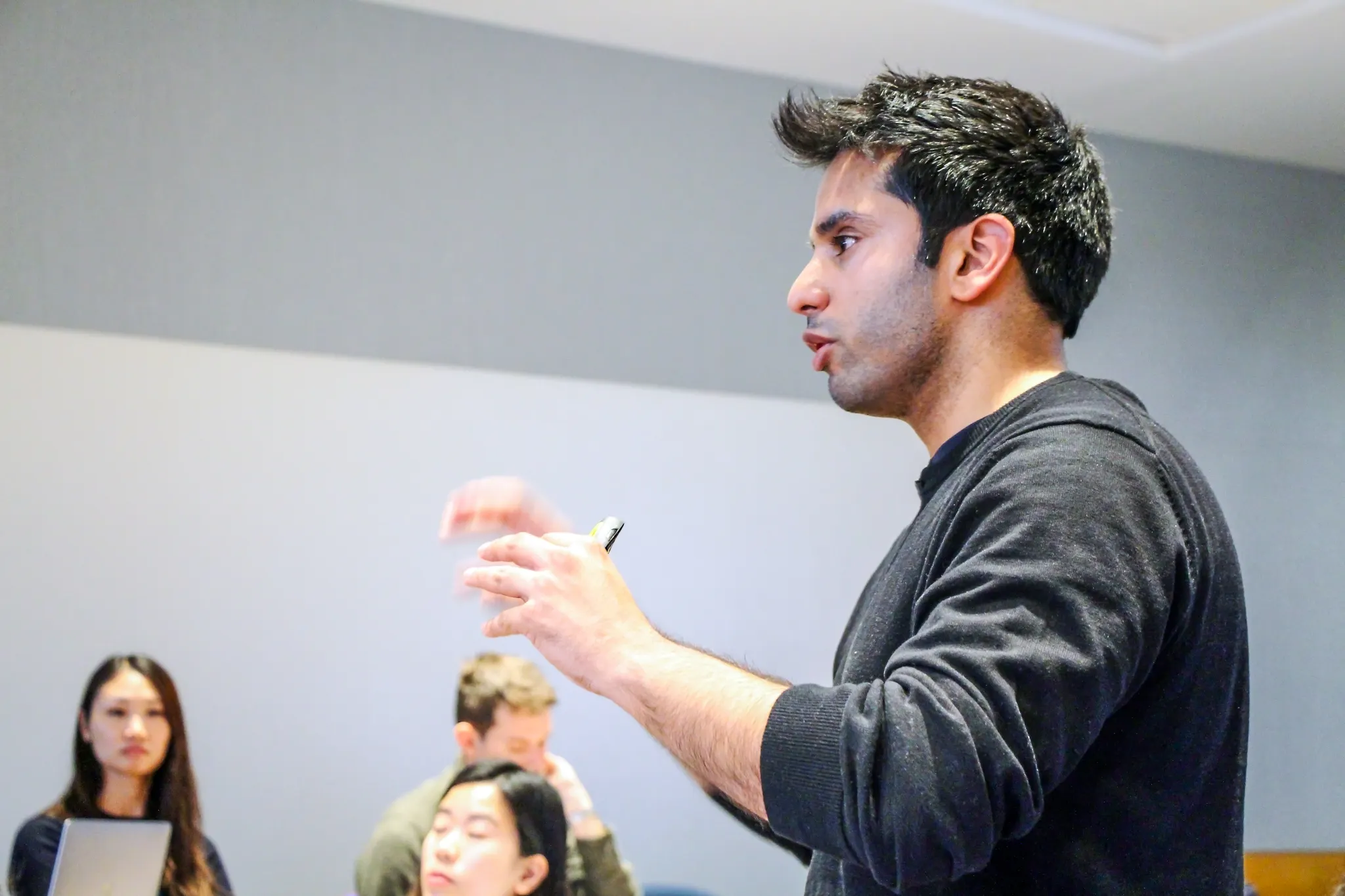
The VTMR framework (Verb, Task, Metric, Result) is Elite Careers Strategy's method for rebuilding CV bullets for applications to firms such as Goldman Sachs, Kirkland & Ellis and Blackstone. Hassan Akram developed it from patterns he saw across the more than 10,000 applications and related candidate materials he has reviewed in recruitment work and ECS advisory. It replaces vague claims with specific actions, named tasks, numbers and results. It is an ECS method, not a firm's screening standard, and it is especially useful for non-target candidates whose CVs cannot lean on institutional brand.
What is the VTMR framework and why does it matter for elite-firm CVs?
I built VTMR after starting Elite Careers Strategy, from a pattern I saw repeatedly in recruitment work and advisory: candidates list "project management" or "stakeholder engagement" without naming a project, a stakeholder or a result, so the CV reads like a job description rather than evidence. Alongside the four VTMR elements, ECS asks two questions of every bullet. Could the claim be checked? And does it matter for the sector the candidate is targeting? If the answer to either is no, the bullet is rewritten or cut. Maziko M.'s case study records a VTMR CV rebuild in the cycle in which Maziko secured a Citi Insights Programme place.
How does VTMR differ from standard university careers advice?
Standard university careers advice tells candidates to use action verbs and keep the CV to one page. That advice is sound as far as it goes. In ECS's view it does not go far enough: the choice between "spearheaded" and "led" matters much less than whether the outcome is specific and relevant to the work. Standard advice can also leave room for filler such as "developed interpersonal skills" or "enhanced communication through team collaboration". Those bullets name no task, contain no metric, report no result and could appear on anyone's CV.
VTMR rejects filler. Every bullet needs all four elements, and ECS adds its two checks. Verifiability: could the claim be checked with the organisation, the dataset or the deliverable? "Increased social media engagement by 300% for Brand X" could be; "developed interpersonal skills" could not. Relevance: does the outcome show a skill the target work uses? Financial modelling does; event planning can, if it involved budgeting, negotiation or commercial risk. "Increased revenue" has no metric; "increased revenue by £50,000 in six months" does. For a Goldman Sachs M&A application, a Python script that automated a pricing model is relevant; volunteering at a local school can be too, if it involved a fundraising campaign with a measurable result. The ECS 1-to-1 Advisory rebuilds CVs through VTMR line by line.

Which ECS clients have used VTMR?
ECS's case records note which frameworks each candidate used; they do not contain the candidates' actual CV lines, which are private. The documented VTMR case is Maziko M., a state-school student at the University of Glasgow and an ECS Scholarship client. Maziko's preparation began with a VTMR CV rebuild, designed to restructure the profile around commercial evidence rather than the absence of a target-university brand, alongside STAR-3 for written applications, PEAL-3 and PEAL-X for interviews and Commercial Fluency for markets-side interviews. The documented outcomes were a place on the Citi Insights Programme, a three-day spring insight programme at Citi's London office.
To show how a rebuild works, here is an illustration rather than a client's CV. Before: "Society treasurer", with no detail. After: "Managed a £12,000 budget for a 250-member society; negotiated three sponsorship agreements worth £4,000 in total; pitched to five corporate partners." Each part now carries a Verb (managed, negotiated, pitched), a Task at a named scope, a Metric and a Result. Another before: "Marketing intern: supported the marketing team." After: "Researched competitor pricing across five UK brands; built an Excel comparison model the senior team used for Q3 campaign planning; presented findings to the marketing director."
For law applications the method is the same. An illustration: "Volunteer, legal advice clinic" becomes "Assisted with 15 client consultations on housing disputes; drafted two-page summaries for the supervising solicitor; researched ten precedent decisions." ECS's documented law outcomes include candidates who prepared with ECS's free content, such as Kalen Harrald, who secured a Clifford Chance SPARK 2026 place using STAR-3 and PEAL-X.
The four VTMR elements: how to apply them line by line

Verb comes first. Replace "responsible for", "involved in" and "helped with" with a verb that says what you did: built, negotiated, drafted, analysed, presented. Alongside it, ECS applies its verifiability check. If you say "increased website traffic", name the website and the percentage. If you say "managed a team", give the team size and the deliverable. Nobody may check a CV line in real time, but it should be written so that checking is possible. In ECS's view, vague claims signal weak discipline and specific ones signal rigour.
Task is the named piece of work at a named scope: a three-statement model for a mid-market acquisition target, a research memo on a regulatory change, a sponsorship pitch to five corporate partners. This is also where ECS checks relevance. Financial modelling, Excel analysis and negotiation carry across to banking, private equity and law directly. Event planning and volunteering carry across when they involved budgeting, negotiation or a measurable outcome. Soft skills should be shown inside a task, not listed: not "developed leadership skills" but "led a three-person team to deliver a £10,000 fundraising campaign, 25% above target, in eight weeks".
Metric is the scale, speed or volume. "Increased revenue" has none; "increased revenue by £50,000 in six months" has one. "Managed a budget" has none; "managed a £12,000 budget across four projects with no overrun" has one. "Presented findings to senior management" has none; "presented findings to the CFO and three department heads in a 30-minute session, informing a £200,000 capital allocation decision" has one. A metric lets the reader judge the level at which you worked.
Result is what changed because of the task: the decision it informed, the deal it supported, the money it raised or saved. Then apply ECS's relevance check against the target. For Goldman Sachs M&A, bullets on equity research, financial modelling or an M&A case competition are directly relevant; a mobile app is relevant if it had a commercial application, such as a financial dashboard. For Kirkland & Ellis, legal drafting, contract review and commercial negotiation are relevant; pro bono work is relevant when it shows legal analysis, such as precedent research or drafted memos. Relevance does not mean every bullet must be about finance or law. It means every bullet should show something that carries across. The ECS Vault contains sector-specific VTMR examples for law firm and investment banking CVs.
What the documented cases show, and what they do not
Vivek Patel secured a Morgan Stanley FRS placement from a BTEC DDD profile using ECS's free content only. His case record lists STAR-3 for application narratives and Commercial Fluency for financial services vocabulary; it does not list VTMR, and ECS does not claim it.
Karam Kahlon, from Exeter, secured the HSBC 2026 Investment Banking Internship and the Blackstone 2026 Spring Insight Programme across a multi-year engagement that used STAR-3, PEAL-3 and Commercial Fluency. No single element of a multi-year engagement can be isolated as the cause of an outcome, and ECS does not attempt to.
Maziko M.'s VTMR rebuild was one part of a broader preparation. ECS's claim is limited to what the record shows: the CV was rebuilt with VTMR in the cycle in which Maziko secured a Citi Insights Programme place. The firms made their own decisions.
Next step
The ECS 1-to-1 Advisory rebuilds CVs line by line using VTMR. Hassan Akram reviews the original CV, finds the bullets that lack a verb, task, metric or result, checks each for verifiability and relevance, and rewrites them for the sector the candidate is targeting. Apply for a diagnostic at /start. Families can read Hassan's methodology for parents or explore the Corporate Law Vault for sector-specific VTMR examples.
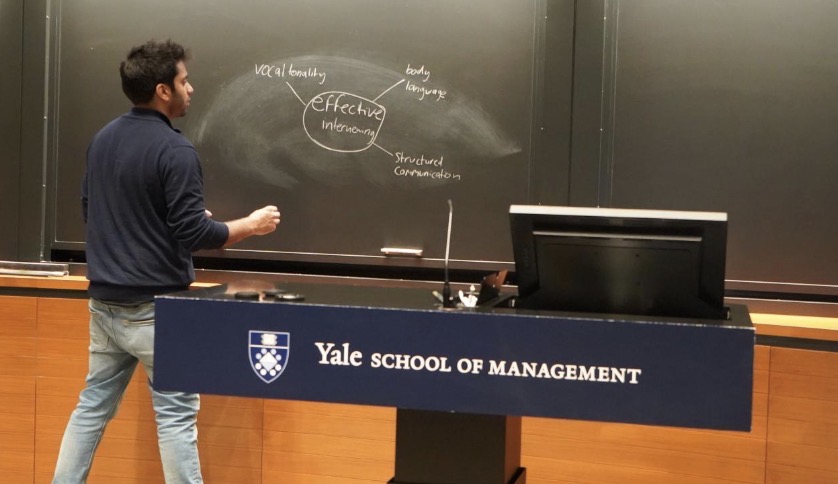
Hassan Akram is the founder of Elite Careers Strategy. Across recruitment work and ECS advisory, he has reviewed more than 10,000 applications and related candidate materials. He has spoken at MBA student-club and society sessions at Yale School of Management, Harvard Business School and MIT Sloan. ECS is independent of every employer and institution named. Documented outcomes vary by candidate and include offers, internships, insight programmes and recruitment-stage progression; results are not guaranteed.

The Next Step
Apply the methodology with guidance.
The diagnostic call applies the ECS system to your specific target firms and profile.
Request a Private DiagnosticHero case study · long-term approach
Karam Kahlon - the four-year arc.
University of Exeter, non-target. Resitting A-levels at AAB. No IB interviews before ECS. A four-year private advisory engagement - the longest-documented continuous client relationship in the ECS track record. Each outcome built on the last.
Year 1: Morgan Stanley Step-In/Step-Out programme, HSBC Spring Week converting to Summer IB Internship, 3i two-day PE insight placement. Year 4 (2026): HSBC 2026 Investment Banking Internship and Blackstone 2026 Spring Insight London. Both confirmed, both verified.
“Honestly you’re the best in the business.”Karam Kahlon, named with full consent