
Commercial awareness in corporate law and banking interviews: why the preparation differs
Hassan Akram on how commercial awareness questions differ between corporate law and investment banking interviews, in ECS's experience, and how ECS prepares candidates for Magic Circle and US firm interviews.

In ECS's experience, corporate law interviews tend to treat commercial awareness as advisory judgement under time pressure and with incomplete information, while banking interviews tend to treat it as modelling accuracy and execution fluency. Hassan Akram, founder of Elite Careers Strategy, has reviewed more than 10,000 applications and related candidate materials across recruitment work and ECS advisory, in both tracks. ECS's view is that the difference explains why some candidates with strong banking preparation find law interviews harder than expected, and vice versa. This article sets out that difference and how ECS prepares candidates for it. It is ECS's interpretation, not a statement of any firm's assessment criteria.
How do commercial awareness questions differ between corporate law and banking interviews?
A law interviewer might ask you to assess a cross-border acquisition where regulatory approval is uncertain and the client's appetite for risk is unknown; a good answer shows judgement about trade-offs rather than precision about valuation multiples. A banking interviewer might ask you to walk through a leveraged buyout when debt markets are stressed; a good answer shows modelling fluency and an understanding of execution, rather than an opinion on whether the deal should happen.
Kalen Harrald, from Queen Mary University of London, secured his Clifford Chance SPARK place using ECS's free public content, with no paid or private ECS support, and named STAR-3 and PEAL-X as the frameworks he used. The scholarship was awarded after the SPARK outcome, for future support. Full credit for the result is his.

What mistake do candidates commonly make in corporate law interviews?
In ECS's practice sessions, a common one is delivering banking-style transaction detail when the question calls for advisory judgement and comfort with ambiguity. It gets worse when candidates cite deal specifics from the Financial Times without connecting the commercial rationale to the legal advice.
A typical mock interview runs like this. The candidate opens with a leveraged buyout by a large private equity sponsor, then moves to debt pricing and equity rollover mechanics. The interviewer asks about regulatory risk or jurisdictional structure. The candidate reaches for more execution detail rather than framing the advice, and the conversation stalls.
ECS's view of why: trainee solicitors work on matters where the terms are not yet agreed and the commercial drivers are contested, and part of their job is to synthesise incomplete information so that a senior lawyer can frame options for the client. Magic Circle firms such as Freshfields, Linklaters and A&O Shearman work across private equity M&A, debt capital markets and restructuring. A junior banker's work, by contrast, is more often built around a defined mandate and a known analytical framework.
US firms in London, including Kirkland & Ellis, Latham & Watkins and White & Case, run smaller trainee intakes, and candidates often hear that trainees there are given responsibility early. ECS prepares candidates for those firms to show commercial awareness that translates into clear client communication, not just execution detail.
How does ECS train corporate law candidates differently from banking candidates?
For law candidates, ECS uses a five-step structure for commercial awareness answers, set out below: point, evidence, application, link and extension. It builds on the Point-Evidence-Analysis-Link pattern in ECS's PEAL frameworks. Alongside it, PEAL-X, ECS's framework for 'why this firm', anchors motivation in verifiable facts about the firm: a named practice area, a public matter, a person, a programme. ECS uses both with candidates targeting Clifford Chance, Freshfields, Kirkland & Ellis and Latham & Watkins.
Banking candidates work more on STAR-3 for competency answers, which develops three Actions and three Results with a Link to the firm, and on technical and deal preparation. (ECS's BDC framework, used in both tracks, is for assessment-centre group exercises: Began, Developed, Confirmed.) That preparation builds execution fluency and modelling confidence. On its own it does not build advisory judgement.
Law candidates work more on the five-step structure and Commercial Fluency. The five steps help a candidate frame a legal question as an advisory trade-off with consequences for the client. Commercial Fluency helps them take the commercial driver from a Financial Times article and connect it to the jurisdictional structure and regulatory timetable the law firm is managing. ECS's aim is advisory judgement in the first sentences of an answer, with execution detail used only as evidence for it.
The ECS five-step structure for corporate law commercial awareness
The five steps are point, evidence, application, link and extension. ECS uses them for commercial awareness answers in Magic Circle and US firm interviews.
Point. The candidate opens with the advisory judgement. This is a one-sentence statement of the legal or commercial trade-off at the heart of the question. Example: "The regulatory approval timeline creates a six-month gap between signing and closing, which leaves the seller exposed if approval fails and may justify a reverse break fee." The point is advisory, not descriptive. It frames the commercial context as a decision the client must make, not a fact pattern the candidate has memorised.
Evidence. The candidate cites the commercial driver from a live transaction or market trend. This is where Financial Times reading matters, but only as proof for the judgement. Example: "In cross-border technology M&A, merger control reviews in several jurisdictions can run for many months, and some large semiconductor deals in recent years have been abandoned in the face of regulatory objections." The evidence is specific but does not overwhelm the point. The candidate names the sector and the regulatory context, then moves on.
Application. The candidate connects the evidence to the law firm's advisory role. This is the step most candidates omit. An illustrative example, not a claim about any firm's drafting practice: "The advising firm negotiates conditions tied to regulatory clearance, conduct-of-business covenants for the period between signing and closing, and a reverse termination fee to compensate the seller if approval fails." The candidate is not describing the transaction. The candidate is describing the advice.
Link. The candidate ties the application to the client's risk appetite or commercial objective. This is the client-facing layer. Example: "For a private equity sponsor with a three-year fund hold period, the six-month approval delay compresses the exit window and increases refinancing risk. The law firm advises on alternative completion structures, including earnout clauses tied to post-closing EBITDA targets." The link shows the partner that the candidate can translate legal mechanics into client language.
Extension. The candidate extends the logic to a cross-border or cross-practice context. Example: "In a US-UK deal, the firm coordinates with US antitrust counsel so that the UK Competition and Markets Authority review and the US Hart-Scott-Rodino filing with the FTC and Department of Justice run on compatible timetables. The sequencing shapes the long-stop date and the drafting of the break fee." In ECS's view, this step shows the widest perspective: how large firms work across jurisdictions and practice areas at once.

How long the structure takes to become natural varies by candidate. The ECS 1-to-1 Advisory builds it through mock interviews, weekly Financial Times exercises and firm-specific case study rewrites, until candidates use the five steps without thinking about them. The aim is advisory judgement under time pressure, which in ECS's view is what law interviews most reward.
Documented ECS outcomes at Clifford Chance and Goldman Sachs
Kalen Harrald studies at Queen Mary University of London, a strong institution commonly described in the broader recruitment market as outside the core Magic Circle recruiting set (a market classification, not a Clifford Chance classification or view). He secured his Clifford Chance SPARK 2026 place after preparing with ECS's free content, and named STAR-3 and PEAL-X, unprompted, as the frameworks he used.
In his words: "Your frameworks, STAR-3® and PEAL-X®, have been an absolute lifesaver." Full credit for the outcome is his.
Maziko M., a state-school Computer Science and Statistics student at the University of Glasgow and an ECS Scholarship client, prepared for banking: STAR-3 for written applications, PEAL-3 for competency interviews, PEAL-X for 'why this firm' and Commercial Fluency for markets-side interviews. The documented outcomes were a place on the Citi Insights Programme, a three-day spring insight programme at Citi's London office.
ECS's view is that the difference is not a matter of taste. It reflects the work: trainee solicitors help advise on matters whose terms are still moving, while junior bankers build models and run processes within a defined mandate. It is reasonable to expect interviews for the two roles to probe different kinds of judgement.
Across both tracks, ECS has 106 documented outcomes and selection progressions across 53 candidate journeys. ECS's advice is to learn the difference early and prepare for the role in front of you: advisory judgement for law, execution fluency for banking.
Next step
The ECS 1-to-1 Advisory reviews candidates' applications and builds their preparation. Apply for a diagnostic at /start. Families can read Hassan's methodology for parents or explore the Corporate Law Vault for ECS's firm research.
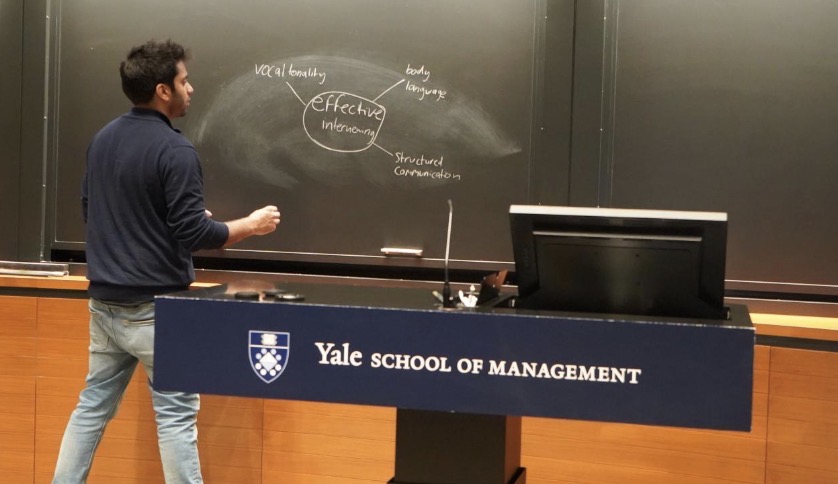
Hassan Akram is the founder of Elite Careers Strategy. Across recruitment work and ECS advisory, he has reviewed more than 10,000 applications and related candidate materials. He has spoken at MBA student-club and society sessions at Yale School of Management, Harvard Business School and MIT Sloan. ECS is independent of every employer and institution named. Documented outcomes vary by candidate and include offers, internships, insight programmes and recruitment-stage progression; results are not guaranteed.
The Next Step
Apply the methodology with guidance.
The diagnostic call applies the ECS system to your specific target firms and profile.
Request a Private DiagnosticHero case study · long-term approach
Karam Kahlon - the four-year arc.

University of Exeter, non-target. Resitting A-levels at AAB. No IB interviews before ECS. A four-year private advisory engagement - the longest-documented continuous client relationship in the ECS track record. Each outcome built on the last.
Year 1: Morgan Stanley Step-In/Step-Out programme, HSBC Spring Week converting to Summer IB Internship, 3i two-day PE insight placement. Year 4 (2026): HSBC 2026 Investment Banking Internship and Blackstone 2026 Spring Insight London. Both confirmed, both verified.
“Honestly you’re the best in the business.”Karam Kahlon, named with full consent