How to Get into Freshfields Training Contract as an International Student
Hassan Akram on how international students can prepare for a Freshfields training contract: visa questions to check, the commercial fluency to build, and ECS frameworks for Magic Circle applications.
International students do secure Magic Circle training contracts, and two practical questions come first: visa sponsorship, and whether you can show the commercial fluency that a practice spanning capital markets, private equity M&A and cross-border restructuring calls for. Freshfields appears on the UK register of licensed sponsors; check its graduate recruitment pages for its current position on trainees. Hassan Akram, founder of Elite Careers Strategy, has reviewed more than 10,000 applications and related candidate materials across recruitment work and ECS advisory. In the international candidates' applications ECS reviews, a recurring weakness is commercial vocabulary rather than academic record. ECS's frameworks are designed to close that gap.
Does Freshfields sponsor international students for training contracts?
The Magic Circle firms overlap in their client bases, so a strong application explains what is distinctive about Freshfields, drawn from public sources such as its practice pages, deal announcements and directory rankings, rather than generic Magic Circle prestige. Kalen Harrald, a Queen Mary University of London student (a university commonly described in the broader recruitment market as non-target, a market classification, not a Clifford Chance classification or view), secured his Clifford Chance SPARK place using the STAR-3 and PEAL-X frameworks from ECS free content. He is now an ECS Scholarship client continuing into the training contract cycle. In ECS's judgement, the same commercial-awareness-first preparation applies to Freshfields.

What commercial fluency should international candidates build for Freshfields?
ECS prepares candidates for Freshfields across the firm's main transactional areas. For equity capital markets: the roles of the underwriting syndicate, how prospectus liability works and what stabilisation is for. For debt capital markets and leveraged finance: investment-grade issuance, leveraged loan syndication, covenant terms and why arranging banks are paid as they are. Candidates do not need specialist depth; ECS's aim is that they can discuss these ideas accurately and in their own words.
For M&A: auction dynamics, break fees, and how merger control timelines, such as a CMA Phase 2 review, affect a deal. Antitrust is one of the practices Freshfields is best known for, so candidates should be able to explain why competition clearance can set a transaction's timetable. ECS's view is that this level of fluency comes from following real deals, not from seminar notes.
ECS's Commercial Fluency method works in three layers: sector mechanics, firm-specific commerciality and live commerciality. Candidates learn to compare what Freshfields is publicly known for with its peers, and to talk about live debt issuances, M&A auctions and competition clearances without hesitating. ECS makes no claim about how Freshfields structures or scores its interviews; the firm's graduate recruitment pages describe its current process.
How competitive is Freshfields for non-Russell Group international students?
Very. Freshfields receives far more applications than it has training contracts, and candidates from outside the Russell Group compete with applicants who may have had years of informal exposure to commercial life. Check the firm's published academic requirements for the current threshold. In ECS's experience, a recurring pattern among the international candidates it sees is a strong academic record combined with little commercial vocabulary, and that combination makes it hard to stand out.
The method ECS uses is the same across law and finance. Karam Kahlon, an Exeter student who had resat his A-levels, had no investment banking interviews before working with ECS. Across a multi-year paid engagement using STAR-3, PEAL-3 and Commercial Fluency, he secured the HSBC 2026 Investment Banking Internship and the Blackstone 2026 Spring Insight Programme. The preparation was structured, repeated case work until sector mechanics became familiar: learn the vocabulary, practise the structures and rehearse under time pressure.
The ECS 1-to-1 Advisory reviews international students' applications with this in mind. ECS's advice is to treat commercial awareness as the foundation and to present it in structured answers: STAR-3 for competency evidence, PEAL-3 for motivation and PEAL-X for firm-specific reasons. In the applications ECS reviews, generic answers are the most common reason an otherwise strong application fails to stand out.
The ECS framework: Commercial Fluency and PEAL-3 for Magic Circle applications
ECS's Commercial Fluency method prepares candidates in three layers. Sector mechanics: equity underwriting economics, leveraged finance covenants and M&A auction timelines. Firm-specific commerciality: how Freshfields' publicly described strengths compare with those of Clifford Chance, A&O Shearman, Linklaters and Slaughter and May. Live commerciality: current deals the candidate can walk through from mandate to closing without notes.
PEAL-3 is ECS's framework for motivation answers: Point, Evidence, Analysis, Link, repeated at least three times so that each loop deepens the reasoning. PEAL-X does the same job for 'why this firm', anchoring each sentence to a verifiable fact such as a named practice area, a public transaction or a training programme. In the applications ECS reviews, answers that cite "international reach" and "high-quality work" are weak because they could be sent to any firm. The frameworks are designed to help candidates avoid that; they do not guarantee a result within any timeframe.
Hassan developed these frameworks from patterns he saw repeatedly in applications: candidates who wrote about "wanting to work on complex transactions" without naming a single deal structure. The ECS remedy is repetition. Candidates practise describing equity underwriting syndicates, leveraged buyout financing and competition clearance timetables until the vocabulary is their own.
Documented ECS outcomes at Freshfields and Magic Circle firms
ECS has documented a Freshfields Training Contract for an anonymised client who engaged ECS with a Freshfields assessment centre invitation already in hand; the preparation covered PEAL-3 for interviews, a full two-day assessment centre simulation and Watson Glaser practice. Kalen Harrald secured a place on Clifford Chance SPARK 2026 from Queen Mary University of London using ECS free content, before becoming an ECS Scholarship client; he is now preparing for the training contract stage.
Maziko M., a state-school student at the University of Glasgow and an ECS Scholarship client, secured a place on the Citi Insights Programme, a three-day spring insight programme at Citi's London office in one cycle, with Commercial Fluency part of the preparation. Law and banking assess candidates differently, but ECS's view is that commercial preparation carries across.
Vivek Patel, applying with a BTEC DDD profile, secured a Morgan Stanley FRS placement using ECS free content only. Across all its work, ECS has 106 documented outcomes and selection progressions across 53 candidate journeys, at firms including Goldman Sachs, Kirkland & Ellis, Blackstone, Clifford Chance, Morgan Stanley and White & Case. For a Freshfields application, ECS's advice is commercial fluency combined with firm-specific positioning and structured answers. Outcomes vary by candidate and are not guaranteed.

Next step
The ECS 1-to-1 Advisory reviews international students' applications and builds their commercial preparation. Apply for a diagnostic at /start. Families can read Hassan's methodology for parents or explore the Corporate Law Vault for ECS's Freshfields research, compiled from public sources, including practice area breakdowns and training contract timelines.
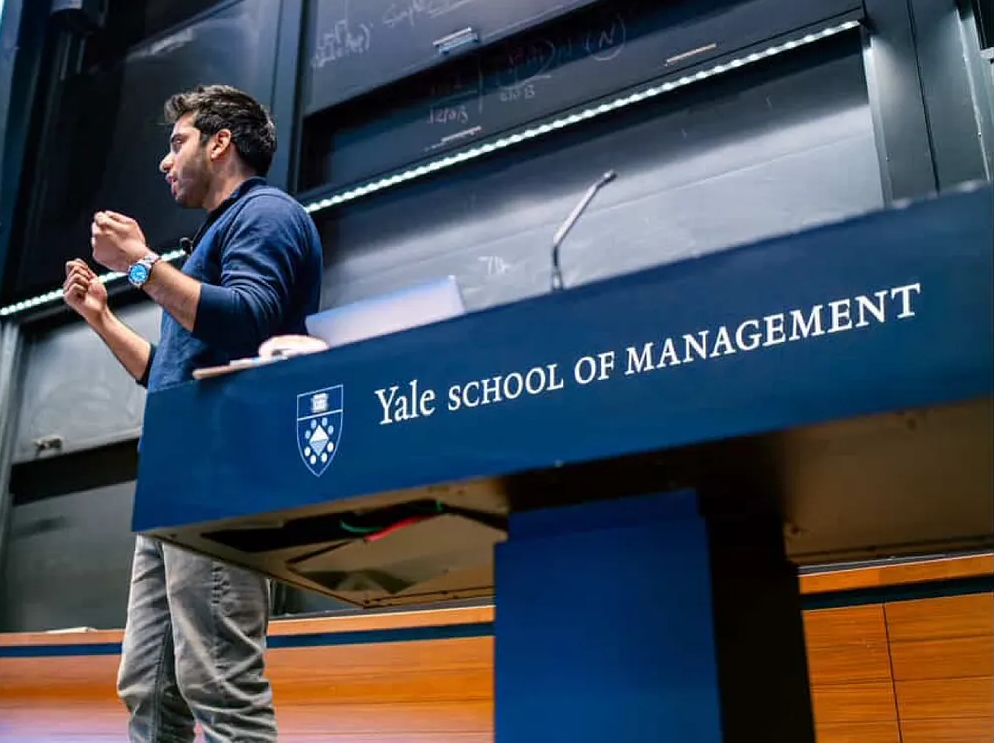
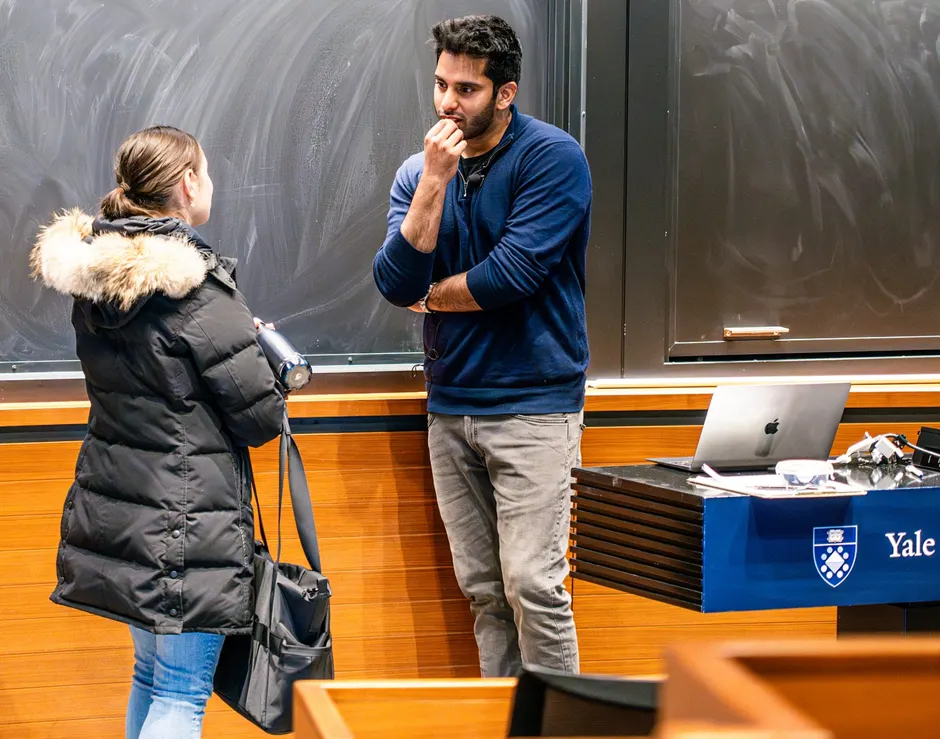
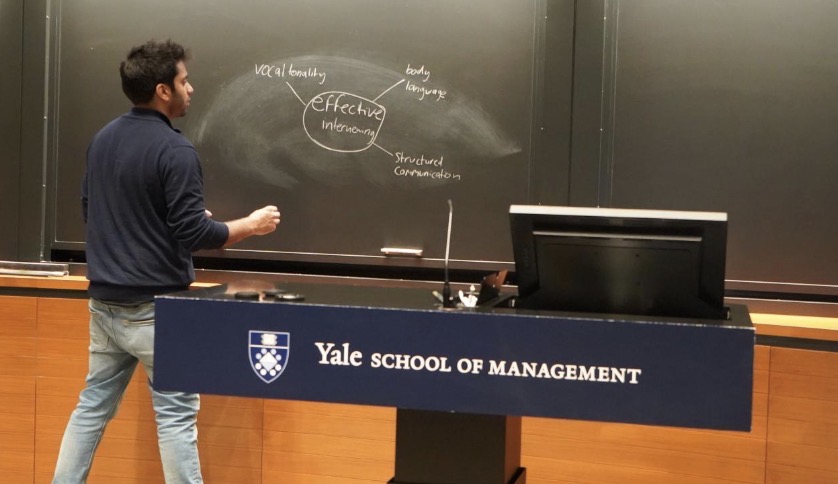
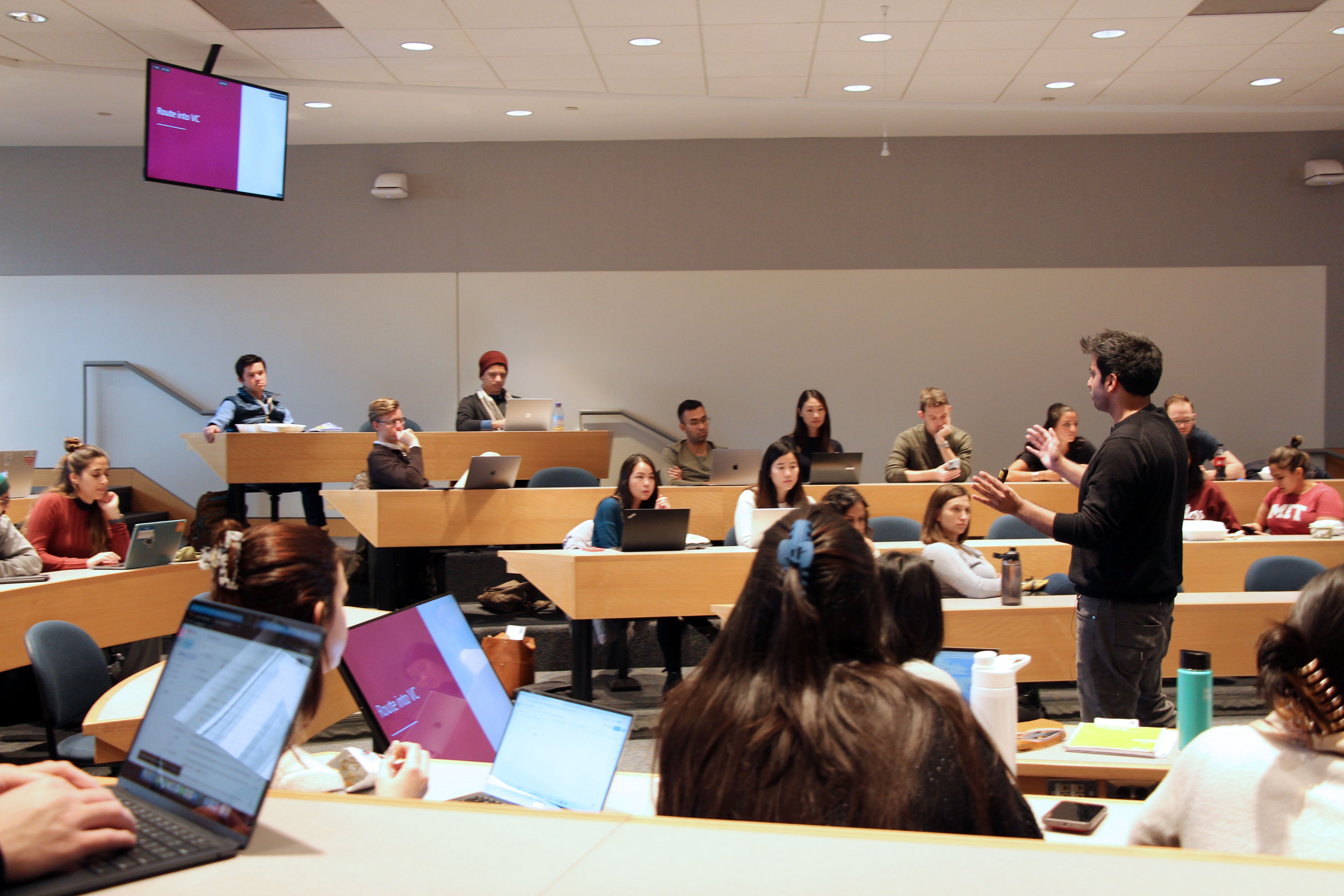
Hassan Akram is the founder of Elite Careers Strategy. Across recruitment work and ECS advisory, he has reviewed more than 10,000 applications and related candidate materials. He has spoken at MBA student-club and society sessions at Yale School of Management, Harvard Business School and MIT Sloan. ECS is independent of every employer and institution named. Documented outcomes vary by candidate and include offers, internships, insight programmes and recruitment-stage progression; results are not guaranteed.
The Next Step
Apply the methodology with guidance.
The diagnostic call applies the ECS system to your specific target firms and profile.
Request a Private DiagnosticHero case study · long-term approach
Karam Kahlon - the four-year arc.

University of Exeter, non-target. Resitting A-levels at AAB. No IB interviews before ECS. A four-year private advisory engagement - the longest-documented continuous client relationship in the ECS track record. Each outcome built on the last.
Year 1: Morgan Stanley Step-In/Step-Out programme, HSBC Spring Week converting to Summer IB Internship, 3i two-day PE insight placement. Year 4 (2026): HSBC 2026 Investment Banking Internship and Blackstone 2026 Spring Insight London. Both confirmed, both verified.
“Honestly you’re the best in the business.”Karam Kahlon, named with full consent